
Spray foam insulation is one of the most effective thermal barriers available, offering exceptional performance in homes and businesses. Known for its unmatched coverage in uneven or tight spaces, its durability, and a high return on investment, spray foam is a great choice for many insulation applications. Some people do have concerns about the chemicals in spray foam insulation and potential health effects. Find out why this popular insulation product is generally considered non-toxic after it cures and why professional installation is the best way to ensure your family’s health and safety.
Is Spray Foam Hazardous?
The hazards of spray foam insulation are primarily based on a 2016 EPA study assessing the health risks of spray foam insulation chemicals. In its research, the EPA raised health concerns with spray foam insulation’s application process and input components.
Spray Foam Insulation Chemicals
Spray foam insulation – specifically, spray polyurethane foam (SPF) – derives its long-lasting seal from a chemical reaction between two components, often called Side A and Side B. The components are completely separate until they are sprayed. This forms a chemical reaction, generating heat and ultimately resulting in the waterproof, ultra-strong bond that makes SPF such a valuable insulating material.
While specific spray foam insulation products vary slightly, the following chemicals are commonly found in most residential insulation materials.
Side A components are generally referred to as isocyanates, a family of chemicals that react with Side B’s polyols. The most common isocyanates in spray foam insulation (primarily in open-cell foam) include methylene diphenyl diisocyanate, polymeric MDI, and MDI mixed isomers.
Side B components are a mix of petroleum-based polyols and additives such as flame retardants, surfactants, and blowing agents.
Many of these compounds are toxic when heated, inhaled, or placed in direct contact with skin.
Note that one of the key differences between open-cell and closed-cell SPF is the usage of isocyanates.
Closed-cell SPF does not contain any isocyanates, and while it’s sometimes considered a non-toxic spray foam, it has several other chemicals that may cause respiratory issues if inhaled.
Open-cell SPF does contain isocyanates, but it’s the least commonly used type of spray foam insulation in most parts of the US and Canada.
Spray Foams Health Risks, Explained
Research by the EPA and other regulatory agencies shows that spray foam insulation dangers are almost entirely concentrated during installation and immediately afterward.
Exposure During Installation
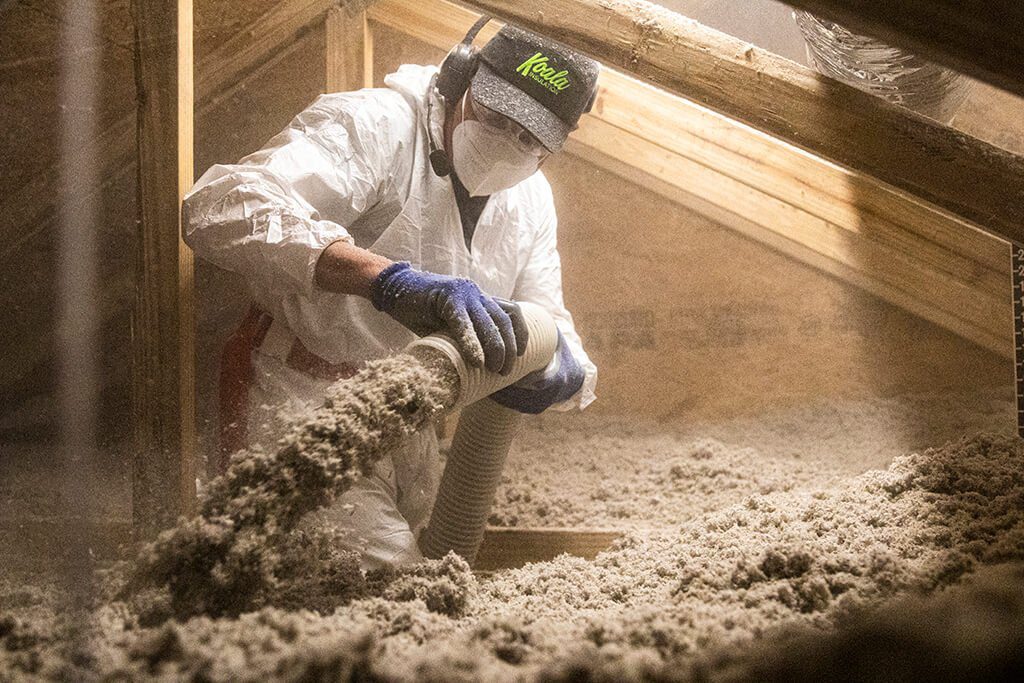
The greatest health risk occurs during the installation process. This is when isocyanates and other potentially hazardous chemicals are released as vapors and aerosols, often at levels that exceed safe exposure limits. That’s why Koala Insulation follows Occupational Safety and Health Administration guidelines to mandate skin, eye, and respiratory protection when handling and applying spray foam insulation chemicals.
The danger of chemical exposure during installation is the reason why all building occupants must leave during installation and for roughly 24 hours after the work is complete.
Exposure During Off-Gassing
Spray foam off-gassing occurs when the newly installed insulation is curing. During the curing process, the foam contains unreacted (and unbonded) chemicals, which may release harmful compounds, even when the insulation appears and feels dry.
How long does spray foam insulation off-gas?
Most manufacturers and installers recommend waiting 24 hours after installation to ensure the high-risk off-gassing period is complete.
The exact curing time varies based on several factors, including:
- Humidity
- Temperature
- Thickness of insulation
- Ventilation
The EPA and other entities recommend further research on the exact timeline for spray foam insulation off-gassing. The most reliable information for any insulation product is the manufacturer’s data sheet (MDS) or safety data sheet (SDS).
What to Know About the Health Effects of Spray Foam Insulation
Exposure to spray foam insulation chemicals during installation or off-gassing is linked to respiratory issues, including asthma and difficulty breathing. It can also irritate the eyes, nose, and throat, and cause rashes and itching after direct skin contact.
Other correlated issues include headache, fatigue, and light-headedness.
These symptoms of exposure are most common during installation and 24 hours after, but contact a healthcare professional if you experience these issues after reentering your property.
Spray Foam Safety Tips
Spray foam insulation health concerns can be mitigated in several ways.
Trust the professionals. You can trust your local Koala Insulation to source and install spray foam products. Our technicians follow OSHA guidelines and have the training and experience to provide expert installation and keep your family safe.
Stay clear. In most cases, homeowners and business occupants can return to the property within 24 hours. Your technicians may recommend a longer period if necessary. Follow your re-entry timeline, and keep pets away from the area, too.
Air it out. Keep the area well-ventilated for several days post-installation, as a precaution. Contact your local Koala Insulation team with any questions or concerns.
Find Out If Spray Foam Insulation Is the Right Choice for You
Koala Insulation takes pride in safely, professionally installing SPF and other insulation materials. Our highly skilled teams follow industry standards to ensure your safety and comfort while delivering improved energy efficiency you can really feel.
To see if spray foam insulation is the best option for you, find your local Koala Insulation and get a free estimate!
Related
Articles


Find Your Location



Get a quote