
The best affordable way to keep your home cool in warmer climates is by investing in the right insulation. Insulation acts as a thermal barrier, it keeps treated air inside, helping your home stay cool and preventing heat conduction that can warm your garage, roof, walls, and over time your entire home. It is no doubt the correct insulation will help keep your home cool – this blog will help you understand what insulation solution is best for your home.
How does Insulation Keep Your House Comfortable
Most of you probably only think of insulation for when it is chilly outside, but it’s just as crucial when it is hot outside. In both hot and cold climates – Insulation will work as a thermal barrier, it slows down the transfer of heat that goes through your walls and roof.
How Does Insulation Keep Heat Out?
All Insulation reduces heat flow in two forms: conduction and convection.
Conduction is when hot air slowly increases the temperature of housing materials, such as exterior walls and shingles. When the temperature of these materials increase, they transfer the heat indoors causing indoor temperatures to rise and your air conditioning to work harder.
When you install the right insulation you are introducing a non conductive material into your home which will help keep the heat out.
Convection is when hot air enters your home through gaps and cracks in your walls, roof, or insulation. This is also known as an air leak, which can cause your AC system to work harder increasing your energy bills.
Air sealing is often the first thing that is done to prevent convection heat gain. However, for older homes that have a history of water damage the best option is to remove any old insulation and install new updated materials.
The Top Insulation to Block Heat
Today’s insulation materials do a great job at blocking heat, each material has their own positives and negatives depending on its application, cost, and other factors.
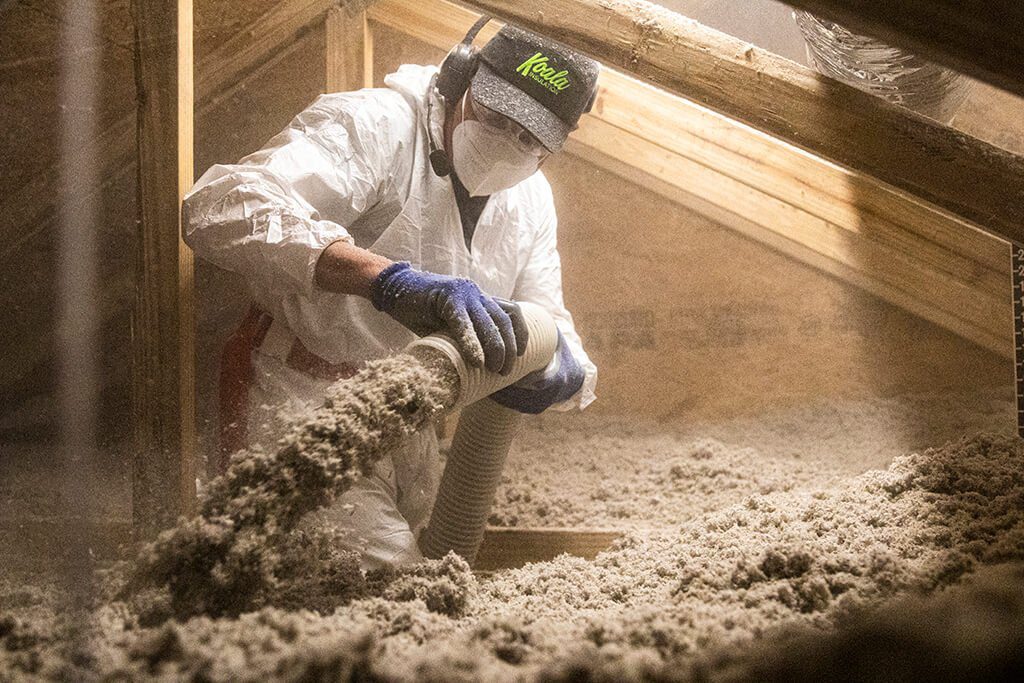
- Cellulose insulation is an effective option for reducing heat transfer and for air sealing.
- Fiberglass batt is a very cost effective option for insulation in hot, dry climates.
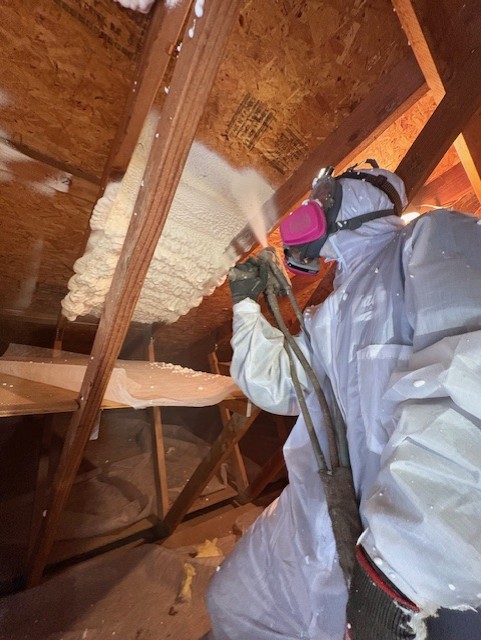
- Spray foam insulation, especially closed-cell, is an amazing option for humid and warm climates. This is because it is effectively moisture-proof while also offering a high R-value.
In summary, the best insulation for hot climates depends on your specific needs.
The Best Attic and Roof Insulation for Hot Climates Is…
Spray foam insulation is the best option for attics in warmer climates because it combines air sealing with a high R-value at a lower thickness. Blow-in cellulose and fiberglass insulation is a great affordable alternative, but it’s important to add a radiant barrier when using these materials.
What Is a Radiant Barrier?
Usually made from aluminum foil, radiant barriers reflect roughly 90% of solar heat and are commonly used in attics to keep indoor temperatures cooler. Installing a radiant barrier is least expensive when completed during traditional insulation installation, not afterward. It also requires an air gap to deliver optimal results.
Some examples of radiant barriers include:
- Foil-faced insulation (usually fiberglass batt)
- Foil-faced plywood
- Foil-faced OSB (oriented strand board)
Do I Need Both: Radiant Barrier vs. Insulation?
Radiant barriers of any kind are not a replacement for insulation. Standalone radiant barriers only reflect heat, but they do not slow heat transfer through conduction. Many homeowners in hot, humid climates opt for a foam-faced insulation product that combines both materials into a single cohesive system.
The Best Wall Insulation for Hot Climates Is…
Spray foam is often considered the best wall insulation for hot climates because it offers a high R-value and strong moisture resistance. However, it can be more expensive than some other options, which can make it less ideal for some insulation retrofit projects. Spray foam is typically a great choice for new builds or smaller projects, especially if you’re already remodeling or completing other home improvement projects. Otherwise, blown-in cellulose or fiberglass insulation is usually the most affordable option that still performs well in warm climates.
Like roofs and attics, walls benefit from having both insulation and radiant barriers. Depending on your home it might be best to add a radiant barrier or use a foil-faced product on exterior walls that receive direct sunlight, such as east- and west-facing walls.
What is the Best Garage Insulation for Hot Climates?
Foil-faced insulation or OSB is the best garage insulation for heat protection. Obviously most homeowners do not need their garage to be as comfortable as their primary living areas, so you can also use rigid foam boards for walls and ceilings, especially if your garage is unfinished.
Insulating your garage won’t necessarily lower your home’s energy consumption, but it’s a smart option for an attached garage. You just have to be sure to focus on the shared interior wall to maximize the benefits in your primary living area.
When Insulation is Installed correctly, it helps keep all that hot outside air out, lowering your energy bills, and keeping your family comfy and cool all summer long!
Upgrade Your Home’s Insulation Today
Make the energy-efficient upgrades to your home today, with the Koala Team. At Koala Insulation we provide exceptional customer service while educating you on what your home needs. When temperatures start to rise, you will be glad that you made the call. Call your local Koala Insulation today to schedule a free evaluation!
Related
Articles
Addressing Spray Foam Insulation Safety
CELLULOSE 101: THE BENEFITS AND INSTALLATION TIPS

How to Choose the Best Vapor Barrier Material
Find Your Location



Get a quote