
What a Conditioned Attic Actually Costs in Colorado
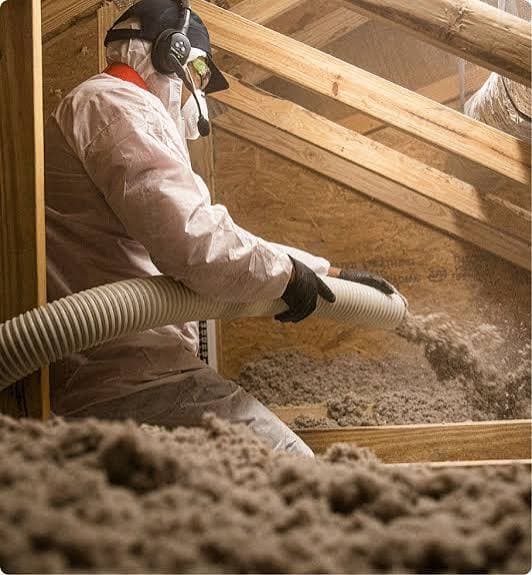
Most attic insulation work in Colorado happens on the attic floor. Typically, blown-in fiberglass or cellulose goes down over the ceiling joists, the attic stays vented and stays cold, and the insulation separates the living space below from the outside air above.
A conditioned attic does the opposite. The insulation moves up to the roofline, sprayed directly against the underside of the roof deck and the rafters. The vents get sealed. The attic stops being outdoor space and becomes part of the conditioned envelope of the house, roughly the same temperature as the rooms below it.
It is a legitimate assembly and in some houses it is the right answer. It is also several times more expensive than insulating the floor, and almost nobody in this market will tell you the number before they are standing in your driveway. Here is the number.
Ready to start your insulation project?
What it costs
Closed cell spray foam is priced by the board foot. One board foot is one square foot of surface at one inch of depth. Our closed cell runs $1.10 to $1.35 per board foot depending on the application.
We spray the roofline at 8.7 inches. Multiply it out and you get $9.57 to $11.75 per square foot of roof deck sprayed.
| Roof deck sprayed | Depth sprayed | Typical installed cost |
| 1,200 sq ft | 8.7 inches | $11,500 to $14,100 |
| 1,500 sq ft | 8.7 inches | $14,400 to $17,600 |
| 2,000 sq ft | 8.7 inches | $19,100 to $23,500 |
| 2,500 sq ft | 8.7 inches | $23,900 to $29,400 |
One thing to understand about those square footage numbers: they refer to the roof deck, not the footprint of the house. A pitched roof has more surface area than the floor underneath it, and gable ends add more. A 1,500 square foot footprint under a moderately pitched roof is meaningfully more than 1,500 square feet of deck to spray. We measure the actual surface on site and quote from that, which is why a phone estimate on this particular scope is not worth much to either of us.
For comparison, insulating the same attic the conventional way, blown-in on the floor to R-60 with air sealing and baffles, lands in a completely different price tier. If cost is the driving factor, the attic floor wins and it is not close. We break those numbers down in our Boulder County attic insulation cost guide.
Why 8.7 inches
Front Range residential code calls for R-60 in the attic. Closed cell spray foam delivers R-7.4 per inch, which means 8.11 inches technically satisfies the requirement. We spray 8.7 inches, which lands at roughly R-64.
That is deliberate. A roof deck is not a flat, uniform surface, and foam depth varies across rafter bays no matter how good the applicator is. Specifying to the exact minimum means the thin spots fall under code. Specifying past it means the thin spots still clear. The extra half inch costs you a few hundred dollars and removes the argument entirely.
There are two situations where the number moves:
- Rafter depth caps the R-value. If the framing is shallow and the assembly was grandfathered into the original plans, the cavity may physically not accept 8.7 inches. That gets evaluated on the specific house.
- Continuous insulation above the deck. If the roof already carries rigid insulation above the sheathing, or the roofer is adding it as part of a re-roof, that R-value counts toward the total and the foam depth below comes down accordingly. That coordination happens with the roofer, not with us alone.
Commercial buildings run under different code requirements entirely and get evaluated case by case. If you are a general contractor or a building owner reading this, the residential math above does not apply to your project.
What happens to the vents
They get sealed. That is not a side effect, it is the point.
A vented attic works by letting outside air wash through it, which means anything you install on the roofline is fighting a losing battle against air movement. A conditioned attic only works if the attic is sealed off from the outside, so soffit vents, ridge vents and gable vents all get closed as part of the scope.
This is a permanent change to how the house handles air and moisture in that space. It is not a reversible decision, and it is the single biggest reason this scope deserves a conversation on site rather than an online order form.
When a conditioned attic is worth the money
The case gets strong when one of these is true:
- Your HVAC equipment or ductwork lives in the attic. Ducts in a vented Colorado attic are surrounded by air that swings from below zero to well over 100 degrees. Bringing the attic inside the envelope puts that equipment in conditioned space and stops the losses at the duct line, which is where the payback on this assembly usually comes from.
- The roof geometry makes floor insulation impractical. Cathedral sections, complex rooflines, low-slope areas, dormers and knee walls all create assemblies where insulating the floor is either impossible or so full of gaps that it underperforms no matter how much material you put down.
- The attic is or will be living space. Finished bonus rooms, storage you actually want at a reasonable temperature, or a future conversion all point to the roofline.
- Air sealing the ceiling plane is a lost cause. Some houses have so many penetrations, chases and can lights that sealing the ceiling to a meaningful standard is not realistic. Moving the boundary to the roof deck sidesteps the problem instead of chasing it.
If none of those describe your house and your ductwork is not in the attic, blown-in insulation on the attic floor will get you most of the comfort and energy result for a fraction of the cost. We will tell you that on the estimate.
How the estimate works
We measure the actual roof deck surface, check rafter depth, look at what is already up there, and confirm whether the existing insulation on the floor needs to come out. Then you get a written number with the depth and the R-value on it, not a per-square-foot teaser that changes once the rig shows up.
Koala Insulation of Boulder has three BPI certified analysts on staff, and the work carries a limited lifetime warranty. If you want to spread the cost, Colorado has state and utility backed financing programs for exactly this kind of work, and we are an approved contractor on them. Our Colorado insulation financing guide walks through the options.
Frequently asked questions
Is a conditioned attic the same as crawl space encapsulation? No, but the logic is the same. Both move the insulation and air barrier from the floor of a vented space to its outer boundary, bringing that space inside the building envelope.
Can I do part of the attic? No. The envelope has to be continuous to work. A partially foamed roofline with open vents is the worst of both approaches.
Do I still need the old insulation on the attic floor removed? Usually yes. Once the roofline is the boundary, insulation sitting on the ceiling plane serves no purpose and can trap moisture against the ceiling drywall. That removal is a separate line on the estimate.
Open cell or closed cell? Closed cell at the roofline. It delivers the R-value in the depth available and it controls moisture at the roof deck, which matters more in this assembly than in any other.
Does this work on a house at elevation? Yes, and mountain and foothill jurisdictions sometimes enforce different R-value minimums than the Front Range. We confirm the requirement for your address before quoting.
Get a real number for your house
Conditioned attics are one of the few insulation scopes where the wrong call is expensive and hard to undo. We will measure it, price it, and tell you honestly if the attic floor is the better buy.
Koala Insulation of Boulder serves Boulder County, Broomfield, Jefferson County and the surrounding Front Range. Request a free estimate and we will get someone in your attic this week.
Find Your Location



Get a quote