
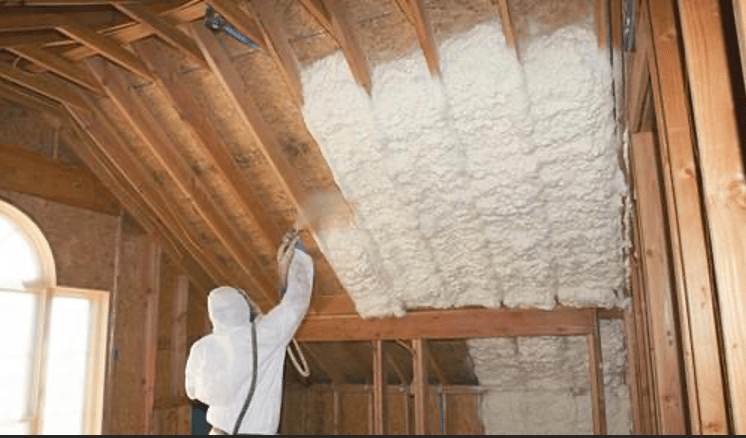

The insulation performance relies primarily on two insulation factors which are insulation thickness and R-value. The insulation thickness guide enables you to select the appropriate insulation material for your upcoming replacement project, remodeling work, or new construction project by providing guidance on thickness selection and R-value requirements needed to achieve optimal energy efficiency.
Why the Thickness of Insulation matters
Thick insulation acts as a more comprehensive thermal barrier between indoor and outdoor temperature differences. Also known as insulation depth for spray foam and blown-in insulation, thickness is directly correlated with R-value. R-value measures thermal resistance, with higher values providing superior protection against temperature imbalances.
R38 insulation requires double the thickness of R19 insulation for all insulation types. The thickness of material together with its R-value determines heat loss, which means that an attic with R19 insulation will release double the heat of an R38 attic during winter months, resulting in higher energy costs and increased damage to your heating equipment.
The process of selecting insulation materials for your roof and attic and wall surfaces requires consideration of these factors.
- R-value adds up: the more insulation layers you add, the better your home stays protected from the heat and cold. For example, installing two layers of professional R19 insulation gives you an effective R38 rating.
- Compression reduces performance: insulation isn’t meant to be squished. Putting too much into an area actually lowers its effectiveness, no matter the R-value or material.
- Climate matters: use the recommended insulation thickness and R-value for your region. Check the EPA’s guidelines or talk to your local local Koala Insulation experts to make sure you’re getting it right.
Insulation Thickness Charts
Homes lose the majority of their energy through attics, exterior walls, and gaps around doors and windows. Adding proper insulation, along with sealing air leaks, can make a big difference, with attics and walls offering the biggest energy savings.
How Much Attic Insulation Do You Really Need?
The insulation for your attic is based on the recommended material and the R-value that is required for your climate. Roofs and attics often tend to use a higher R- value insulation than other areas in the home because heat rises, which causes more energy to escape.
In most northern states, attic insulation should have an R-value of at least R49, which usually means a thickness of 16 inches or more.
Roof or Attic Insulation Depth Chart
| Insulation Material | R-value per Inch | R-38 Thickness | R-49 Thickness | R-60 Thickness |
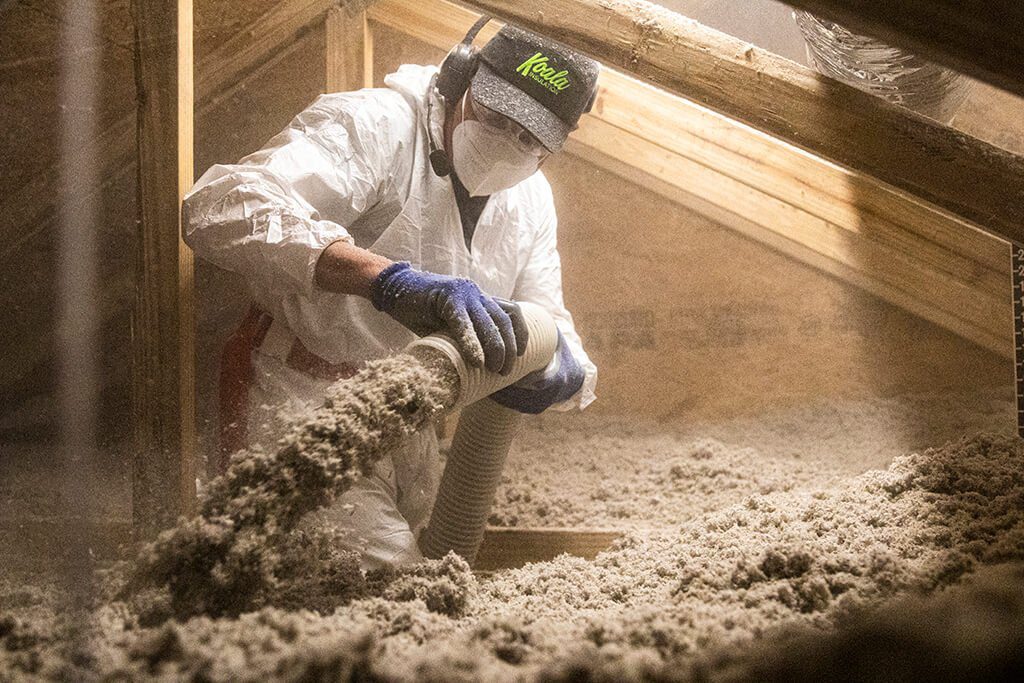
| Blown-in Cellulose | R-3.2 to R-3.8 | ~10 to 12 inches | ~13 to 15.5 inches | ~16 to 19 inches |
| Blown-in Fiberglass | R-2.2 to R-2.9 | ~13 to 17 inches | ~17 to 22.5 inches | ~20.5 to 27 inches |
| Fiberglass Batts | R-2.9 to R-3.8 | ~10 to 13 inches | ~13 to 17 inches | ~16 to 21 inches |
| Closed-Cell Spray Foam | R-6.0 to R-7.0 | ~5.5 to 6.5 inches | ~7 to 8 inches | ~8.5 to 10 inches |
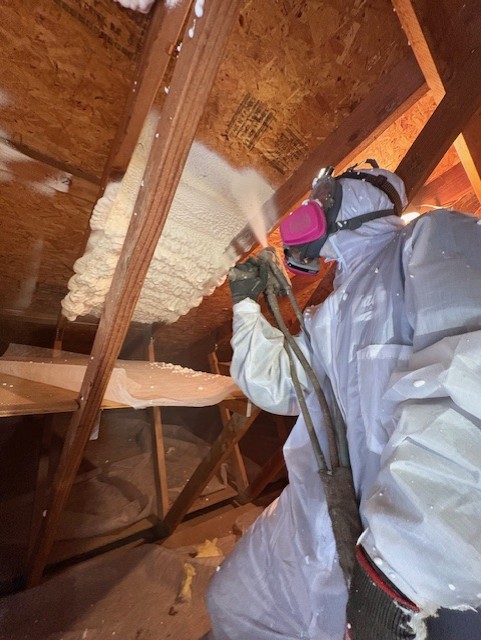
You will find that batt insulation thickness is slightly lower than blown-in, while closed-cell spray foam has the highest R-value per inch. That’s one reason that spray foam insulation can often be found in tight spaces and those hard to reach locations such as your crawlspace or attic.
Exterior Wall Insulation Thickness
Exterior walls usually require less insulation because they aren’t as significant sources of heat loss. Wall construction also influences insulation thickness.
Most homes are built with wooden studs, and when insulation is installed it is installed in between each stud. Wood conducts thermal energy easily, which means that you may need to add continuous insulation (CI) over the stud. This prevents thermal bridging, or heat loss through wooden elements between traditional insulation.
On the chart below, you’ll find the recommended wall insulation thickness (in inches) for Climate Zones 1-8, plus a recommended CI layer for Climate Zones 3-8.
| Climate Zone |
Wall R-Value Requirement |
Fiberglass Batt Thickness (in.) | Blown-in Cellulose Thickness (in.) | Spray Foam Thickness (in.) |
| Zone 1-2 |
R-13 |
~3.5 to 4.5 |
~3.5 to 4 |
~2 to 2.5 |
| Zone 3 |
R-20 or R-13 + R-5 CI |
~5.5 to 7 |
~5.5 to 6.5 |
~3 to 3.5 |
| Zone 4 (except Marine) |
R-20 + R-5 CI or R-13 + R-10 CI |
~5.5 + R-5 CI |
~5.5 + R-5 CI |
~3 + R-5 CI |
| Zone 5-8 |
R-20 + R-5 CI or R-13 + R-10 CI or R-0 + R-20 CI |
~5.5 + R-5 CI |
~5.5 + R-5 CI |
~3 + R-5 CI |
A Note on Insulation Width
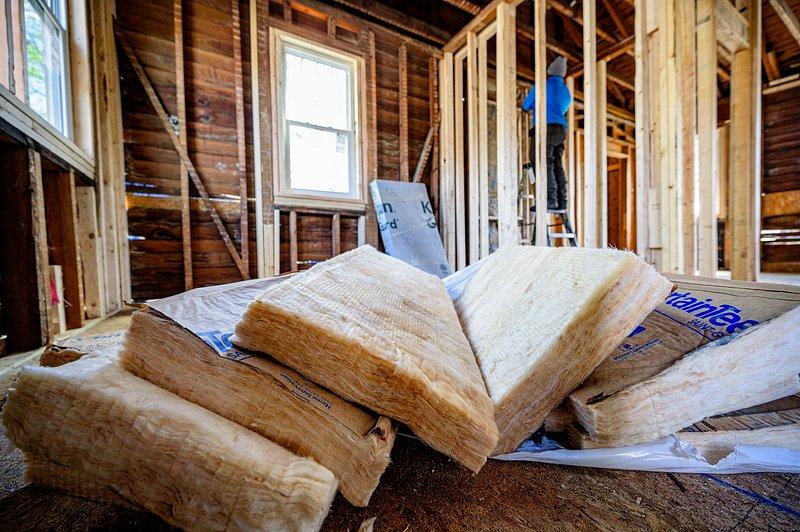
Fiberglass insulation batts are manufactured into two primary widths, based on the standard wooden stud spacing in walls.
- For 16-inch stud spacing, select 15-inch batts.
- For 24-inch stud spacing, select 23-inch batts.
Roll insulation is also available in 15″, 16″, 23″, and 24″ widths. In some cases, your local insulation contractor may need to trim insulation to achieve the ideal fit.
Get the Right Fit with Koala Insulation
Choosing and installing the right insulation goes beyond a handy chart. As North America’s top insulation contractor, every Koala Insulation combines a unique mix of local expertise and national resources.
Take ownership of your home’s energy environment and enjoy year-round comfort with upgraded insulation; schedule a free estimate with Koala Insulation today!
Related
Articles
Find Your Location



Get a quote