
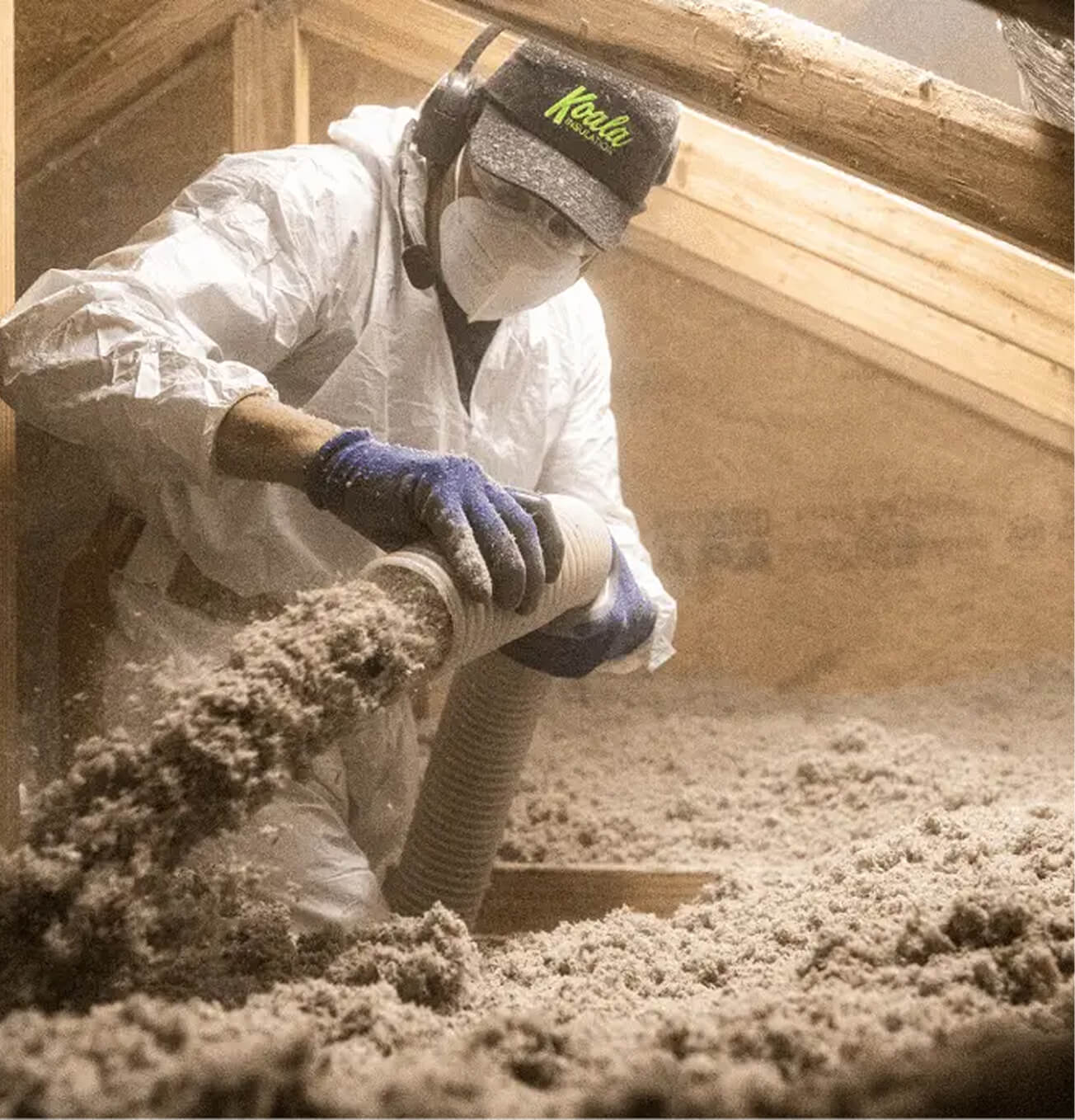

Slows Heat Transfer: A deep blown-in layer resists conduction through your ceilings and walls, so indoor temperatures in the Texas Hill Country stay steadier through strong sun.
Reliable Blown-In Insulation Services in the Texas Hill Country
Let Our Insulation Experts Show You The Many Benefits Of Our High Performance Insulation.
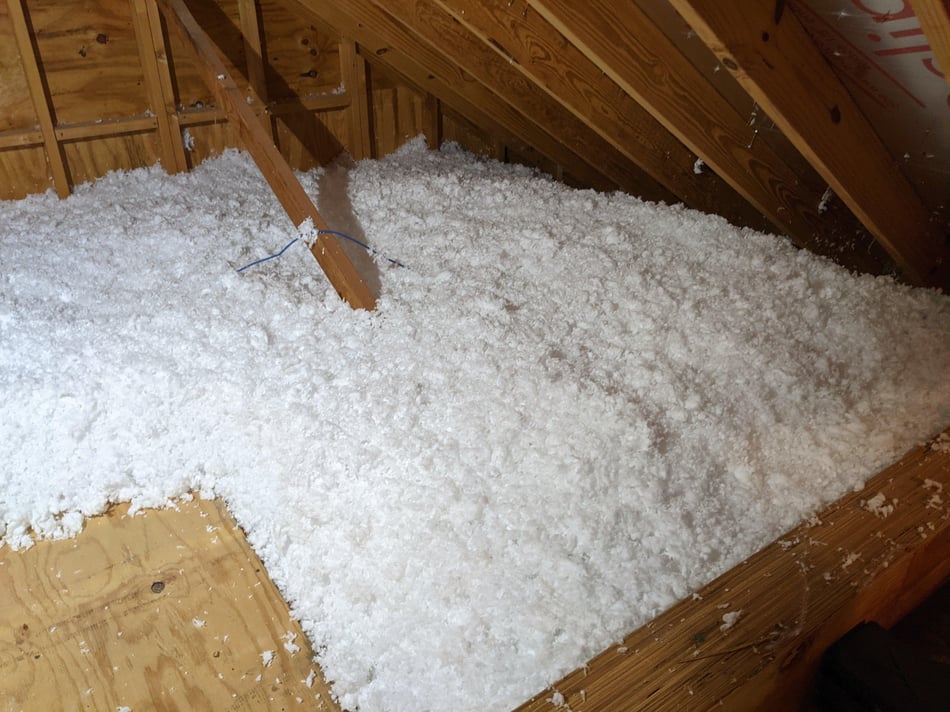
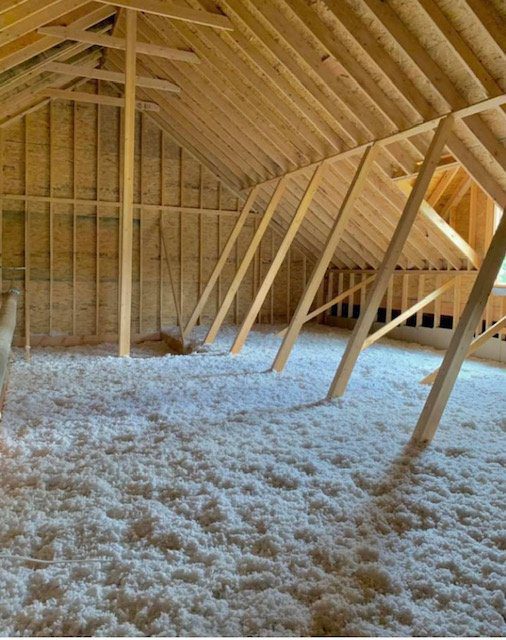
Looking for a proven way to make your Hill Country home more efficient without a major renovation? Blown-in (loose-fill) insulation installs quickly: our crew uses a hose system to blanket your attic floor or fill wall cavities with a thick, uniform layer of insulation.
It is ideal for topping off settled insulation, finishing new spaces, and taming drafty older homes, and Koala Insulation of Texas Hill Country can help with all three.
Get a Free Estimate


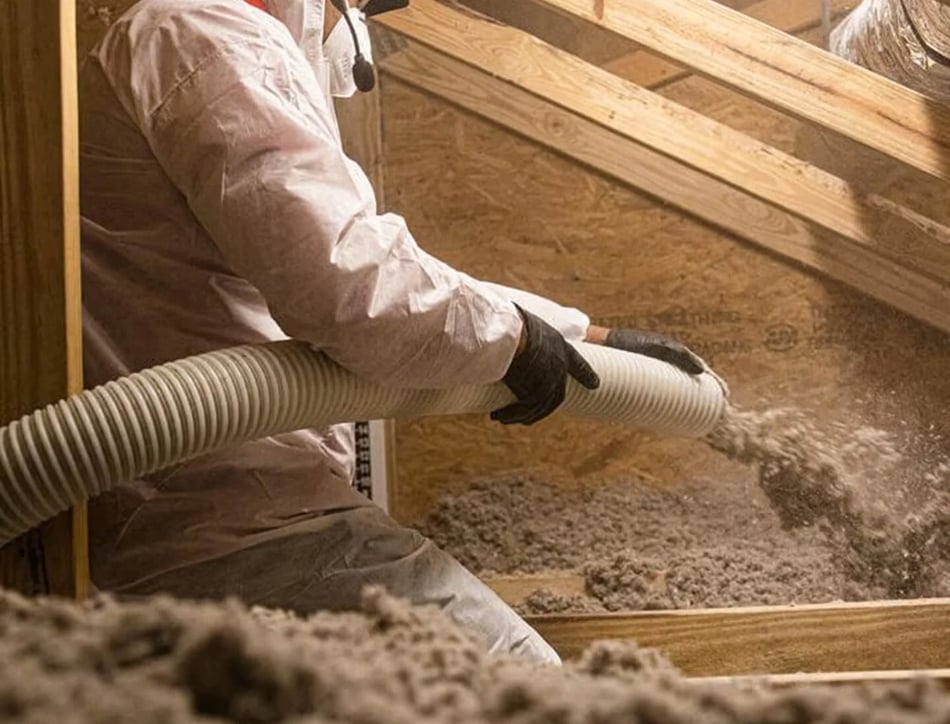
Trusted
Blown-In Insulation Pros in the Texas Hill Country

The Hill Country’s blazing summers and unpredictable winter cold snaps can make your home feel uncomfortable and your HVAC system work overtime. The surprising part? A large share of homes here still rely on a thin, decades-old layer of attic insulation that falls well below current recommendations.
Where blown-in insulation shines:
Attic floors to quickly boost your R-value to modern standards.
Wall cavities, in select retrofits, following industry best practices.
Knee walls & sloped ceilings for those hard-to-reach areas.
A Superior
Thermal Home Upgrade
Hill Country homeowners and businesses choose blown-in insulation because it upgrades comfort and efficiency in a single visit. Installed as a continuous layer over the attic floor or packed into cavities, loose-fill performs like conventional insulation while going in faster and covering more evenly, even over existing material.
These capabilities define the insulation type:
Fights Drafts: Combined with strategic air sealing, blown-in insulation limits infiltration around penetrations and top plates, keeping the air you have paid to heat or cool inside your Hill Country home.
Stops Moisture: By improving overall attic R-value and supporting proper ventilation, blown-in insulation helps reduce the condensation and moisture movement that contribute to heat loss in homes in the Texas Hill Country.
Advantages Of
Blown-In Attic Insulation in the Texas Hill Country
For homes in the Texas Hill Country facing strong sun and blazing summers, blown-in insulation delivers a lot: it is fast to install, layers cleanly over existing material, and helps lower heating and cooling costs while keeping rooms comfortable in every season. Key benefits include:

Improved Air Quality
Sealed and insulated attics leak less, which means less dust and fewer outdoor pollutants pulled into your Hill Country home through can lights, plumbing penetrations, and access panels.

Water & Fire Resistance
Our blown-in materials are engineered with fire safety in mind, and installation matters just as much: we keep proper clearances at recessed lights, chimneys, and other heat sources, following local codes and manufacturer specifications on every job in the Texas Hill Country.

Pest and Wildlife Protection
Worried about unwanted attic guests? Cellulose is the one blown-in material treated with pest-deterrent additives, and pairing it with thorough air sealing helps keep insects and critters out of attics in the Texas Hill Country.

Soundproofing
A thick layer of loose-fill insulation helps absorb sound from outside, and even between levels of your home. If you have noisy neighbors, a busy road, or kids’ rooms over the main living space, blown-in insulation helps soften that noise and create a quieter indoor environment in the Texas Hill Country.

Environmentally Friendly
Choosing blown-in is an environmentally friendly move for Hill Country homeowners. The material itself is manufactured from recycled content, and by trimming the energy needed to heat and cool your home (studies cite reductions of up to 40%), it shrinks your carbon footprint season after season.
The Hill Country’s Stress-Free 4-Step
Blown-In Installation Process

Free Attic Assessment
It all starts with a free visit: our team evaluates your current insulation levels and overall efficiency so recommendations fit your Hill Country home, not a template.
- Protect & Prep the SpaceEvery blown-in insulation project in the Texas Hill Country starts with careful preparation. We protect floors and walkways, set up safe access to the attic, and install rulers or depth markers so we can confirm the final insulation level across the entire space. If needed, we will install baffles at the eaves to maintain ventilation and keep insulation from blocking soffit vents.
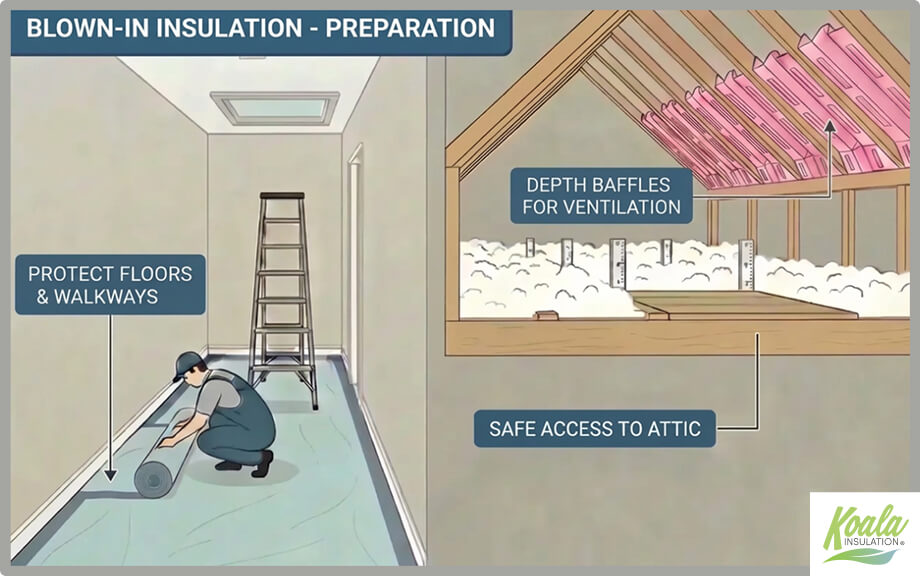
Koala Difference: Protecting your Hill Country home up front means better insulation performance later, and no post-project cleanup left on your plate.
- Seal Key Leaks & Set Up EquipmentThis is the step most installers skip: guided by thermography leak detection, we seal plumbing, wiring, and recessed-light penetrations plus the attic access in the Texas Hill Country, so the insulation above works with a tight ceiling below.
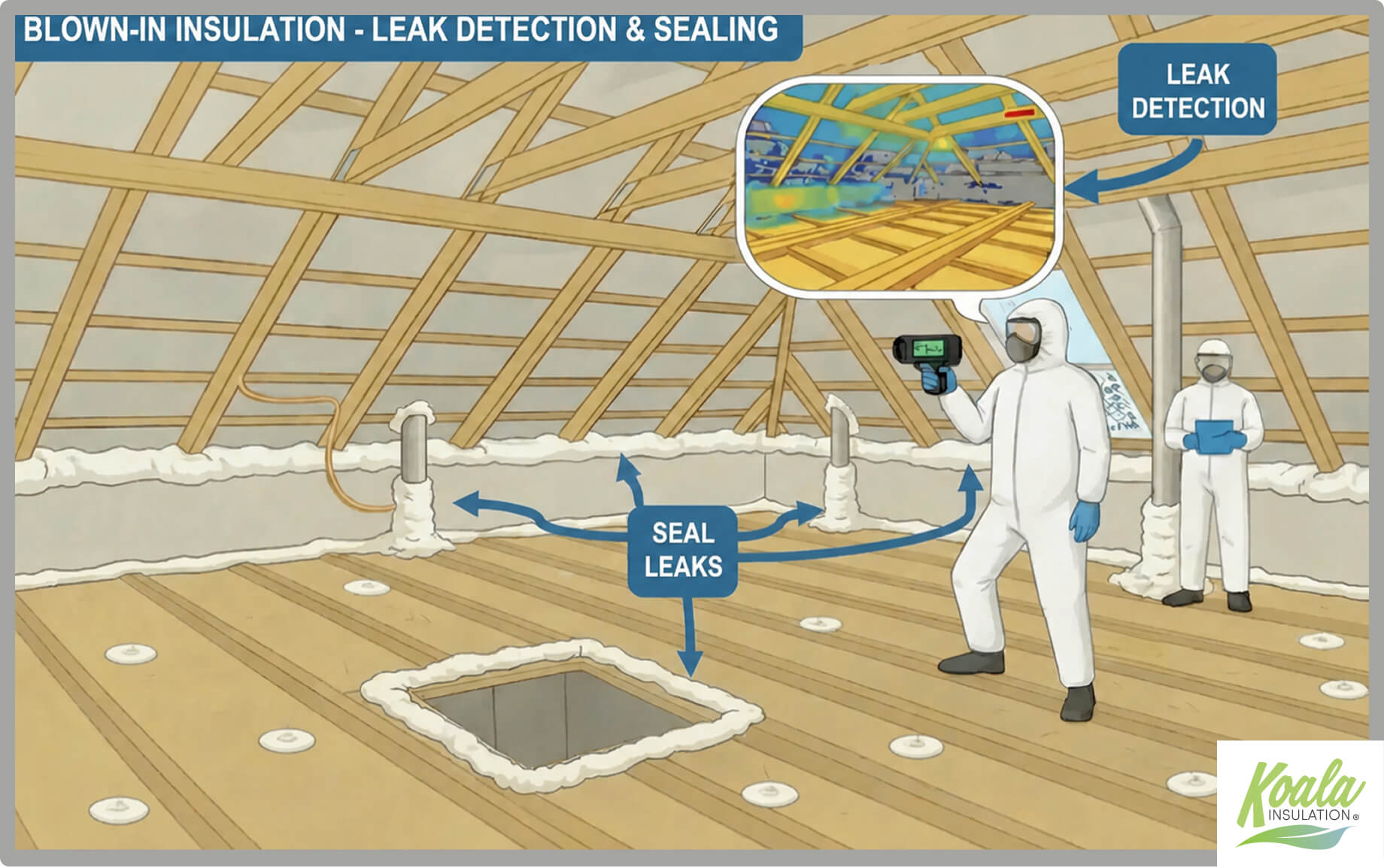
Koala Difference: The difference is durability: air sealing plus insulation delivers comfort in the Texas Hill Country that a fluff-only job simply cannot match.
- Blow In the InsulationNow the insulation goes in. Our installers work methodically across the attic, blowing material to the specified depth and R-value, feathering it into corners and tight spots, and checking depth markers until coverage is uniform across your Hill Country home.
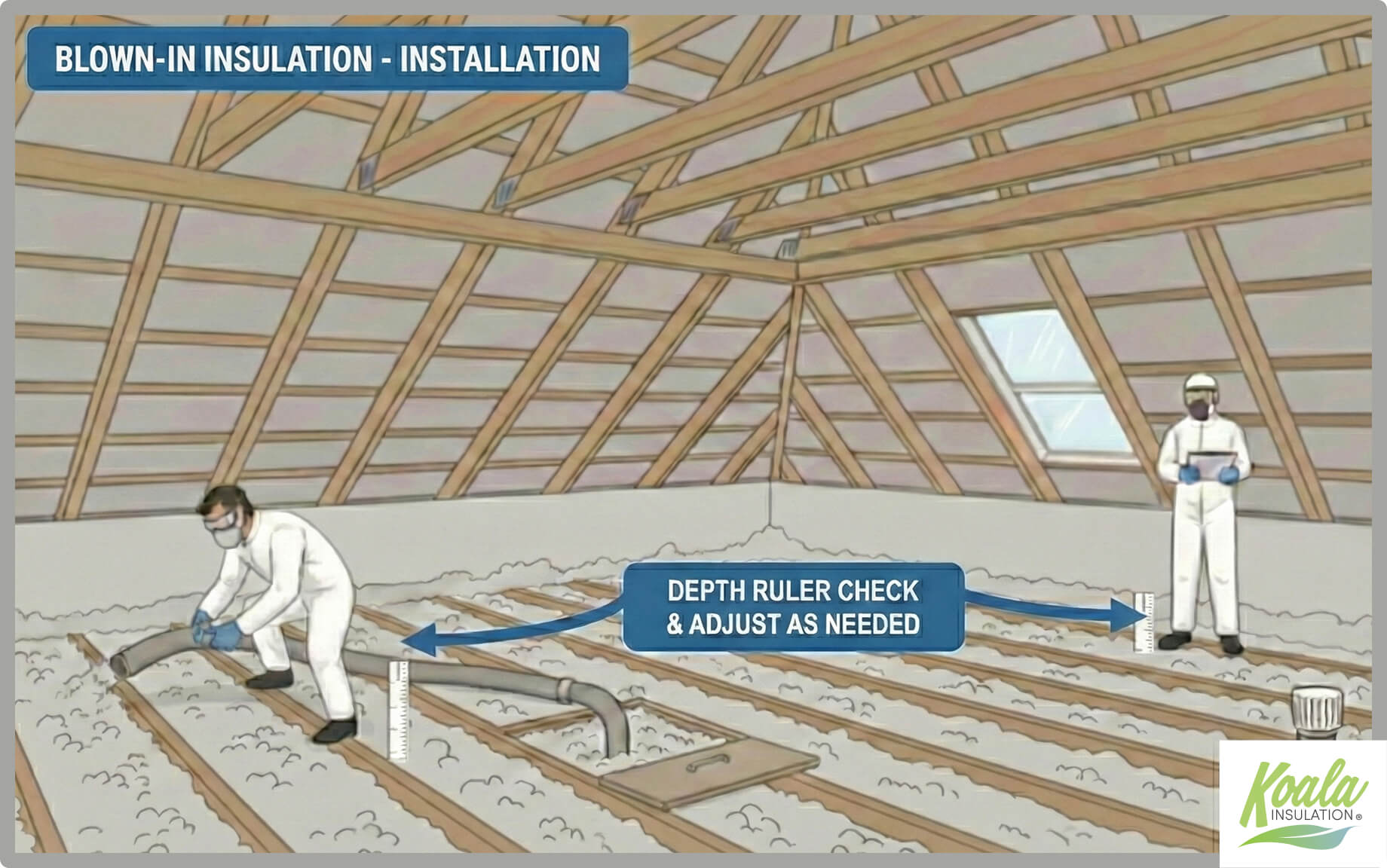
Koala Difference: We measure as we go because even small “thin spots” can undercut the comfort Hill Country homeowners are paying for.
- Clean the Site & Review
The last step is leaving your Hill Country home spotless: we vacuum, clear our equipment, and seal the attic access correctly. Before we go, we review everything completed, show before-and-after photos where available, and cover how to keep your insulation performing.
Koala Difference: The relationship outlasts the project. Koala Insulation of Texas Hill Country stays available for questions and can point you toward rebates or tax credits you may qualify for.
Get a Quote
Take the first step toward lower energy bills in the Texas Hill Country. Schedule a free quote with Koala Insulation of Texas Hill Country now!
What to Expect
In 5 Easy Steps
In 5 Easy Steps
What to Expect
In 5 Easy Steps

Schedule Your Free Evaluation
Contact your nearest Koala Insulation Location, recognized as the #1 trusted insulation expert nationwide. We will discuss your needs and schedule an appointment to provide a free evaluation.

Home Efficiency Assessment & Estimate
One of our friendly insulation experts will perform a thorough home efficiency assessment. Your insulation expert will then review the assessment findings, the science behind these findings, and why any changes are needed. Lastly, your insulation expert will provide the best option that fits your home efficiency needs and your budget.

Schedule Your Insulation Service
We will schedule your insulation service for the soonest availability that fits your schedule because we understand that your home insulation is a priority!

Installation
Our team of highly skilled insulation technicians will install your premium insulation solution in as little as two hours. We treat your home like our own and take time to leave it cleaner than it was before.
Post Installation Inspection
Contact your nearest Koala Insulation Location, recognized as the #1 trusted insulation expert nationwide. We will discuss your needs and schedule an appointment to provide a free evaluation.

Enjoy Your Comfortable & Efficient Home
Enjoy a more efficient home with lower energy bills and improved comfort year-round. Enjoy your improved home stress free knowing that Koala Insulation stands behind their work! Reach out to your Koala Insulation team anytime for support.

Benefits

Enhanced Comfort

Energy Savings

Quality Materials

Eco-Friendly Options
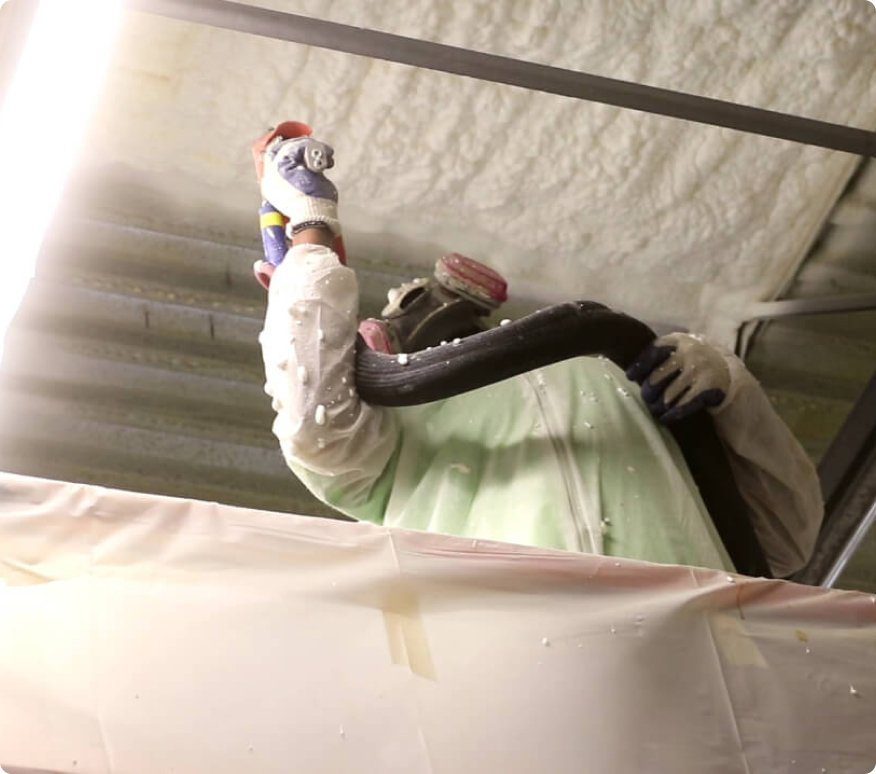
Enhanced Comfort
Stay cozy inside, no matter the weather outside.
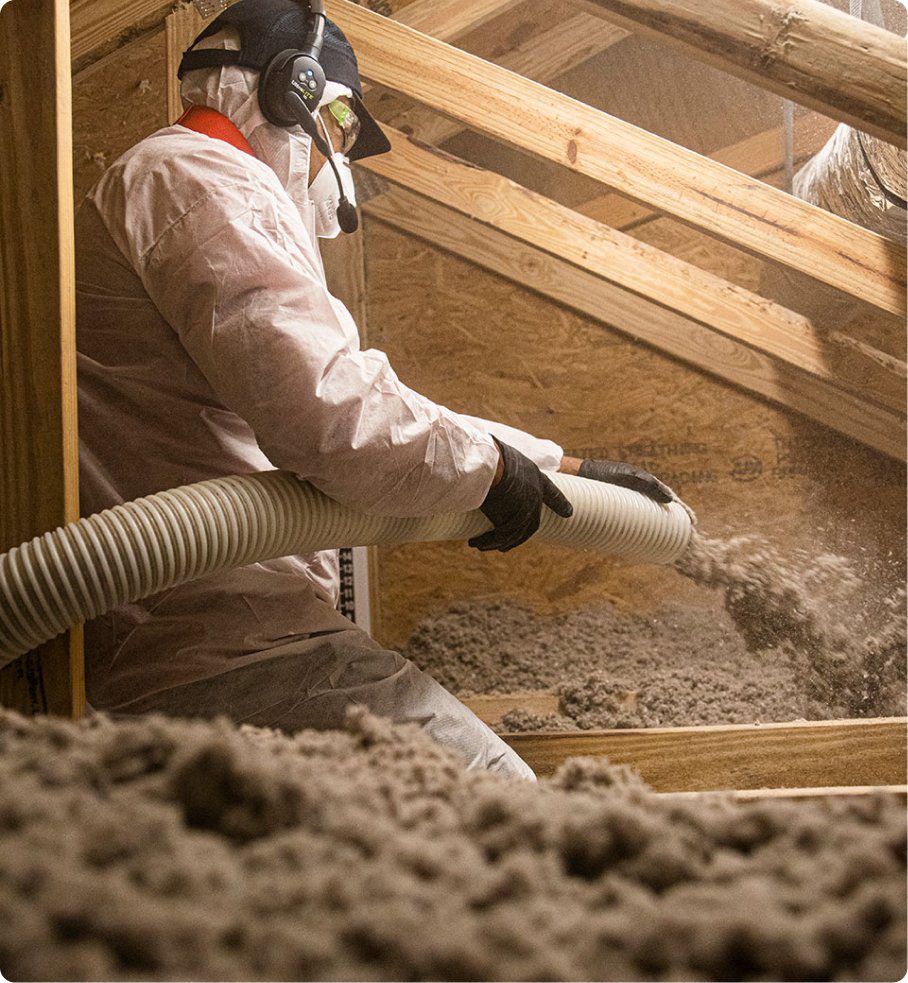
Energy Savings
Save on your energy bills while keeping your home comfy all year.
Reduced Noise
We use top-quality insulation to give you lasting results.
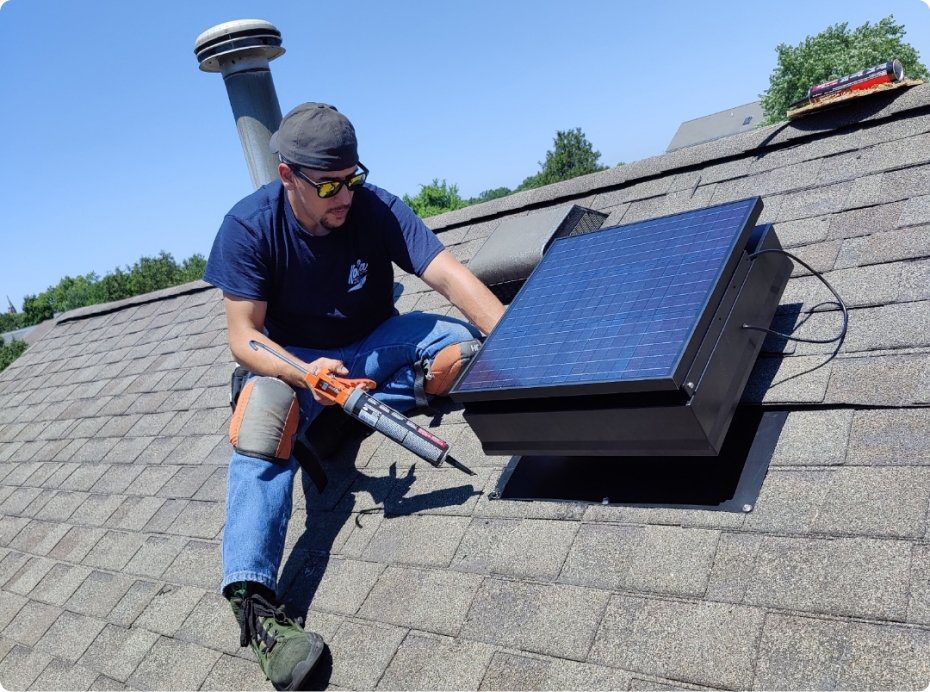
Eco Friendly
Choose insulation that’s better for your home and the planet, such as solar-powered attic fans.
Your Satisfaction is
Our Top Priority
But do not take it from us: hear what clients in the Texas Hill Country say about their experience with our insulation team.



besttec58
19:14 31 Aug 26
This company really knows what they’re doing! Very straightforward assessment and estimate given. The crew showed up on time and had to work done quickly. They also did a nice job cleaning up any of the installation that was on the ground. I would definitely recommend them if you need attic insulation.

Lauryn Garcia
18:55 15 Jul 26
We recently had our attic insulation replaced and couldn’t be happier with the results. The crew was accommodating, reliable, gave advanced notice before their arrival and arrived on time, walked us through the process before starting, and worked efficiently with minimal disruption to our day. Communications from different Koala representatives were excellent every step of the process from the initial evaluation to the day of service. Special thanks to Andrew, Anthony, Sergio and Arthur for your professionalism, expert knowledge, and hard work especially in this Texas heat. I highly recommend and trust this team to anyone seeking Koala services.

Bill Dillow
16:08 13 Jul 26
Only House meetings a lot of work and years and taken refuge in the attic and made a big mess. Koala was very thorough backing up in our replace it with blowing insulation as greatly increased of the house. Their work was exceptional, and I would highly recommend them.

Patrick Okruhlik
11:06 26 Jun 26
"Professionals," from start to finish. It was a matter of minutes after sitting down with Andrew that we knew that we would be doing work with his company. The labor was approachable, punctual, detailed, and thorough. There were no new price increases, or needed work after our first consultation. The quality of work was more than what we hoped for. I highly recommend this company.

Israel Velazquez
20:30 15 Jun 26
65 years old home with probably 65 years old blown insulation. Koala insulation was quick to respond and provide data and visual information that showed all the hot spots that were plaguing our house.
They were able to draw up a solution based upon the extreme temperatures and architecture of the house in order to substantially reduce the trapped heat before the Texas summer heat really kicks in.
Pricing was fair and we were not pushed or pressured to buy beyond our budget.
Excellent communications and superb client service to enhance their customer experience.
They were able to draw up a solution based upon the extreme temperatures and architecture of the house in order to substantially reduce the trapped heat before the Texas summer heat really kicks in.
Pricing was fair and we were not pushed or pressured to buy beyond our budget.
Excellent communications and superb client service to enhance their customer experience.

R Camp
15:48 18 May 26
Koala Insulation dba Java Corp did an excellent job bringing our attic insulation up to date.
They were on time, completed their work on time and left our home clean.
This contractor I would highly recommend!
Very thorough pre-inspection of our attic and what was needed to be taken care of. Then Andrew sat down with us and explain exactly what was needed and why, then followed up with a detailed written bid. We got three bids and they were right in the middle and very competitive. We are extremely happy with the work that they did and we are glad that we chose them.
They were on time, completed their work on time and left our home clean.
This contractor I would highly recommend!
Very thorough pre-inspection of our attic and what was needed to be taken care of. Then Andrew sat down with us and explain exactly what was needed and why, then followed up with a detailed written bid. We got three bids and they were right in the middle and very competitive. We are extremely happy with the work that they did and we are glad that we chose them.

carolina rodriguez
17:09 23 Mar 26
They do not hunt you down to be able to sell… Had a really good experience with Koala Insulation. Andrew was honest and didn’t try to upsell me at all. He explained exactly what insulation I have, the levels, and where I stand, I felt supported and comfortable to trust his expertise.
I’m on the lower side, but he was very clear it’s not urgent and I don’t have to do anything right now. Even told me I could wait until June/July and see how the heat feels, then decide.
Gave me options, pricing was fair, and overall just very helpful and professional. If I end up needing it later, I’ll definitely go with them, no doubt.
I’m on the lower side, but he was very clear it’s not urgent and I don’t have to do anything right now. Even told me I could wait until June/July and see how the heat feels, then decide.
Gave me options, pricing was fair, and overall just very helpful and professional. If I end up needing it later, I’ll definitely go with them, no doubt.

Phil Yantis
22:57 20 Mar 26
Koala did a fantastic job on our Attic Insulation upgrade. From the prompt, detailed inspection, through the recommendations, estimate, and agreement, Andrew was extremely professional and detail oriented.
Frank and Sergio showed up on the agreed date and time, and got to work. We hardly noticed they were here, but they were hard at work, and completed our job by lunchtime. Professional, pleasant, and patient, they answered a few questions, which confirmed that they were well informed of the specifics of our job.
Job completed, our paperwork was promptly sent, and included all the details needed for a Rebate from our energy provider, CPS Energy in San Antonio. The Rebate was approved in less than 24 hours, and I am looking froward to smaller eneergy bills, and Rebate money to help pay for our bills.
And possibly a tax break from the IRS on our 2026 taxes. We will confirm that with our tax preparer next year. Koala also provides all this info on their web site. It really helps reduce the direct cost for the insulation upgrade.
Thank You, Koala - I wish all companies were this easy to deal with.
Frank and Sergio showed up on the agreed date and time, and got to work. We hardly noticed they were here, but they were hard at work, and completed our job by lunchtime. Professional, pleasant, and patient, they answered a few questions, which confirmed that they were well informed of the specifics of our job.
Job completed, our paperwork was promptly sent, and included all the details needed for a Rebate from our energy provider, CPS Energy in San Antonio. The Rebate was approved in less than 24 hours, and I am looking froward to smaller eneergy bills, and Rebate money to help pay for our bills.
And possibly a tax break from the IRS on our 2026 taxes. We will confirm that with our tax preparer next year. Koala also provides all this info on their web site. It really helps reduce the direct cost for the insulation upgrade.
Thank You, Koala - I wish all companies were this easy to deal with.

Mac ENNIS
00:22 20 Mar 26
I haven't had a need for Koala's services in the past, but on one Real Estate transaction, it was absolutely imperative to have Koala on the job! They were quick, responsive, and accommodating to the needs of the job in front of me. Great work, great communication, and great outcome. Thanks Andrew.

shaun neibrandt
21:27 11 Mar 26
Nice crew very polite and did good work without issues!

Brady Little
19:12 10 Mar 26
Koala is the best and most honest attic insulation service in San Antonio. Andrew was knowledgeable, and advised us in what insulation we needed.
In our home, we essentially had no insulation. We had some old cellulose from the 80’s that had degraded down to less than 2 inches in depth. Let me tell you, when it was hot, our house was hot, when it was cold our house was cold.
Initially we were thinking about getting spray foam insulation, (which other companies had recommended for us to do AND QUOTED US FOR IT), but Andrew explained that spray foam wouldn’t work in our house since our attic has a gas furnace and gas water heater, so they would be starved for air, and it would ruin essentially thousands of dollars in equipment. He recommended that we use blown-in insulation because that’s what the house was designed for. So we went for it.
Frank and Antonio arrived on time and were very professional. They were thorough in making sure that the attic was cleaned before they started working. They then added tubing to the bathroom exhaust fans so that they went above the insulation (they were buried before they came). After blowing the insulation they vacuumed the carpet from where they entered the attic, and made it look like they were never there.
Let me tell you, I’ve been sleeping better because our house isn’t having these huge temp swings that used to strain our ac unit. I would recommend Andrew and his team again and again for insulation services here in San Antonio.
In our home, we essentially had no insulation. We had some old cellulose from the 80’s that had degraded down to less than 2 inches in depth. Let me tell you, when it was hot, our house was hot, when it was cold our house was cold.
Initially we were thinking about getting spray foam insulation, (which other companies had recommended for us to do AND QUOTED US FOR IT), but Andrew explained that spray foam wouldn’t work in our house since our attic has a gas furnace and gas water heater, so they would be starved for air, and it would ruin essentially thousands of dollars in equipment. He recommended that we use blown-in insulation because that’s what the house was designed for. So we went for it.
Frank and Antonio arrived on time and were very professional. They were thorough in making sure that the attic was cleaned before they started working. They then added tubing to the bathroom exhaust fans so that they went above the insulation (they were buried before they came). After blowing the insulation they vacuumed the carpet from where they entered the attic, and made it look like they were never there.
Let me tell you, I’ve been sleeping better because our house isn’t having these huge temp swings that used to strain our ac unit. I would recommend Andrew and his team again and again for insulation services here in San Antonio.

Diane
15:17 12 Feb 26
Wonderful working with this company. Andrew gave a thoughtful, clear understanding of our roofs insulation needs. Arthur and Antonio were a prompt, detailed, polite and neat install team. That neatness was so welcomed! Not one speck of stray insulation. Don't hesitate to use this company, great work!

Don Hawkins
17:20 25 Jan 26
We called Koala for insulation work but had a special request. We asked for all the old insulation to be removed on one day while we had a/c work completed and then asked them to return after that work was completed to install new insulation. Without an issue Koala competed the 2 jobs without a problem. They accommodated us on dates/times and the did a fantastic job. Seriously one of the best vendors we've used in a long time. I highly recommend them and will use them for any insulation needs I have moving forward.

Adrian Rodriguez
21:25 12 Dec 25
Inquired on several contractors for attic blown-in insulation estimates. Ended up choosing Koala Insulation through Lowes projects. Did find price estimate to be very reasonable plus loved how they used Johns Mansfield product. As courtesy, the team re-taked some radiant barrier that was loose, bravo. Entire project took about 2 hours to complete. Existing R-Value of insulation before project was R12 at 0-6" attic coverage. Goal was to get at least to R-38. Attic coverage after project done is significantly improved. Would definitely suggest Koala for any residential or commercial insulation needs for service.

Shane Sareli
23:09 27 Nov 25
Koala did a really top notch job cleaning and improving the attic insulation in my home. They were very thoughtful and supportive in achieving my unique goals and needs, delivering a price conscious solution that same week. The final results were great!

Manzy Lowry
19:51 22 Oct 25
Your employees were great, professional, honest, quick, and friendly. 5 star service fit for a king or queen... highly recommend for all your insulation work!

Elisabeth Wright
22:16 17 Jul 25
Andrew and his crew were friendly, prompt, competitively priced, and extraordinarily accommodating. They cleaned out the old, sealed the space and blew in new insulation on the same day for exactly what the estimate said. They later returned after some trades had compacted the freshly blown insulation and did the repair installation for cost, ensuring we’d be ready for city inspections. We really appreciate the work they did for us.

Heather Sammis
16:27 12 May 25
We had an incredible experience working with Koala Insulation. Andrew and his crew were excellent; they exceeded our expectations. He was kind, professional, and took the time to explain everything clearly and gently. In today's world, it's rare to find a company that treats everyone with respect regardless of gender, and I truly appreciated how he communicated with us without any assumptions. I highly recommend Koala Insulation for their exceptional service and honest, respectful approach.

Jose
01:45 10 May 25
Koala Insulation exceeded expectation! It feels cool even with the a/c off. Punctual and kept contact at every point. Our inspector and sales rep, Austin was very professional and got us set up very quickly. Sergio and Antonio did our removal. Ezra and Anthony handled our reinsulation. They all were punctual, efficient, professional and very pleasant despite our super tiny and nasty attic! Would recommend!

Jose Moya
01:45 10 May 25
Koala Insulation exceeded expectation! It feels cool even with the a/c off. Punctual and kept contact at every point. Our inspector and sales rep, Austin was very professional and got us set up very quickly. Sergio and Antonio did our removal. Ezra and Anthony handled our reinsulation. They all were punctual, efficient, professional and very pleasant despite our super tiny and nasty attic! Would recommend!

Tom Boone
12:42 04 Feb 25
Very happy with the entire process.
I contacted Lowe's who recommended Koala and was contacted quickly by Andrew to set up a time for project review.
Quotes were provided for several options. Once I made a decision and accepted the proposal the job was scheduled quickly.
The installers, Ezra and Anthony arrived on time and immediately went to work and didn't stop until project completion and clean up.
Everyone I worked with From Andrew the owner, Gary the GM and the installers were professional and great to work with.
Definitely recommend these folks.
I contacted Lowe's who recommended Koala and was contacted quickly by Andrew to set up a time for project review.
Quotes were provided for several options. Once I made a decision and accepted the proposal the job was scheduled quickly.
The installers, Ezra and Anthony arrived on time and immediately went to work and didn't stop until project completion and clean up.
Everyone I worked with From Andrew the owner, Gary the GM and the installers were professional and great to work with.
Definitely recommend these folks.

Derek Hintze
17:59 18 Nov 24
These guys are fast, professional and very well priced. I highly recommend them for any insulation projects that you have and will definitely be using them again.

Trent Carmichael
19:04 12 Nov 24
From the time I spoke to the owner to get a quote it was 1 week and work was complete. The installers of the spray foam were very polite and did a top notch good. I did no clean up after they did everything. Highly recommend. They even went over what I should and should not do. 5 stars

Eddie T
14:18 07 Nov 24
I saw them at the San Atonio Home and Graden show and wanted an estimate for spray foam insulation. They no-showed two straight appointments for providing an estimate to insulate my crawlspace. VERY disappointed.

Jackie Heinrich
16:59 06 Nov 24
On Time, Very professional people. Focused on doing the right thing. Went OVER and ABOVE the necessary.
Great Company. VERY HAPPY
Great Company. VERY HAPPY

Teresa Arnao Dietz
15:43 30 Oct 24
From the very start, we experienced outstanding customer service and unwavering professionalism. The journey began with a detailed estimate for our insulation, and the exceptional care continued right through the installation process.

Kathy D
18:09 01 Oct 24
I had a recommendation to use Koala Insulation from a family member who had used Koala's services. I was able to get a quick appointment for an estimate, done by Austin. I was pleased to receive texts from the company, keeping me informed of who to expect and what time. The quote was reasonable and work was done the next day. The entire process has been well handled by a professional staff, Austin, Arthur and Sergio, who installed the insulation and solar roof fan. They all were helpful in explaining the different insulation options and answering questions. The company owner, Andrew, was very helpful in providing all the necessary paperwork needed for me to apply for a CPS rebate. They provided a pleasant home improvement experience, well done!

Matt Carr
15:53 16 Jul 24
Not the cheapest home upgrade but well worth it. We had Koala come out this past March to top off our attic off with blown in fiberglass. They did a great job. Very professional and left our home clean. They also added a solar fan to help pull the heat out. Now that we have had some heat, I can say it has made a huge difference. Our AC's are not working near as hard and our home is overall very comfortable. Last summer we could not get below 80 degrees until late evening.

Eugene Smith
19:22 28 Jun 24
Koala Insulation was the #1 choice out of five companies I researched. The owner (Andrew) was professional, fair and reasonable pricing and supports military with a discount. He was awesome, friendly and explained everything in detail. The three man team came out the next day after I confirmed the work. The team was professional, friendly, answered all my questions and cleaned up after they finished insulating two walls.
I recommend this company they are a 5 out of 5!!
I am going to use Koala Insulation again for my future projects.
I recommend this company they are a 5 out of 5!!
I am going to use Koala Insulation again for my future projects.

Sherry LH
18:51 14 Jun 24
Very impressed with this company! Responded quickly to my request for a quote on attic insulation. We’re able to schedule us within a week. Arrived on time and completed the work in a timely matter and cleaned up the area. We can already tell a difference in our garage temperature! Highly recommend this firm!
Why Homeowners
Choose Koala
Neighbors, not a call center: Koala Insulation of Texas Hill Country is locally owned and operated, backed by a network across the U.S. & Canada.
Certified quality practices: Trained installers, professional equipment, and depth-marker verification so coverage is real, not estimated.
Safety-first installs: Code-required clearances at recessed lights, chimneys, and flues, maintained on every project in the Texas Hill Country.
Incentive know-how: We flag the rebates and tax credits that can shrink your out-of-pocket cost.

Get a Quote
Take the first step toward lower energy bills in the Texas Hill Country. Schedule a free quote with Koala Insulation of Texas Hill Country now!
Frequently Asked Questions
Blown-In Insulation FAQs
Get all your questions answered by our local experts. If we didn’t address your question here, give us a call at (830) 212-4050 or schedule a free quote today!
What Does Blown-In Insulation Cost in the Texas Hill Country?
Rather than quote a flat rate, we price every blown-in insulation project around a few specifics.
The size of the home matters most, since a larger attic takes more material and time. The type of insulation used plays a role as well, and so does the level of effort the installation requires, from attic access and prep to air sealing and any removal of old insulation.
The good news is that the investment pays you back through steadier comfort and lower heating and cooling costs season after season.
Many state and local governments and local utilities also offer rebates or incentives that can offset a portion of the project. The only precise number is one measured on site. Schedule a free assessment and we will price your exact attic in the Texas Hill Country, not an average.
Is Blown-In Insulation Better Than Rolls (Batts)?
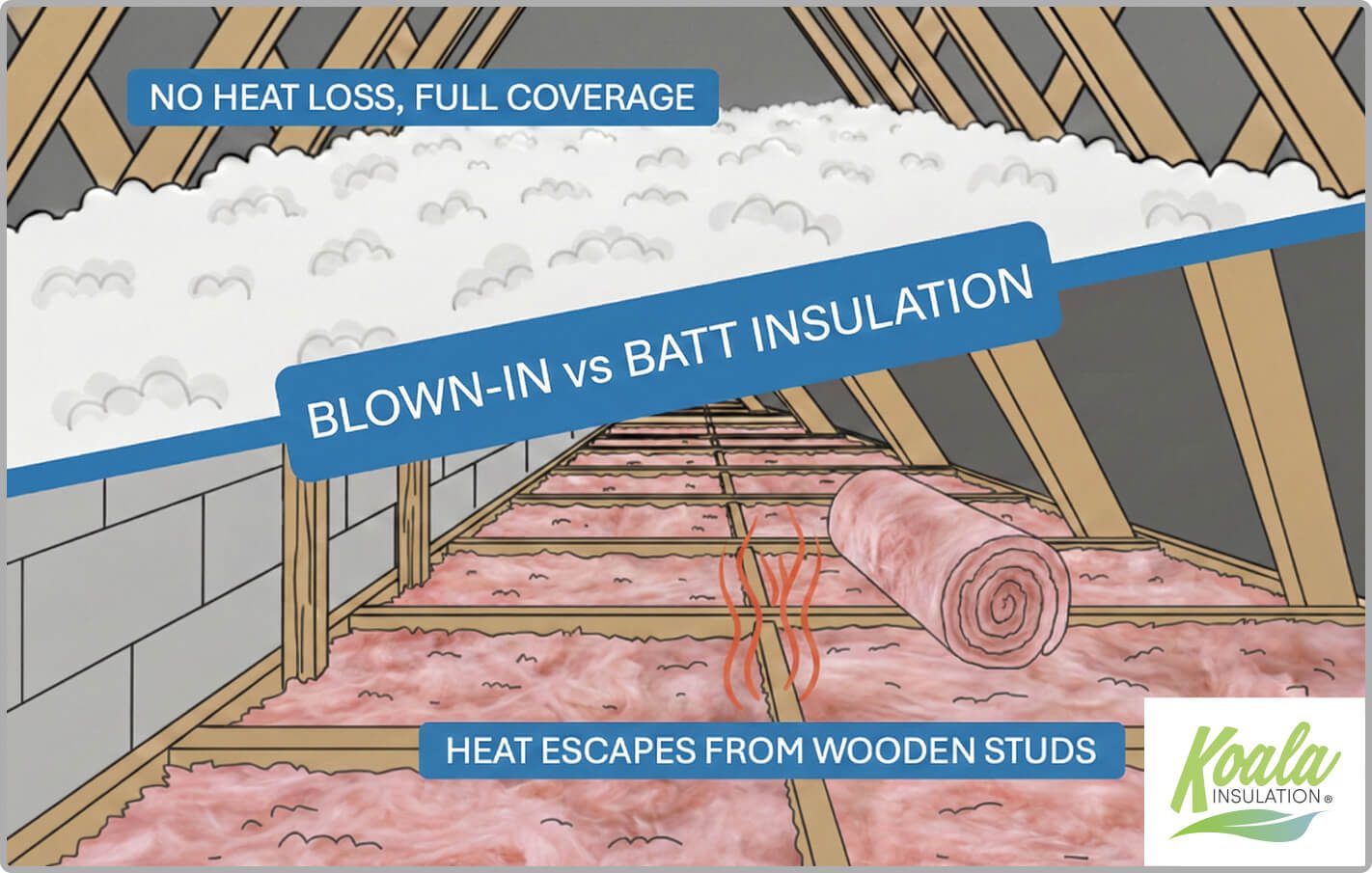
Blown-in insulation is usually a better attic solution than rolls (batts) because it creates a more consistent, continuous layer across the attic floor. It fills around joists, wiring, pipes, and odd corners where rolls often leave small gaps. Those gaps may not look like much, but they add up to drafts, uneven temperatures, and lower real-world performance in homes in the Texas Hill Country.
How Much Blown-In Insulation Does My Attic Need?
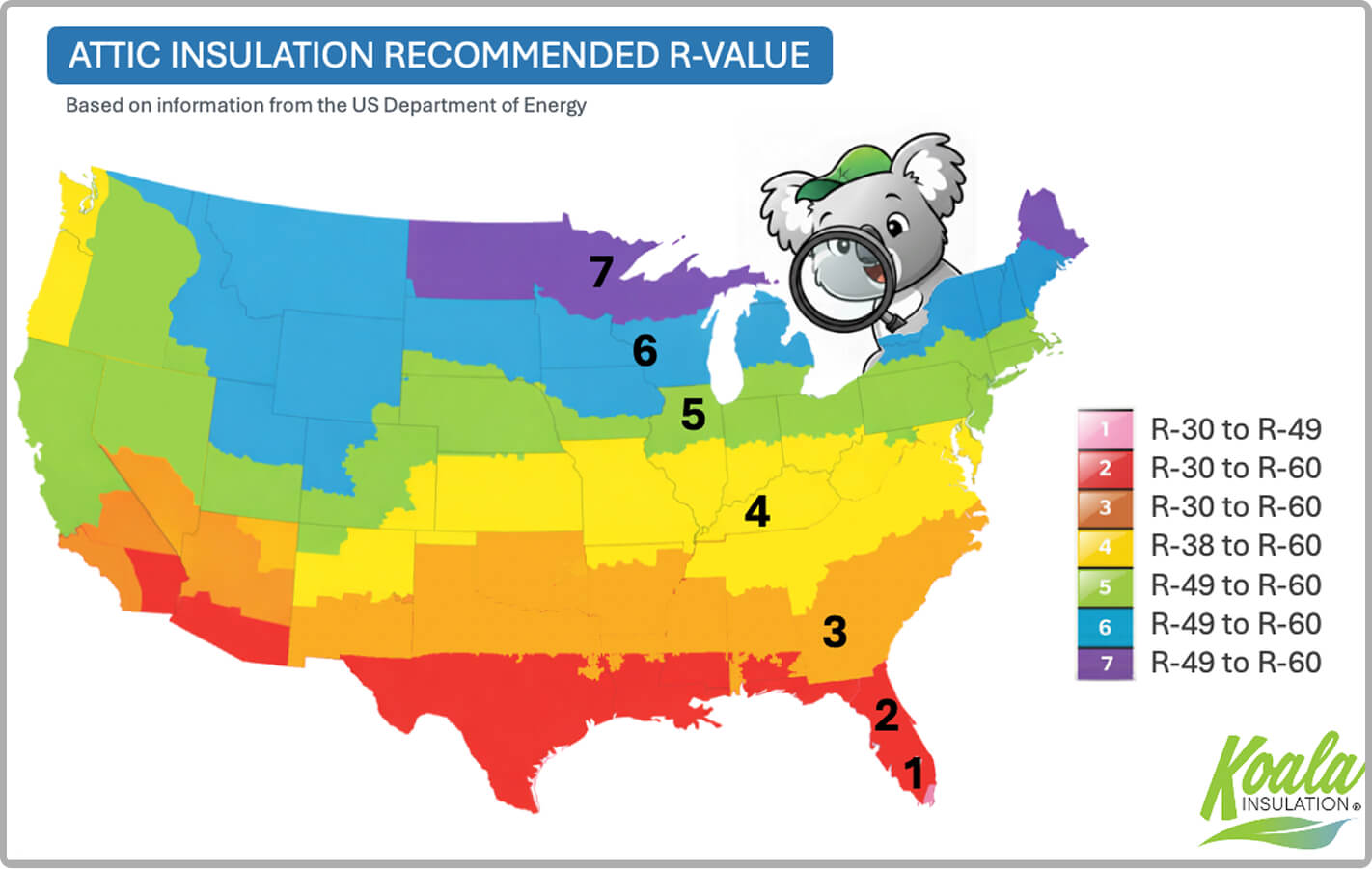
The right amount comes down to three inputs: the square footage of the space, the insulation depth required, and where you live (see the map below). Climate drives the recommended attic R-value, with colder regions needing thicker insulation to slow heat loss and warmer regions needing enough depth to block heat gain. Attic size and target R-value together set how much material consistent coverage requires. The Texas Hill Country falls in IECC Climate Zone 2A (hot-humid), where DOE and ENERGY STAR guidance calls for attic insulation of roughly R-30 to R-60.
That is why professional installers do not eyeball it: material calculations follow climate-zone guidelines, current insulation levels, and manufacturer coverage charts. Done right, the depth matches the recommended R-value for your area, allows for natural settling, and leaves no thin spots to drag down performance. The diagram below illustrates how recommended attic insulation levels shift by region, a quick way to see why needs differ from one location to the next.
Insulation Education
Learn why insulation is critical to your home’s energy efficiency and your family’s comfort.
Learn More
Get a quote
Ready to start your insulation project? Get a free quote from your local Koala Insulation team today.