
Is Your Upstairs Too Hot? You May Need More Insulation
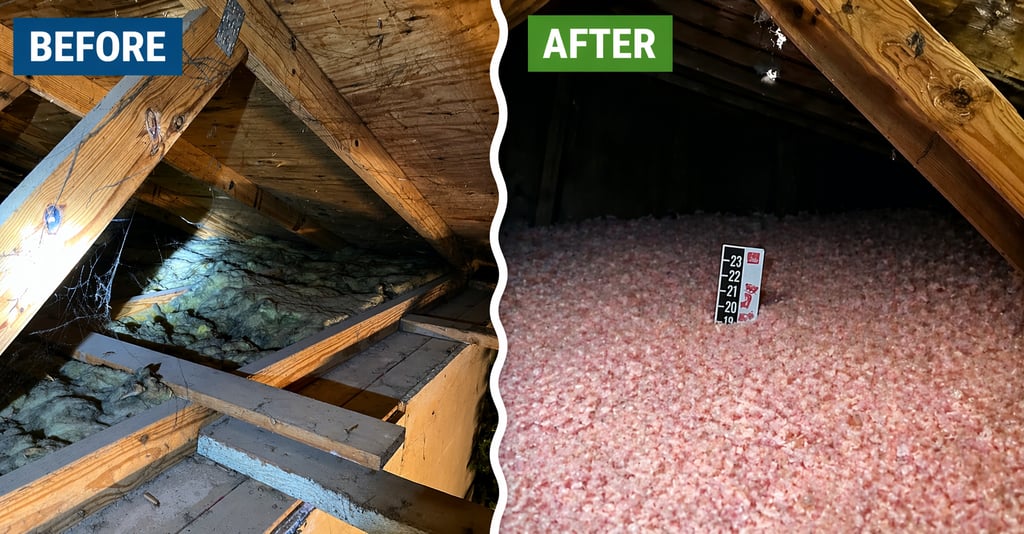
If your upstairs is too hot while the main floor feels comfortable, the problem is often not your air conditioner alone. In many Southeast Denver homes, an overheated second floor is caused by heat entering through the attic, air leaks between living space and the roofline, under-insulated attic floors, leaky ductwork, or a combination of these issues.
The practical fix is usually to improve the building envelope: add the right amount of attic insulation, seal air leaks, inspect duct runs, and make sure attic ventilation is working as intended. This helps slow heat transfer in summer and heat loss in winter, making rooms in Englewood, Highlands Ranch, Parker, Castle Rock, Lone Tree, Centennial, Greenwood Village, Cherry Hills Village, Castle Pines, Larkspur, Elizabeth, Franktown, Sedalia, Monument, and North Colorado Springs more consistent and comfortable.
Koala Insulation of Southeast Denver helps homeowners identify where comfort problems are coming from and which insulation upgrades are likely to make the biggest difference. This guide explains why upstairs rooms get hot, how insulation solves the root cause, and what to check before investing in a bigger HVAC system.
Ready to start your insulation project?
Why Is My Upstairs Too Hot?
A hot upstairs is usually the result of heat moving into the home faster than your cooling system can remove it. Because heat naturally rises and the second floor sits closer to the attic and roof, upstairs rooms are more exposed to solar heat gain, trapped attic heat, and pressure imbalances inside the house.
In Colorado Front Range communities, this can feel especially noticeable. Sunny days, high elevation, dry air, strong temperature swings, and large roof surfaces can all add stress to the top floor. A home in Castle Rock or Parker may feel cool in the morning, then become uncomfortable upstairs by late afternoon after the roof has absorbed hours of sun.
The important point is that temperature imbalance is a symptom. Turning the thermostat down may provide temporary relief, but it can also overcool the main floor and increase energy use. A better approach is to find out why the upstairs is gaining so much heat in the first place.
The attic is often the main heat source
During summer, your roof can heat the attic to temperatures far above the living space. If the attic floor is under-insulated, compressed, uneven, or disturbed, that heat radiates and conducts down into upstairs ceilings. Bedrooms, bonus rooms, and hallways directly below the attic feel the impact first.
This is why many homeowners say the upstairs is tolerable in the morning but uncomfortable by dinner time. The attic has been storing heat all day, and the insulation layer is not slowing that heat transfer enough.
Stack effect pulls conditioned air where you do not want it
Stack effect is the natural movement of air through a home caused by temperature and pressure differences. In summer, hot attic air and upper-level air leaks can disrupt cooling. In winter, warm indoor air escapes upward through ceiling penetrations, drawing colder air in from lower areas.
Common leakage points include recessed lights, attic hatches, plumbing chases, electrical penetrations, bathroom fans, duct boots, and gaps around top plates. Insulation helps, but insulation alone does not stop air movement. That is why air sealing is a key part of a lasting comfort solution.
How More Insulation Helps Cool a Hot Second Floor
Insulation works by slowing heat transfer. In summer, it helps keep attic heat out of upstairs living spaces. In winter, it helps keep heated indoor air from escaping into the attic. When the attic floor has adequate, continuous insulation, upstairs rooms are less affected by outdoor temperature swings and roof heat.
For homeowners asking whether more insulation can make the upstairs cooler, the direct answer is yes, when the attic is under-insulated or poorly air sealed. Adding insulation is not a magic fix for every HVAC issue, but it is one of the most common and cost-effective improvements when the second floor is hot and the attic insulation is thin, uneven, or missing in spots.
Official energy-efficiency guidance, local building codes, and insulation manufacturer specifications often recommend higher attic insulation levels for cold and mixed climates like the Denver metro and Palmer Divide areas. The right target depends on your home, existing insulation, roof assembly, and local requirements, so it is best to verify recommendations during a professional assessment.
Insulation reduces ceiling heat gain
When attic insulation is too shallow, heat moves through the ceiling drywall and into the rooms below. You may notice warm ceiling surfaces, upstairs bedrooms that never catch up, or an air conditioner that runs for long cycles without fully solving the problem.
A deeper, properly installed insulation layer creates thermal resistance across the attic floor. This does not make the attic cool, but it helps keep attic heat separated from the conditioned rooms below.
A consistent insulation blanket matters
Insulation performance depends on continuity. Gaps, low spots, wind-washed areas near eaves, crushed batts, uncovered attic hatches, and insulation moved aside by past wiring or storage projects can create weak points. Heat finds those weak points easily.
A quality insulation upgrade should even out coverage, protect soffit airflow with baffles when needed, and address small areas that are often overlooked. A few thin sections above a bedroom can be enough to make that room feel noticeably hotter than the rest of the house.
The importance of ventilation
While insulation and air sealing are essential for keeping conditioned air inside your living spaces, a truly efficient and healthy home requires proper ventilation to work hand in hand with those systems. Without adequate airflow, tightly sealed homes can trap extreme heat and destructive moisture in the attic, which quickly degrades insulation, promotes mold growth, and leads to wood rot. Active ventilation solutions, such as high-efficiency solar attic fans ranging from 25W to 70W, complete your home’s thermal boundary by increasing hourly air exchanges and actively regulating the environment.
Equipped with smart technology that automatically activates based on precise temperature and humidity thresholds (like turning on at 85° or 75% humidity), these durable fans continuously flush out stagnant air. This vital airflow prevents winter condensation from destroying your insulation and drastically lowers summer attic temperatures, ultimately easing the thermal stress on your AC system, protecting your roof’s integrity, and ensuring your insulation and air sealing can perform at their absolute best year-round.
Signs Your Home Needs More Attic Insulation
You do not need to be an insulation expert to spot warning signs. If the upstairs is consistently uncomfortable, your home may be telling you that the attic and air barrier need attention. These signs are common in older homes, remodeled homes, and even newer homes where insulation was installed minimally or disturbed after construction.
Look at comfort patterns, not just thermostat readings. A single hot room may point to duct or window issues, while an entire second floor that overheats often suggests an attic-level problem.
Common comfort symptoms
Your home may need more attic insulation if the upstairs is much warmer than the main level, the air conditioner runs constantly on sunny afternoons, bedrooms above the garage are difficult to cool, or the temperature changes quickly when the sun hits the roof.
Other clues include hot ceilings, high summer utility bills compared with similar homes, ice dam concerns in winter, drafty upper-level rooms, or insulation that looks patchy when viewed from the attic access. These symptoms can overlap with HVAC problems, so a thorough inspection is important.
What to look for in the attic
If it is safe to view your attic from the access point, look for insulation that sits below the tops of the ceiling joists, areas with visible drywall, dark streaks that may indicate air movement, or places where insulation has been pushed aside. Do not step into the attic unless you know where it is safe to walk; ceiling drywall will not support body weight.
Also check whether the attic hatch or pull-down stairs are insulated and weatherstripped. An unsealed attic access can act like a large hole in the ceiling, allowing heat and air movement exactly where you do not want it.
One solution that Koala Insulation offers is a Hatch Master that offers a lot of benefits to keeping a completely sealed attach hatch.
Insulation Alone Is Not Always Enough: Air Sealing, Ducts, and Ventilation
A lasting solution for a hot upstairs usually includes more than simply adding material. The best results come from treating the attic as a system. Insulation, air sealing, duct performance, ventilation, and HVAC balance all affect comfort.
This is where a professional inspection is valuable. A trained insulation contractor can identify whether the main problem is low insulation depth, air leakage, duct leakage, poor return airflow, inadequate attic ventilation, or a combination of issues.
Air sealing should happen before adding insulation
Air sealing closes gaps between conditioned space and the attic. This includes sealing around penetrations, chases, attic access points, bath fan openings, wiring holes, and other bypasses. If these leaks are buried under new insulation without being sealed, air can still move through them.
Think of insulation as a sweater and air sealing as a windbreaker. A sweater helps, but it performs much better when air is not blowing through it. In homes from Centennial to Monument, where wind and temperature swings can be significant, this combination can make a noticeable difference.
Attic ventilation must be balanced
Attic ventilation helps remove heat and moisture from the attic, but it does not replace insulation. Intake vents at soffits and exhaust vents near the ridge or roofline need to work together. Blocked soffits, missing baffles, or unbalanced ventilation can reduce performance.
The goal is not to force outdoor air into the living space. The goal is to keep the attic assembly functioning correctly while the insulation and air sealing separate the attic from the conditioned rooms below. Local code guidance, roofing manufacturer instructions, and building science best practices should all be considered.
Best Insulation Options for a Hot Upstairs
The right insulation type depends on your attic layout, existing materials, budget, access, and comfort goals. For most vented attics, blown-in insulation is a common choice because it fills irregular spaces and creates a continuous blanket over the attic floor. In some situations, spray foam or targeted batt insulation may also be appropriate.
A good recommendation should be based on inspection findings, not a one-size-fits-all sales pitch. Koala Insulation of Southeast Denver can evaluate the attic and explain options in plain language so homeowners understand what each product is meant to solve.
Blown-in fiberglass or cellulose
Blown-in fiberglass and cellulose are widely used for attic insulation upgrades. Blown-in products are useful for covering uneven areas, filling around framing, and improving overall R-value.
Cellulose and fiberglass have different characteristics related to density, air movement, moisture behavior, and installation technique. A qualified contractor can explain which option fits your attic conditions and local comfort goals.
Spray foam in specific applications
Spray foam may be used for air sealing or for certain roofline and enclosed-cavity applications. It can be effective when the project calls for both insulation and air control, but it must be designed and installed correctly. Ventilation strategy, ignition or thermal barrier requirements, moisture control, and local code considerations matter.
Spray foam is not automatically the best answer for every hot upstairs. In many vented attics, air sealing plus blown-in attic insulation is the more straightforward approach. The correct solution depends on the home.
Garage ceilings and bonus rooms
Rooms over garages are often uncomfortable because they are exposed to unconditioned space below and attic heat above. If your hottest room is above the garage in Highlands Ranch, Parker, Castle Pines, or Castle Rock, the solution may involve attic insulation, garage ceiling insulation, air sealing at floor cavities, and duct evaluation.
These areas can be tricky because heat moves from multiple directions. A room-by-room comfort assessment helps identify the true weak points instead of adding insulation where it will have limited impact.
What to Expect From a Professional Insulation Assessment
A professional insulation assessment should connect your comfort complaint to building conditions. The contractor should ask when the upstairs gets hot, which rooms are affected, whether doors are usually open or closed, how the HVAC system performs, and what insulation is currently in the attic.
The inspection may include measuring insulation depth, checking coverage, looking for air leakage pathways, examining attic access, reviewing ventilation, and noting duct locations. Depending on the situation, a contractor may recommend further evaluation by an HVAC professional, roofer, electrician, or energy auditor.
Questions homeowners should ask
Ask what problem the proposed work is intended to solve. Is the recommendation focused on R-value, air sealing, duct leakage, ventilation, or all of the above? Ask whether existing insulation can remain, whether attic baffles are needed, how the attic hatch will be treated, and what areas are excluded from the estimate.
It is also reasonable to ask how the work aligns with manufacturer instructions, local building requirements, and recognized energy-efficiency guidance. Clear answers are a sign of a contractor who understands building performance, not just product installation.
Why local experience matters
Homes in Southeast Denver and the surrounding foothill and Palmer Divide communities face specific comfort challenges. A house in Cherry Hills Village may have different attic access and roof geometry than a newer home in Castle Pines or a rural property near Elizabeth, Franktown, Sedalia, or Larkspur. Monument and North Colorado Springs homes may experience different wind exposure and winter conditions than neighborhoods closer to Englewood or Greenwood Village.
Local experience helps a contractor recognize common construction patterns, climate demands, and homeowner concerns in the area. That practical knowledge leads to better recommendations and fewer surprises during installation.
Key Takeaways
- If your upstairs is too hot, attic heat gain, low insulation, air leaks, and duct issues are common causes.
- Adding attic insulation can make a hot second floor more comfortable when the existing insulation is thin, uneven, or disturbed.
- Air sealing should usually be completed before new insulation is added, because insulation alone does not stop air movement.
- Ductwork, attic ventilation, garage ceilings, and attic hatches can all affect upstairs comfort.
- A professional assessment helps determine whether insulation, HVAC balancing, duct sealing, or another improvement should come first.
Frequently Asked Questions
Will adding insulation make my upstairs cooler?
Yes, adding insulation can help make your upstairs cooler if heat is entering through an under-insulated or poorly sealed attic. The best results usually come from combining attic insulation with air sealing and checking duct performance.
Why is my second floor hotter than my first floor?
The second floor is closer to the attic and roof, where solar heat builds up during the day. Heat rising through the home, attic air leaks, uneven duct airflow, and insufficient insulation can all make upstairs rooms hotter than the main level.
Should I replace my air conditioner if the upstairs is too hot?
Not necessarily. A larger air conditioner may not solve the problem if the upstairs is gaining too much heat through the attic or losing cooled air through leaky ducts. It is smart to inspect insulation, air sealing, ducts, and airflow before replacing equipment.
How do I know if my attic has enough insulation?
Signs of insufficient attic insulation include visible ceiling joists, uneven coverage, hot upstairs rooms, warm ceilings, and high energy use. A professional can measure insulation depth and compare it with current code and energy-efficiency guidance for your area.
Is blown-in insulation good for a hot upstairs?
Blown-in insulation is often a good option for vented attics because it covers irregular spaces and creates a more continuous thermal layer. It should be installed with proper air sealing, ventilation protection, and attention to attic access points.
Do homes in Southeast Denver need different insulation than other areas?
Homes in Englewood, Highlands Ranch, Parker, Castle Rock, Centennial, Monument, and nearby communities experience strong sun, seasonal temperature swings, and varied construction styles. The insulation approach should be based on local climate, home design, existing materials, and applicable building guidance.
Conclusion
A hot upstairs is frustrating, but it is also a useful clue. In many homes across Southeast Denver, the second floor overheats because the attic insulation is not doing enough to separate the living space from roof heat. Air leaks, duct problems, ventilation issues, and garage-adjacent rooms can make the problem worse.
Before you lower the thermostat again or assume your HVAC system is failing, start with the building envelope. Koala Insulation of Southeast Denver can inspect your attic, explain what is happening, and recommend practical insulation and air sealing improvements for a more comfortable home in summer and winter.
Find Your Location



Get a quote