
Open-Cell vs. Closed-Cell Spray Foam in New Mexico
What is Spray Foam Insulation?
Spray foam insulation is a mixture of chemicals that produce a strong insulator and air sealant. The chemicals are mixed on-site and sent through a hose into the stud cavity, where they react upon application and harden to create a long-term barrier. Insulation technicians need to be trained and certified in most states in order to ensure they’re able to properly handle the equipment and install the correct mixture. This is to ensure the chemicals are balanced and applied safely while also guaranteeing the expansion of the foam is set and dry before the household reenters.
| Feature | Closed-Cell Spray Foam | Open-Cell Spray Foam |
|---|---|---|
| R-Value | About R-6.5 per inch | About R-3.7 per inch |
| Density | Dense and rigid | Lightweight and flexible |
| Moisture Resistance | Higher | Lower |
| Air Sealing | Strong | Strong |
| Sound Control | Moderate | Stronger |
| Common Uses | Walls, roofs, floors, moisture-prone areas | Interior walls, ceilings, sound-control applications |
For many New Mexico applications, closed-cell spray foam can be beneficial where higher R-value, moisture resistance, and limited cavity space are priorities. Open-cell spray foam may be a better fit where sound control, flexibility, and filling larger cavities are more important. The right choice depends on the area being insulated and the building’s specific needs.
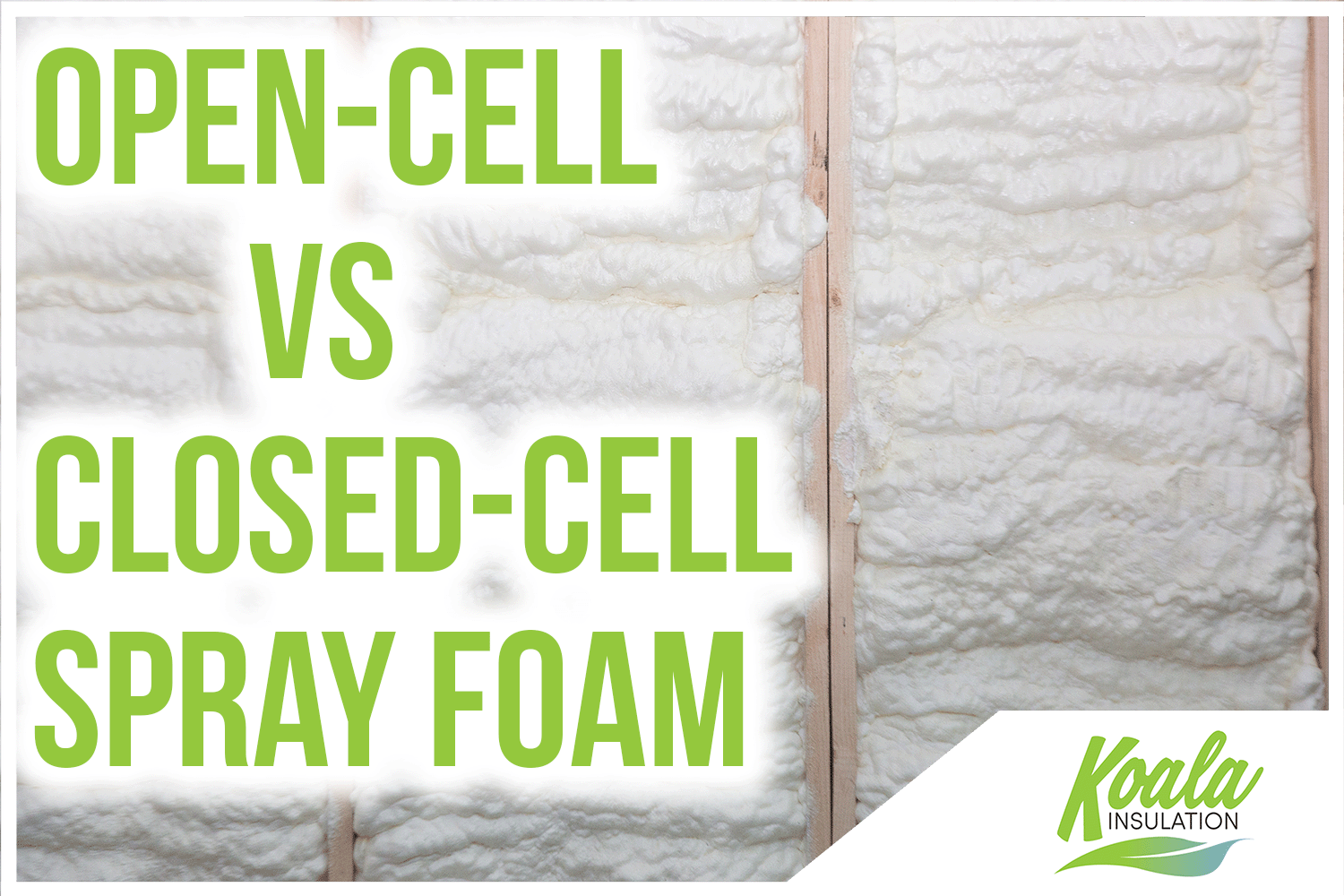
Spray foam is most often applied in walls, on ceilings, and under floors. Professional spray foam insulation is generally available in two main types: closed-cell and open-cell. Depending on the needs of your home, each has its own benefits in certain applications. Open-cell spray foam is most easily recognized by its bubbly, cloud-like appearance and is more often used in warmer climates. Closed-cell spray foam is more rigid and dense, providing more structural support and a common choice when looking for a quality vapor barrier. When it comes to choosing the right insulation to install throughout your building, it’s important to weigh the various strengths each material has to offer.
Ready to start your insulation project?
Closed-Cell Spray Foam
R-Value
R-value, which stands for resistance value, is the numerical measurement of a material’s ability to slow heat transfer. This is the rate at which heat moves through a structure. Closed-cell spray foam has one of the highest R-values for insulation with an average of R-6.5 per inch of depth. With a higher R-value, less material needs to be applied to effectively reduce unwanted heat in the summer and trap desired warmth during the winter. Spray foam is also a great sealant; when the material is applied, the foam expands to fill gaps, cracks, and holes in the structure to help reduce air leaks and the entrance of outdoor allergens and pollutants.
Moisture Barrier
While R-value can be a significant factor to consider when choosing insulation materials, each option has additional benefits to review before making a decision. Closed-cell spray foam is a great vapor and moisture barrier to help prevent moisture and condensation from affecting your structure. This can reduce your risk of high humidity, which creates the perfect environment for mold growth and pests like termites and carpenter ants. In addition to wreaking havoc on your structure, moisture damages can also increase the risk of dangerous illnesses and airborne pathogens from bacteria and mold.
Structural Support
Closed-cell spray foam is a rigid and high-density material, which gives it the ability to provide structural support to a building. When applied inside walls, in between ceiling or floor joists, and even on roods, it contributes to the strength of the surface. Its density can also make closed-cell foam useful in certain commercial insulation applications where durability, thermal resistance, and air sealing are priorities, the building envelope of your home can also benefit from this aspect of closed-cell spray foam.
It’s important to remember that there are several variables that can impact the effectiveness of the insulation material. Everything from building codes, the climate zone, and even regular household activities can influence your choice of material. Consulting your local insulation professionals can provide more information on how closed-cell spray foam can contribute to your home’s comfort, safety, and savings.
Open-Cell Spray Foam
R-Value
Open-cell spray foam has a significantly lower R-value than its closed-cell counterpart. However, this insulation material still has a higher R-value than most materials commonly installed in residential buildings with an average of R-3.7 per inch of depth. Also, because the chemicals react as the spray foam is being applied, the more material that is applied to the structure means a higher R-value due to the thickness.
It’s also important to consider which type of insulation material works best for your home and climate. For example, open-cell spray foam is a more common application than closed-cell in hotter climates. As mentioned earlier, scheduling an evaluation with your local insulation experts can help you and your household determine what kind of insulation works best for the needs of your home.
Noise Reduction
When it comes to creating an efficient sound barrier, open-cell spray foam is often considered over closed-cell spray foam. The material is more porous, making it more effective at trapping soundwaves. Insulation materials improve noise reduction by working as a sound barrier in the same way it acts as a barrier to heat transfer; the material slows the movement of waves through a structure, helping to decrease noise coming from the outside and other rooms and floors. The hard and rigid structure that makes closed-cell spray foam exceptional for reducing heat loss and improving structural support makes it weak at reducing noise. Being less dense than closed-cell foam, open-cell insulation is able to reflect the noise in your home more effectively.
Flexibility and Air Sealing
Open-cell spray foam is a lighter material, weighing on average about ½ pound per cubic foot. Due to the interconnected open cells of the foam, this type of spray foam insulation is considerably more flexible than other materials. The flexibility of open-cell spray foam is beneficial for seasonal expansion and contraction, which homeowners may notice as the house “settles” throughout the year. Being able to adjust with the building movement helps to prevent air leaks, which can be problematic even as tiny openings and cracks within your building envelope.
Which Type of Spray Foam Is Right for Your New Mexico Home?
Koala Insulation of Albuquerque and Santa Fe have a team of trained and certified insulation technicians that have extensive experience in applying spray foam. Since spray foam can address both thermal resistance and unwanted air movement, our team can also evaluate whether air sealing services would benefit other areas of your home. During our free evaluation of your home, our team can provide insight on where spray foam may help increase your comfort and safety while also reducing your monthly bills and energy waste.
Frequently Asked Questions
Is closed-cell or open-cell spray foam better for New Mexico homes?
The best option depends on where the insulation is being installed. Closed-cell foam provides a higher R-value per inch and greater moisture resistance, while open-cell foam can provide strong air sealing and sound-control benefits.
What is the R-value of closed-cell spray foam?
Closed-cell spray foam typically provides about R-6 to R-7 per inch, although exact performance varies by product.
What is the R-value of open-cell spray foam?
Open-cell spray foam commonly provides around R-3.5 to R-4 per inch, depending on the product and installation.
Can spray foam help reduce air leaks?
Yes. Both open-cell and closed-cell spray foam expand during installation and can help seal gaps and cracks that allow uncontrolled air movement.
Find Your Location



Get a quote