
What Homeowners Need to Know About Thermal Bridging (and Why It Matters in Middle Tennessee)

When we talk about home comfort and energy efficiency, most people think: add insulation and call it a day. But one of the biggest energy leaks in a home has nothing to do with how much insulation you have—it’s something called thermal bridging and it’s a big problem in Nashville, Brentwood, Nolensville, Franklin, Mt Juliet and Murfreesboro.
What Is Thermal Bridging?
A thermal bridge is any pathway that lets heat move in or out of your home more easily than the surrounding materials.
- Think of it like a shortcut for heat.
- Common examples include:
- Wood framing in your attic or walls
- Metal beams or hardware
- Uninsulated attic hatches, can lights, or knee walls
- HVAC lines or plumbing penetrations
- Uninsulated or poorly insulated crawl space band joists
These materials conduct heat much faster than insulation does. Even if you’ve got plenty of insulation around them, heat will still escape through those “bridges.”
Ready to start your insulation project?
Why Thermal Bridging Is a Problem
Thermal bridging leads to:
- Higher energy bills
- Cold spots and drafts
- Moisture problems, because warm indoor air meets cold surfaces
- Reduced effectiveness of your insulation (your R-value on paper won’t match performance in real life)
In Middle Tennessee—where we swing from humid summers to chilly winters—those temperature differences can create condensation on cold surfaces, leading to mold, musty odors, and comfort issues.
What Thermal Bridging Looks Like in a Tray Ceiling Attic
1. Batt insulation installed to code in Williamson County… but with exposed joists everywhere
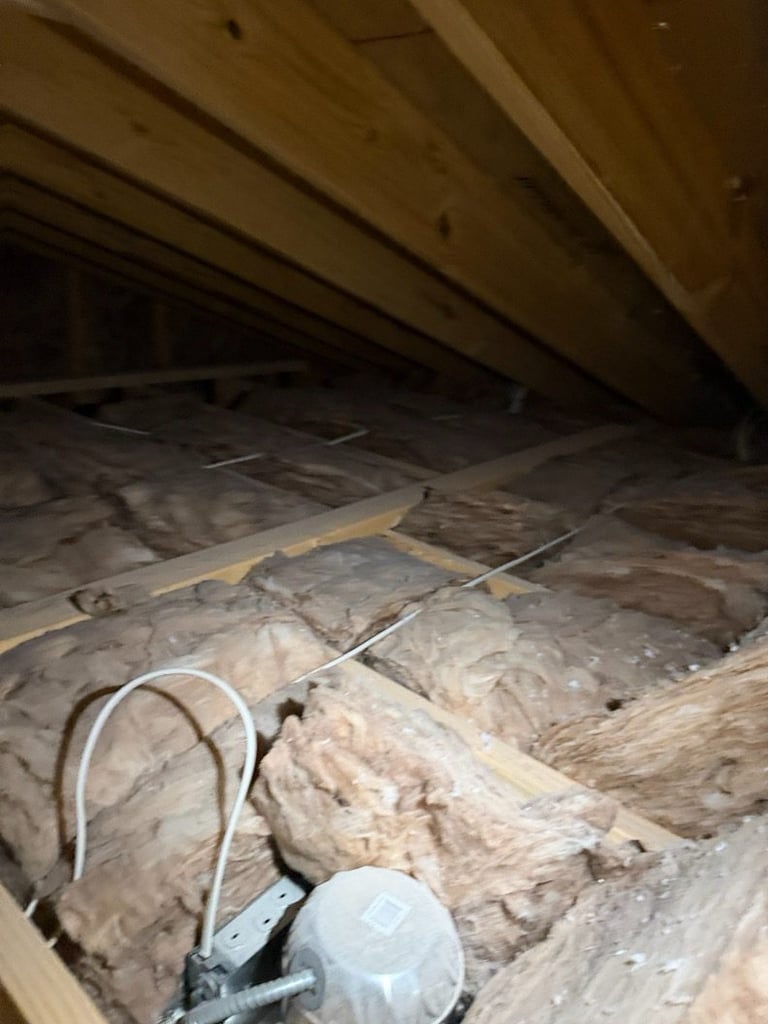
In this photo, the batt insulation sits between the joists, but the wood framing is fully exposed to the vented attic. Because the attic exchanges air with the outdoors, these joists become the same temperature as outside air—hot in summer, cold in winter.
That temperature transfers straight through the joists into the ceiling drywall of the master bedroom.
2. Close-up showing the direct wood-to-drywall thermal pathway at corner of tray ceiling
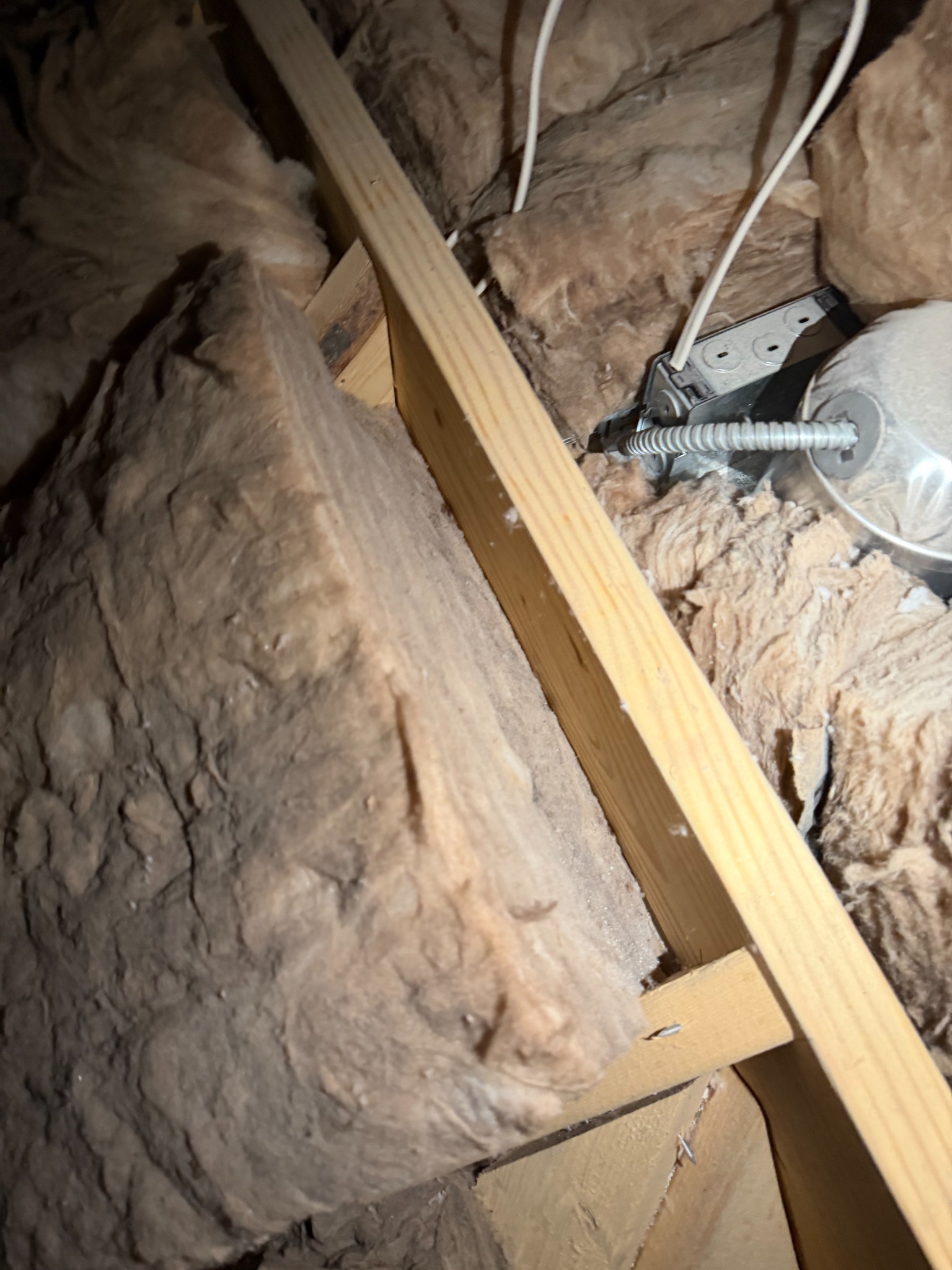
This is the part homeowners don’t realize:
Even with proper R-value, batt insulation does nothing to insulate the wood.
Every exposed joist becomes a highway for heat loss or heat gain.
3. The “zebra stripe” pattern of thermal bridging

Thermal imaging makes the problem obvious.
Each purple stripe is a cold ceiling joist.
Each yellow/orange area is where the batt insulation is.
This is why rooms under tray ceilings:
- Feel cold in winter
- Get hot in summer
- Are harder to heat and cool
- Have higher energy costs
- Are often the most uncomfortable room in the home
Even though the insulation ‘meets code,’ the performance is poor.
4. What the room looks like from below

From the living space, everything looks beautiful and finished. But the framing above this tray ceiling is typically:
- Shallow
- Hard to reach
- Almost always insulated with batts
- Almost never buried in blown-in insulation
Which means thermal bridging is guaranteed unless corrective work is done.
The Solution: Cover the Wood With Blown-In Insulation
Batt insulation only covers the spaces between joists. That’s why even brand-new homes struggle with thermal bridging.
The real fix is simple:
- Add blown-in insulation over the joists to create a continuous thermal blanket.
- Or add another layer of batt insulation running perpendicular to the original batts. Though this is a more expensive option but for those seeking a batt only solution it may be worthwhile.
This eliminates the cold/hot stripes across your ceiling and dramatically improves comfort—especially in tray ceiling master bedrooms.
Koala Insulation of Nashville installs blown-in insulation to reach the DOE-recommended R-49, fully covering the joists and eliminating thermal bridging.
Want Your Tray Ceiling Inspected?
Thermal bridging is one of the biggest causes of comfort problems in Middle Tennessee homes—and it’s almost always fixable.
👉 Schedule your free attic evaluation:
https://book.housecallpro.com/book/Music-City-Insulation-LLC-DBA-Koala-Insulation-of-Nashville/8b2fffc9c7304db4b078844655b75b02?v2=true
👉 Learn more at:
https://koalainsulation.com/nashville
We take a consultative approach and walk you through exactly what’s happening above your ceiling—whether we do the work or not.
Find Your Location



Get a quote