
Why Does My House Smell Musty? The Truth About Coastal North Carolina Crawlspaces
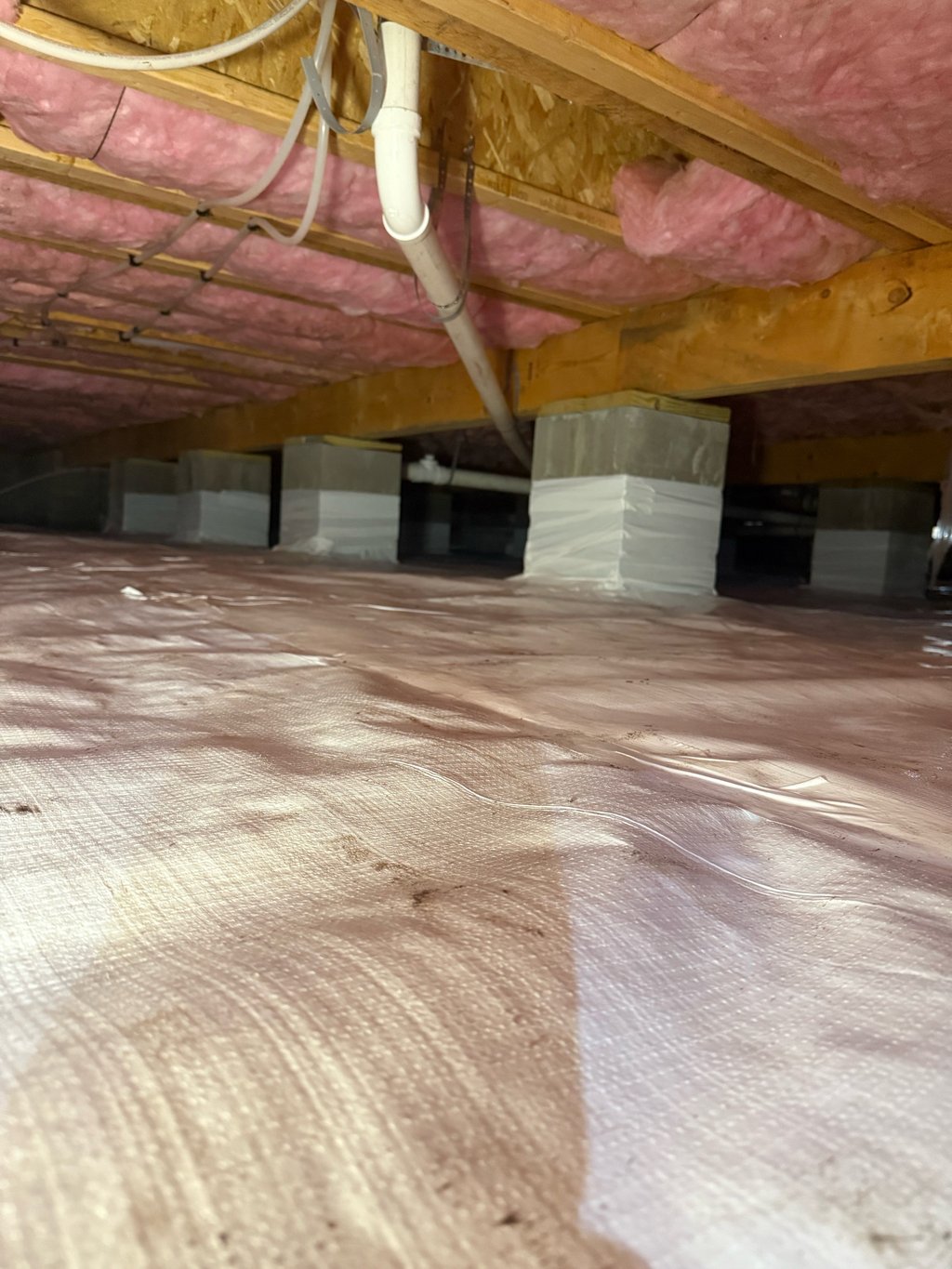
A musty, damp odor inside a home is almost always caused by high relative humidity and microbial growth in the crawlspace directly beneath the living areas. In coastal North Carolina, traditional vented crawlspaces pull in hot, moisture-laden air that condenses on cool floor joists, creating a breeding ground for mold and causing hardwood floors to cup or buckle.
The Stack Effect: How Crawlspace Air Gets Into Your Home
Many homeowners assume the air under their house stays under their house, but building science proves otherwise. A natural airflow pattern known as the “stack effect” constantly pulls air upward through your home.
- Warm air rises: As heat builds up in your attic, it escapes out of the upper levels of your home.
- A vacuum is created: This rising air creates negative pressure on the lower levels.
- Moisture is drawn upward: Cool, damp air from the crawlspace is sucked up through subfloor gaps, utility penetrations, and wiring holes directly into your living spaces.
Because of the stack effect, up to 50% of the air you breathe on the first floor of your home originates in your crawlspace. If that space is damp and musty, your home will be too.
The Coastal Climate Challenge: Why Vented Crawlspaces Fail From New Bern to Wilmington
For decades, building codes required foundation vents to “air out” crawlspaces. While this might work in arid climates, it is a recipe for disaster along the Crystal Coast, in historic New Bern, and down through Wilmington.
Ready to start your insulation project?
High Relative Humidity
During a humid North Carolina summer, the air entering your foundation vents is heavily saturated with moisture. When that hot, humid air hits the air-conditioned, cooler subfloor of your home, it reaches its dew point. This causes literal water droplets to form on your wood framing and fiberglass insulation, leading to sagging insulation and wood rot.
Structural Floor Cupping
When the underside of your hardwood subfloor absorbs constant moisture from a damp crawlspace while the top side is dried out by your indoor air conditioning, the wood swells unevenly. This imbalance causes the edges of your floorboards to rise, a destructive process known as “cupping.”
The Permanent Solution: Crawlspace Encapsulation and Dehumidification
- Mowing over the mold or constantly spraying air fresheners only masks the symptom. To permanently fix a musty home odor and protect your property value, you must completely isolate the dirt floor from the home.
- Sealing the Vapor Barrier: We completely line the crawlspace floor, piers, and walls with a heavy-duty, puncture-resistant polyethylene vapor barrier. All seams are taped and sealed airtight to stop ground moisture from evaporating into the space.
- Sealing Foundation Vents: We close off the legacy foundation vents permanently. This stops the humid Atlantic air from entering the space in coastal environments like Emerald Isle and the surrounding beach communities.
- Commercial Dehumidification: Because air infiltration can never be 100% eliminated, a specialized, heavy-duty crawlspace dehumidifier is installed. This unit automatically monitors the air and keeps the relative humidity safely below 55%, completely halting mold growth and keeping the structural wood dry and stable.
By transforming your open crawlspace into a clean, conditioned, and encapsulated space, you eliminate the root cause of musty odors, protect your hardwood floors, and significantly lower your monthly heating and cooling bills.
Find Your Location



Get a quote