
Sprayfoam Insulation: Complete Guide for Homeowners
If you’ve spent the last few winters chasing drafts around your house or watching your energy bill creep up every time the temperature swings, and Michigan swings a lot, you’ve probably already looked into insulation upgrades. By now you’re not asking “what is insulation.” You’re asking which contractor to trust with the job.
That’s where this guide comes in. We’ll walk through how sprayfoam insulation actually works, what it can (and can’t) do for a home in East Metro Detroit, and what to expect when you bring in a professional crew. Koala Insulation of East Metro Detroit has been evaluating homes throughout the area, and this article draws on that same on-the-ground perspective. When you’re ready to see what your home needs, you can get a free estimate anytime.
What Is Sprayfoam Insulation?
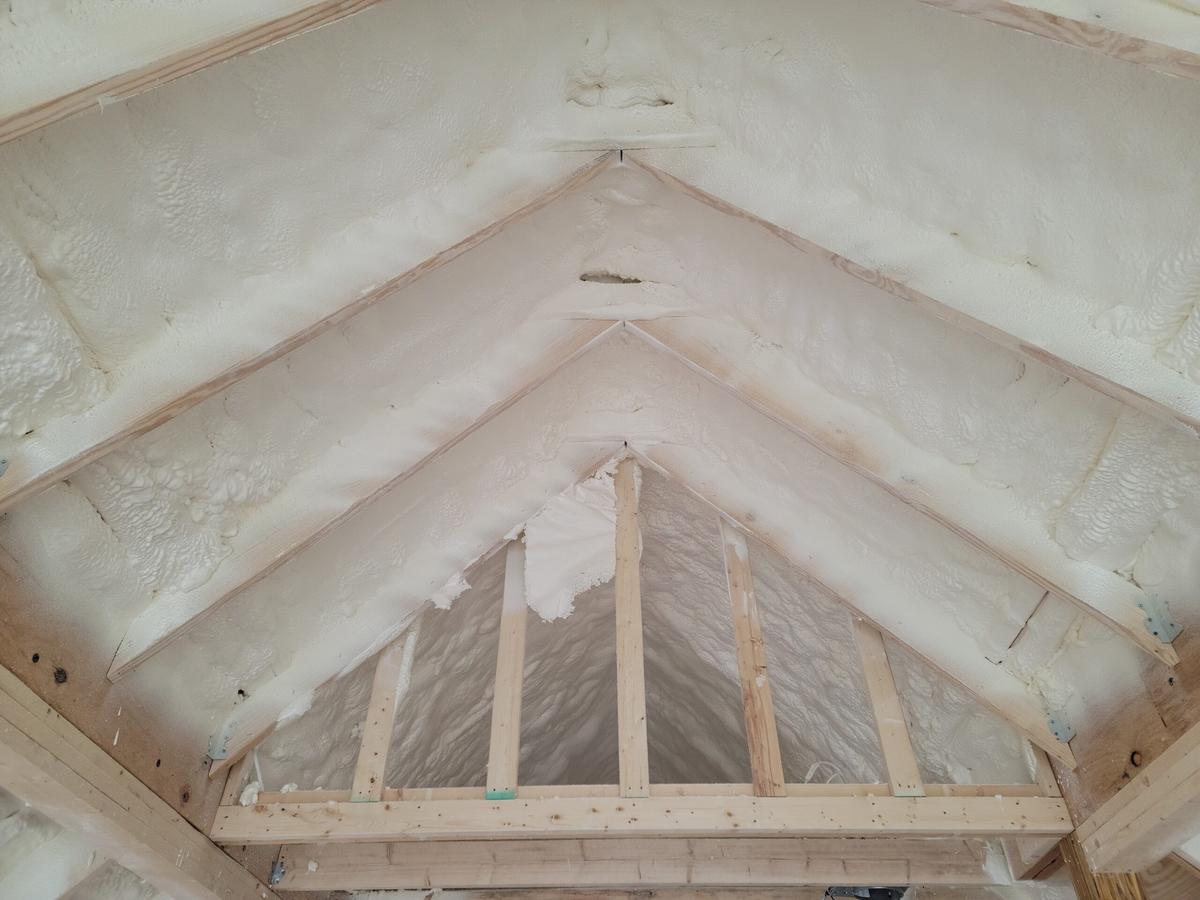
Sprayfoam insulation is a two-part liquid material – most commonly polyurethane, that’s heated and sprayed into wall cavities, attics, rim joists, and other gaps. Within seconds it expands and hardens into a solid barrier that both insulates and air-seals in a single application. That’s the detail that separates it from batt or blown-in products: sprayfoam doesn’t just slow heat transfer, it physically closes the small gaps that let outside air move through your walls and ceilings.
Ready to start your insulation project?
There are two main types, and choosing between them matters:
- Closed-cell spray foam is dense and rigid, with a higher R-value per inch. It also acts as a moisture barrier, which makes it a strong fit for rim joists, basement walls, and roof decks where water intrusion is a concern.
- Open-cell spray foam is softer and more flexible. It’s often used on interior walls and cavities where sound dampening matters more than moisture resistance, and it typically costs less per board foot to apply.
Both types outperform traditional insulation in one key area: filling irregular gaps around wiring, plumbing penetrations, and framing junctions that fiberglass batts simply can’t conform to.
Benefits of Sprayfoam Insulation
For homeowners in East Metro Detroit, the case for sprayfoam usually comes down to a handful of practical benefits:
Tighter air sealing. Michigan winters push cold air into every gap in a home’s envelope. Because sprayfoam expands to fill cracks and voids, it closes off the paths that cause drafty rooms and cold floors.
More consistent indoor temperatures. Uneven heating and cooling, a cold bedroom over the garage, a stuffy second floor in summer, is often a sign of air leakage or thin insulation, not a furnace or AC problem. Sealing the envelope helps even that out.
Lower, more predictable energy bills. According to the U.S. Department of Energy, air leakage and inadequate insulation are among the leading causes of wasted heating and cooling energy in older homes.
Moisture control. Closed-cell foam in particular helps block the pathways that let humid air condense inside walls, which reduces the conditions that lead to mold growth.
Reduced ice dam risk. Attic air leaks let heated household air escape into the attic, warming the roof deck unevenly and melting snow that refreezes at the eaves. Sealing those leaks is one of the more effective ways to reduce ice dam formation on older East Metro Detroit homes.
Noise reduction and durability. Foam insulation dampens sound transmission between rooms and, once cured, holds its shape and R-value for decades without settling the way loose-fill insulation can.
If any of that sounds like your house, whether it’s a century home near Royal Oak or newer construction in Rochester Hills, a home assessment is the next logical step. Request a free estimate to find out where your envelope is losing energy.
How Much Does Sprayfoam Insulation Cost?
Every home is different, and that’s not a dodge, it’s the honest answer. What a project costs depends on the size of the area being insulated, the condition of your existing insulation, how accessible the space is, whether open-cell or closed-cell foam is the right call, and whether the work is new construction or a retrofit. A small rim joist job and a full attic-and-wall retrofit are simply not comparable projects.
Rather than guess at a number that won’t apply to your house, the more useful step is a professional assessment. Koala Insulation of East Metro Detroit will inspect the specific areas you’re concerned about and provide recommendations, and a detailed estimate, based on what they actually find, not a generic average. Get a free estimate to get numbers specific to your home.
Is Sprayfoam Insulation Worth It?
For the right application, yes, but “right application” is doing some work in that sentence.
Sprayfoam tends to deliver the strongest return in areas where air leakage is the main problem: attics, rim joists, additions, and older homes with minimal existing insulation. The upfront investment is generally higher than batt or blown-in insulation, but the combined air-sealing and thermal performance can offset that over time through lower energy use, particularly in a climate like Michigan’s, where homes are heated and cooled for most of the year.
It’s a less obvious fit in situations where the existing insulation is already in good shape or where a smaller air-sealing project would solve the problem on its own. This is exactly why a walk-through assessment matters more than a blanket recommendation, what’s worth it for one home may be overkill for another.
When Should You Hire a Professional?
A few signs typically mean it’s time to call in an experienced installer rather than tackle a DIY fix:
- Persistent drafts near outlets, baseboards, or window trim that weather-stripping hasn’t solved
- Rooms that never seem to hold a consistent temperature
- Musty smells or visible moisture in the attic, crawl space, or basement
- Energy bills that seem high relative to your home’s size and age
- Ice dams forming along the roofline in winter
Professional installation matters here for reasons beyond convenience. Spray foam is applied using specialized equipment, and the two-part chemical reaction that cures it needs to be handled with proper ventilation and protective gear during application. An experienced crew also knows how to evaluate the whole building envelope, not just the symptom you noticed, but the underlying air leakage causing it, so the fix actually addresses the root problem instead of masking it.
The Koala Insulation Process
Koala Insulation of East Metro Detroit follows a straightforward process for spray foam projects:
- Free home evaluation. A technician visits your home to identify where sprayfoam insulation would be most effective.
- Customized plan. We don’t sell a one-size-fits-all package – recommendations are tailored to your home’s specific needs.
- Preparation. Preparation Surfaces and areas near the application site are covered and protected prior to spraying.
- Foam usage. Then the foam is applied sparingly into the gaps and cavities to make sure a complete seal.
- Final inspection. The finished work is inspected to ensure it is installed properly and working as it should.
The East Metro Detroit team is a member of a larger national network of insulation and services the local area including Farmington Hills, Rochester Hills and Royal Oak.
Frequently Asked Questions
What is spray foam?
Sprayfoam insulation is a liquid polyurethane that is sprayed into walls, attics and other cavities where it expands and hardens into a solid air-sealing layer of insulation.
What is the cost of spray foam insulation?
Cost will be dependent on variables such as the size of the area, condition of existing insulation, access and the type of foam to be used. Because each home is unique, the best way to know for sure is to have it professionally assessed. Request a free estimate for recommendations tailored to your home
Is sprayfoam insulation worth it?
Sprayfoam is a great longterm value for homes with high air leakage or low existing insulation, providing improved comfort and lower energy use. This is less of a concern for homes that already have adequate insulation in place, which is why a home assessment is the best way to be sure.
When should I call a professional?
Call a professional if you’re dealing with persistent drafts, uneven room temperatures, high energy bills, moisture or musty odors, or ice dams in winter. Professional installers can identify the actual source of the problem and apply spray foam safely and correctly.
Conclusion
Sprayfoam insulation earns its reputation for a reason: it air-seals and insulates in one step, which is hard for other materials to match. But whether it’s the right investment for your specific home, and where it should go, depends on details a blog post can’t see. An in-person assessment can.
If drafts, high bills, or uneven temperatures have you comparing East Metro Detroit insulation contractors, get a free estimate from Koala Insulation of East Metro Detroit and find out exactly what your home needs.
Find Your Location



Get a quote