
Why Attic Ventilation Is a Summer Lifesaver for Southeast Denver Homes
Attic ventilation is the controlled movement of outdoor air through your attic to remove heat and moisture. In summer, a properly ventilated and insulated attic helps reduce extreme attic temperatures, protects roofing materials, and supports your air conditioning system by keeping heat from radiating down into your living space.
For homeowners in Englewood, Highlands Ranch, Parker, Castle Rock, Centennial, Lone Tree, Cherry Hills Village, Greenwood Village, Castle Pines, Franktown, Sedalia, Larkspur, Monument, North Colorado Springs, Elizabeth, and Foxfield, summer attic heat can be intense. Colorado’s high elevation, strong sun exposure, dry air, and large day-to-night temperature swings all put pressure on roofs, attic assemblies, and HVAC systems.
Koala Insulation of Southeast Denver helps residential customers improve home comfort with practical solutions such as attic insulation upgrades, air sealing, ventilation improvements, and solar attic fans where appropriate. The goal is not just to make the attic less hot; it is to create a balanced system that helps your home stay more comfortable, efficient, and durable year-round.
Ready to start your insulation project?
What Does Attic Ventilation Do in the Summer?
Attic ventilation removes trapped heat from the attic and replaces it with outdoor air. In a typical vented attic, cooler air enters through low intake vents, often at the soffits or eaves, and warmer air exits through high exhaust vents, such as ridge vents, roof vents, gable vents, or properly installed attic fans.
In summer, roof surfaces can absorb a tremendous amount of solar heat. That heat moves into the attic and can accumulate quickly if there is no effective path for it to escape. When attic heat builds up, it can radiate through the ceiling plane and make upstairs rooms, vaulted areas, and south- or west-facing spaces feel warmer than the thermostat suggests.
Good attic ventilation works best when paired with adequate attic insulation and air sealing. Ventilation helps remove heat from the attic air, while insulation slows heat transfer into the home. Air sealing helps keep conditioned indoor air from leaking into the attic and prevents attic air from being pulled into living areas. Together, these improvements create a more complete building envelope strategy.
Why a Hot Attic Affects More Than the Attic
A hot attic can affect rooms below it, especially bedrooms, bonus rooms, hallways, and upper floors. If your air conditioner seems to run constantly in July and August, or if one part of the house never feels comfortable, the attic may be part of the problem.
Heat moves from warmer areas to cooler areas. When attic temperatures climb, the ceiling becomes a pathway for heat transfer. If insulation levels are low, compressed, uneven, or disturbed, more heat can move into the conditioned space. Your HVAC system then has to remove that extra heat, which can increase runtime and wear over time.
Ventilation Is Not a Substitute for Insulation
Ventilation and insulation do different jobs. Ventilation moves air through the attic. Insulation resists heat flow between the attic and the living space. If you add ventilation without addressing weak insulation, your attic may exhaust heat more effectively but your home can still gain heat through the ceiling.
Likewise, adding insulation without proper ventilation may improve comfort but can leave the attic more vulnerable to trapped heat or moisture issues. The best approach is to evaluate the attic as a system: intake, exhaust, insulation depth, air sealing, ductwork, roof design, and any existing fans or vents.
Why Southeast Denver Homes Are Vulnerable to Attic Heat
Homes along the Southeast Denver corridor face a mix of climate conditions that make attic performance especially important. Strong sunshine, high UV exposure, dry summer air, hail-prone weather patterns, wind, and rapid temperature changes can all affect roofs and attic spaces.
In communities such as Parker, Castle Rock, Elizabeth, Franktown, and Sedalia, homes may have broad rooflines, bonus spaces over garages, or rural exposure that increases wind and sun load. In Cherry Hills Village, Greenwood Village, Lone Tree, Centennial, and Highlands Ranch, many homes have complex roof structures with multiple attic zones, dormers, knee walls, or partially finished spaces. In Monument, Larkspur, and North Colorado Springs, elevation and colder shoulder seasons make year-round attic design even more important.
Different home styles need different ventilation strategies. A ranch home with a simple roofline may be easier to ventilate than a two-story home with multiple roof peaks and blocked soffits. A newer home may already have ridge and soffit ventilation but still suffer from insufficient insulation or poor air sealing. An older home may have limited intake, undersized exhaust, or vents that were covered during previous insulation work.
Common Local Warning Signs
Homeowners often notice attic performance problems before they know the cause. Common signs include upstairs rooms that stay hot after sunset, an air conditioner that struggles during afternoon sun, high cooling bills compared with similar homes, hot ceilings, musty attic odors, curling or prematurely aging shingles, and visible gaps or low spots in attic insulation.
Another common clue is uneven comfort. If one bedroom in a Highlands Ranch or Castle Pines home is always warmer than the rest, or if a bonus room over a garage in Parker or Castle Rock never feels right, the issue may involve attic insulation, air leakage, duct leakage, or inadequate ventilation above or around that space.
Why Roof Complexity Matters
Complex rooflines can interrupt airflow. Soffit vents may be blocked by insulation, framing, paint, debris, or remodeling changes. Ridge vents may only serve certain roof sections. Gable vents may short-circuit airflow if they pull air from nearby exhaust vents rather than from lower intake vents.
This is why a professional attic assessment is valuable. The right solution is not always adding more vents. It may be balancing intake and exhaust, installing baffles, air sealing attic penetrations, improving insulation depth, or choosing a solar attic fan for a specific attic zone.
How Proper Ventilation Extends Roof Life
A well-ventilated attic can help protect roofing materials by reducing excessive heat buildup under the roof deck. Roofing manufacturers commonly provide installation and ventilation guidance because attic conditions can affect shingle performance, roof deck durability, and warranty requirements. Homeowners should always verify requirements with the specific roof product manufacturer and local code guidance.
When an attic becomes excessively hot, the underside of the roof deck and roofing materials experience additional thermal stress. Over time, repeated heat exposure can contribute to faster aging of shingles and other components. Ventilation does not make a roof immune to Colorado hail, wind, UV exposure, or age, but it can help reduce one avoidable source of stress.
Ventilation also supports moisture control. Even in Colorado’s generally dry climate, moisture can enter attics from indoor air leaks, bathrooms, kitchens, humidifiers, and seasonal weather. In winter, that moisture can condense on cold roof surfaces if warm indoor air leaks into the attic. In summer, ventilation helps keep attic air moving and reduces stale, trapped conditions.
Roof Ventilation Helps the Whole Roof Assembly
The roof is not just shingles. It is an assembly that includes decking, underlayment, flashing, ventilation paths, fasteners, and insulation below. When attic ventilation is balanced, it helps the roof assembly manage heat and moisture more effectively.
This is particularly important for homes with architectural shingles, dark roof colors, long sun exposure, or limited shade. In neighborhoods with mature trees, shade may help reduce some solar gain, but shade does not replace proper airflow. In open areas near Franktown, Elizabeth, Sedalia, and Larkspur, strong sun and wind exposure can make roof and attic performance even more noticeable.
How Attic Ventilation Supports HVAC Performance
Your air conditioner is designed to cool the living space, not fight an overheated attic. When attic heat radiates downward through poorly insulated ceilings, your HVAC system has to work harder to maintain the thermostat setting. That can mean longer run cycles, more wear on components, and less consistent comfort.
Proper attic ventilation can reduce attic heat buildup, while insulation slows the transfer of that heat into the home. This combination can help the HVAC system operate under less stressful conditions. It will not fix an undersized, failing, or poorly designed HVAC system by itself, but it can remove a major source of unwanted heat gain.
Ductwork also matters. Many Southeast Denver homes have ducts running through attics, kneewall spaces, or garage-adjacent cavities. If ducts are located in a very hot attic, any leakage or poor duct insulation can reduce cooling performance. An attic that is better ventilated, insulated, and air sealed can help protect the conditioned air moving through those ducts.
Why Upstairs Rooms Often Feel Hot
Upper levels are more exposed to attic heat, direct sun, and rising indoor warm air. If attic insulation is uneven or ventilation is poor, upstairs rooms can feel several degrees warmer than main-level spaces even when the thermostat reads correctly in a hallway.
Before replacing HVAC equipment, it is often wise to inspect the attic. A comfort problem may be caused by low insulation, blocked soffit vents, unsealed ceiling penetrations, leaky ducts, or insufficient attic exhaust. Addressing these issues can improve comfort and may help you avoid overspending on equipment that still has to fight the same building-envelope problems.
Ventilation Helps, But Balance Is Critical
More exhaust is not always better. Attic ventilation needs a balanced path for air to enter and exit. If exhaust vents or fans pull more air than the soffit or intake vents can supply, the attic may draw air from the house through ceiling leaks. That can waste conditioned air and potentially pull dust, insulation particles, or pollutants through hidden gaps.
A balanced approach considers net free ventilation area, intake-to-exhaust distribution, attic volume, roof geometry, and local code requirements. This is one reason professional installation matters, especially when adding powered or solar attic fans.
Solar Attic Fans: When They Make Sense
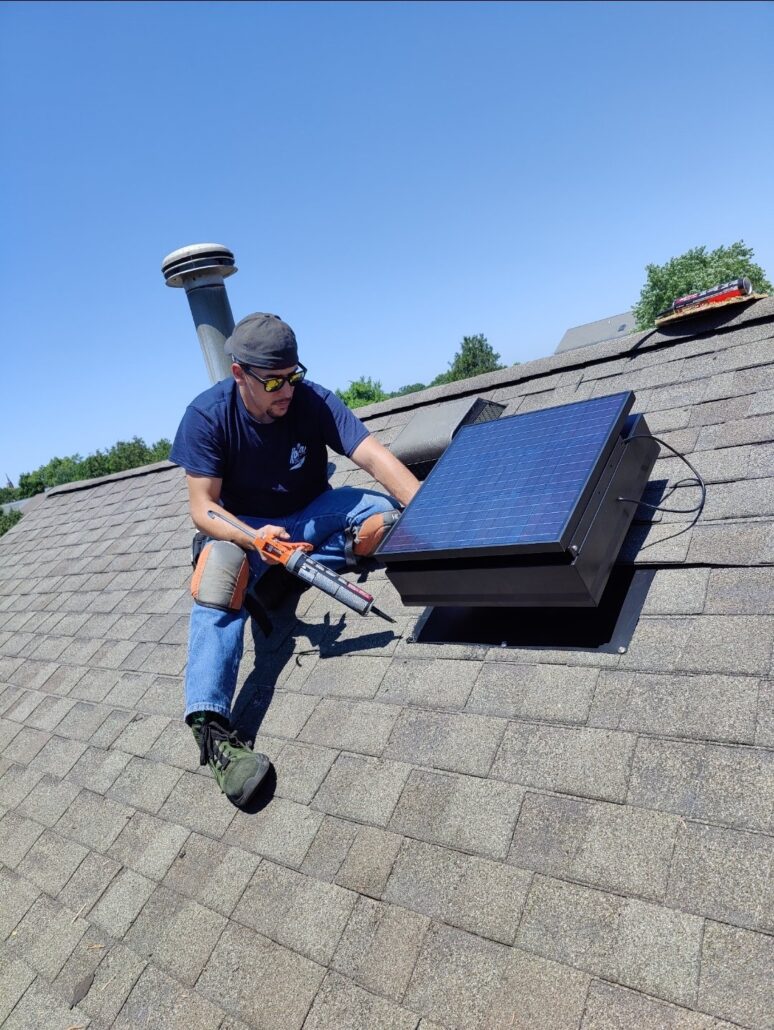
Solar attic fans can be a useful attic ventilation upgrade when an attic needs additional exhaust and has adequate intake air. They use solar energy to power a fan that helps move hot attic air out during sunny conditions, which is often when attic heat is most intense.
For homeowners in sunny Colorado communities such as Centennial, Parker, Castle Rock, Lone Tree, Monument, and North Colorado Springs, solar attic fans can be appealing because they operate without tying into household electrical circuits in the same way as hardwired fans. They can be especially helpful for attics or roof sections that do not ventilate well through passive vents alone.
However, a solar attic fan is only part of an upgraded insulation project. It is also important to confirm there are adequate soffit vents with baffles, or if they need installed as part of the package with increased insulation and air sealing.
Best Conditions for Solar Attic Fans
Solar attic fans tend to make the most sense when the attic has clear intake vents, the roof receives consistent sunlight, passive exhaust is insufficient for the attic layout, and the home has known heat buildup that is not solely caused by HVAC or duct problems.
A professional should also confirm that the fan placement will not interfere with existing ridge vents, gable vents, combustion appliance safety, or roof warranty requirements. Placement matters because the fan should help pull air through the intended ventilation path, not short-circuit airflow from a nearby vent.
Questions to Ask Before Installing a Solar Attic Fan
Before adding a solar attic fan, ask whether your attic has enough intake ventilation, whether soffit vents are open, whether baffles are needed, whether insulation is at an appropriate level for the home, and whether air leaks between the home and attic have been sealed.
You should also ask how the fan will be sized and located. Oversized or poorly placed fans can create pressure issues. A reputable insulation and ventilation contractor will explain why a particular fan, location, or alternative solution is recommended.
The Best Summer Attic Upgrade Is a System Approach
The most effective attic improvements usually combine ventilation, insulation, and air sealing. Treating only one part of the attic may help, but a system approach is more likely to improve comfort, reduce heat transfer, and protect the home over time.
A good attic evaluation starts with observation. The contractor should look at insulation depth and coverage, ventilation openings, roof exhaust types, soffit accessibility, baffles, attic air leaks, recessed lights, bath fan terminations, ductwork, signs of moisture, and any previous repairs or remodeling changes. The recommendations should be based on what is actually happening in your attic, not a generic package.
For many homes, the right solution may include clearing or adding soffit intake, installing baffles to keep airflow paths open, adding or improving exhaust ventilation, sealing attic bypasses, upgrading blown-in insulation, insulating attic access points, and considering a solar attic fan where it supports the overall airflow plan.
Step-by-Step Homeowner Checklist
Start by noting which rooms feel hottest and when the problem occurs. Afternoon heat points to sun and attic heat gain, while all-day discomfort may involve insulation, ductwork, or HVAC distribution.
Next, safely inspect what you can from the attic access without walking on ceiling drywall or disturbing insulation. Look for low insulation, bare spots, blocked vents, disconnected bath fans, signs of moisture, or daylight at soffits and roof vents. If access is difficult or unsafe, leave the inspection to a professional.
Then schedule an attic assessment with a qualified local contractor. Ask for recommendations that include both ventilation and insulation, not just one product. Finally, prioritize fixes in the right order: air sealing and ventilation paths, insulation improvements, duct-related concerns, and attic fan options if needed.
Why Local Expertise Matters
Local homes are built across different eras, elevations, and roof styles. A Cherry Hills Village attic may have very different ventilation needs than a newer home in Castle Pines or a rural property near Sedalia. Snow patterns, wind exposure, wildfire considerations, hail history, and local building practices can all influence the best approach.
Koala Insulation of Southeast Denver understands the comfort concerns common across Englewood, Highlands Ranch, Parker, Castle Rock, Monument, Lone Tree, Foxfield, Elizabeth, Centennial, Greenwood Village, Larkspur, North Colorado Springs, Franktown, and surrounding communities. The right recommendation should fit the home, the roof, the attic, and the homeowner’s comfort goals.
What to Expect From a Professional Attic Ventilation Assessment
A professional attic ventilation assessment should be clear, practical, and educational. The contractor should explain what is working, what is not, and why. You should come away understanding whether your attic needs more intake, more exhaust, better insulation, air sealing, a solar attic fan, or a combination of improvements.
The assessment may include measuring or estimating existing insulation levels, checking ventilation paths, identifying blocked soffits, looking for roof vent distribution, inspecting attic access points, and evaluating whether ducts or bath fans are contributing to comfort or moisture issues. For safety and accuracy, contractors may also consider local building code expectations and manufacturer installation guidelines.
A trustworthy proposal should avoid exaggerated promises. No contractor can guarantee a specific utility bill reduction without detailed energy modeling and usage assumptions. What a well-planned attic upgrade can do is address known sources of heat transfer, improve airflow, support HVAC performance, and help protect roof and attic components.
Good Questions to Ask Your Contractor
Ask how much intake and exhaust ventilation your attic currently has, whether the system is balanced, whether soffit vents are blocked, and whether baffles are recommended. Ask what insulation level is appropriate for your home and how air leaks will be addressed before adding more insulation.
If a solar attic fan is recommended, ask why it is the right solution for your attic, where it will be installed, how intake air will be supplied, and how it will interact with existing vents. Clear answers are a good sign that the recommendation is based on building science rather than guesswork.
Key Takeaways
- Attic ventilation helps remove summer heat from the attic, while insulation slows heat transfer into the living space.
- Balanced intake and exhaust are essential; adding more exhaust without enough intake can create new problems.
- A hot attic can stress roofing materials and make your HVAC system work harder during Colorado summers.
- Solar attic fans can help in the right attic, but they should be paired with adequate intake, air sealing, and insulation.
- Homes across Southeast Denver need attic solutions tailored to roof design, elevation, sun exposure, and local building conditions.
Frequently Asked Questions
Does attic ventilation really help in the summer?
Yes. Attic ventilation helps remove trapped hot air from the attic and replace it with outdoor air. When paired with proper insulation and air sealing, it can reduce heat transfer into the home and support more consistent indoor comfort.
Is a solar attic fan worth it for a Colorado home?
A solar attic fan can be worth it when the attic has strong sun exposure, inadequate exhaust, and enough intake ventilation. It should be professionally sized and placed so it supports the attic’s airflow path instead of pulling conditioned air from the home.
Can attic ventilation extend the life of my roof?
Proper attic ventilation can help reduce excessive heat and moisture buildup under the roof deck, which may support roof durability. Roof life also depends on materials, installation quality, weather exposure, hail, maintenance, and manufacturer requirements.
Should I add insulation or ventilation first?
It depends on the attic, but the best approach is usually to evaluate both together. Air sealing, open ventilation paths, and baffles should be addressed before adding insulation so new insulation does not block airflow.
How do I know if my soffit vents are blocked?
Signs include poor attic airflow, very hot upstairs rooms, insulation pushed tightly into eaves, or no visible daylight or airflow at the soffit area. A professional can inspect safely and install baffles if needed to keep intake paths open.
Can better attic ventilation lower my cooling bills?
Better attic ventilation and insulation can reduce unwanted heat gain, which may help your HVAC system run more efficiently. Actual bill changes vary based on home design, HVAC condition, thermostat habits, weather, utility rates, and existing attic conditions.
Conclusion
Summer attic heat is more than an inconvenience. In Southeast Denver homes, an overheated attic can affect comfort, roof durability, and HVAC performance. The most reliable solution is not simply adding a vent or fan; it is creating a balanced attic system with proper intake, exhaust, air sealing, and insulation.
If your home in Englewood, Highlands Ranch, Parker, Castle Rock, Centennial, Lone Tree, Cherry Hills Village, Greenwood Village, Castle Pines, Monument, North Colorado Springs, Elizabeth, Franktown, Sedalia, Larkspur, or nearby areas feels too hot upstairs or your air conditioner struggles through summer afternoons, Koala Insulation of Southeast Denver can help evaluate your attic and recommend practical improvements tailored to your home.
Find Your Location



Get a quote