
Closed Cell versus Open Cell Spray Foam Insulation
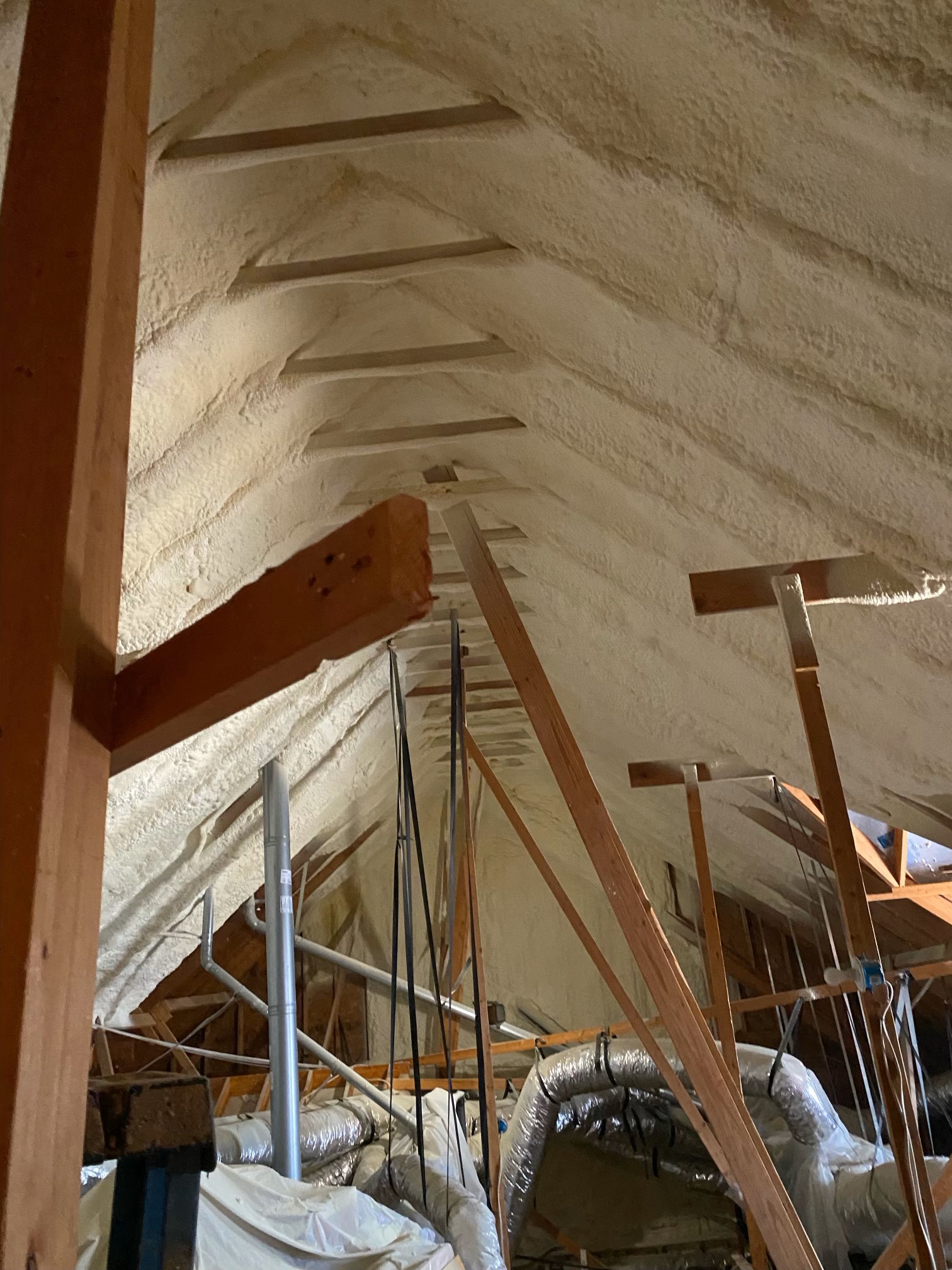
At Koala Insulation of Dallas and Greater Fort Worth, we frequently receive calls from people who tell us they prefer one type of foam over another. Our response is that there is a right and wrong application for each product, and it is essential to use the correct one depending on the application.
What are the principal differences between the two foam types? While similar in their end use as insulation, their properties are quite different. Let’s start with structure. Open cell foam, when installed, resembles a kitchen sponge. It has large, open air pockets through which air and moisture pass. The air pockets provide resistance against energy transfer, making the substance a good insulator. The ability of moisture to pass through the product means that open cell foam, like a kitchen sponge, can become saturated and retain moisture, making it the wrong solution in moist environments such as crawl spaces or against metal surfaces that are likely to sweat or condensate. If open cell foam is used in moist environments, it must be covered by a moisture barrier such as sheet rock, plastic wrap or wood paneling that effectively blocks moisture from passing into the foam.
Closed cell foam, as its name implies, consists of tightly formed, microscopic hard-shelled, closed cells. Because the cells are closed, moisture cannot enter the material and it resists moisture (hydrophobic). This characteristic makes closed cell the correct choice in moist environments such as crawl spaces, metal buildings or applications where one does not want to apply a moisture barrier.
Ready to start your insulation project?
Given these differences in structure, closed cell foam is much denser and heavier and provides higher insulation properties per inch of thickness. Closed cell foam is rated to be R-6 to 7 per inch while open cell is rated to be half that. So does that mean closed cell is the better product? Not always.
Here in Dallas, Fort Worth and North Texas, the proper application for an attic in most cases is to apply open cell foam to the underside of the roof deck. Why not closed cell? Two primary reasons are weight (several inches of closed cell foam adds substantial weight to a roof structure) and porosity. If one’s shingles were to be damaged and begin leaking, hydrophic closed cell foam would divert and disguise the leak, potentially leading to years of undetected wood rot and other damage, resulting in a far more costly repair. A leak over open cell foam, on the other hand, will quickly saturate the foam, promptly revealing the presence and location of the leak, enabling a smaller, localized repair.
Whatever your application, it is important to consult with an expert and understand the options and limitations of spray foam installations.
Find Your Location



Get a quote