
Starting an Insulation Business in 2026: Market Data, Startup Costs, Profit Margins & Franchise Opportunities
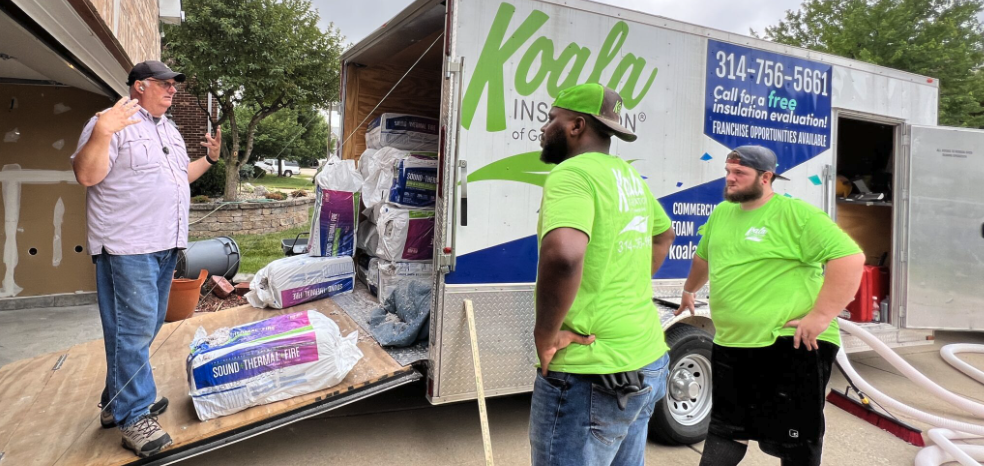
If you’re researching how to start an insulation company in 2026, the timing is strategic. According to updated industry analysis from IMARC Group, the United States insulation market continues to expand steadily, driven by stricter energy codes, retrofit demand, rising utility costs, and federal efficiency incentives. Market valuation now exceeds $14+ billion, with projected compound annual growth continuing through the end of the decade.
Energy efficiency is no longer optional, it’s mandated, incentivized, and expected. That shift is creating long-term stability in residential and commercial insulation services. If you’re asking, is starting an insulation business profitable in 2026? The data suggests strong opportunity, particularly for operators who leverage modern systems, spray foam demand, and structured franchise support.
Is Starting an Insulation Business Profitable in 2026?
Profitability depends on operational efficiency, service mix, and lead generation systems. Most insulation businesses report:
- 30% to 50% gross profit margins
- Strong contribution margins on spray foam projects
- Scalable revenue through crew expansion
High-demand services include:
- Spray foam insulation
- Attic insulation retrofits
- Crawl space encapsulation
- Air sealing and duct sealing
- New construction installs
Available data suggests that increased demand in retrofit and renovation markets, especially as aging housing stock requires energy upgrades, creates consistent inbound opportunity beyond cyclical new construction activity.
With disciplined pricing and strong marketing systems, many insulation business owners reach six-figure personal income within 2 to 4 years.
How Much Do Insulation Business Owners Make?
Income varies by territory and operational maturity, but typical performance benchmarks include:
- $150,000 to $500,000+ in annual revenue per crew
- Owner compensation ranging from $100,000 to $300,000+ annually once stabilized
- Multi-crew operations significantly exceeding these figures
Owners who implement structured lead generation and referral partnerships typically outperform market averages.
Insulation Business Startup Costs in 2026
Understanding insulation business startup costs is critical before launch.
Typical Investment Range:
- Equipment: $40,000 to $150,000
- Spray foam rig & trailer: $80,000 to $150,000
- Truck: $30,000 to $80,000
- Licensing, insurance, certifications: $5,000 to $15,000
- Marketing launch budget: $10,000 to $25,000
- Working capital reserve: $20,000 to $50,000
For a spray foam-focused startup, total investment typically ranges from $120,000 to $250,000.
Equipment reliability directly impacts margins. Poor application quality or downtime can erode profitability quickly.
Equipment Needed for an Insulation Business Startup
Core equipment includes:
- Spray foam proportioner machine
- Heated hose system & spray guns
- Air compressor
- Insulation blowing machine (fiberglass/cellulose)
- Respirators, protective suits, ventilation systems
- Moisture meters and thermal imaging tools
Investing in professional-grade systems protects margins and brand reputation.
Requirements for Starting a Home Insulation Service
To legally and operationally launch:
- Register LLC or corporation
- Obtain state contractor licensing (varies by region)
- Carry general liability & workers’ compensation insurance
- Complete manufacturer certifications
- OSHA safety compliance training
- Implement written estimating systems and contracts
Energy code literacy is increasingly important due to stricter building envelope standards.
Step-by-Step Guide to Launching a Spray Foam Insulation Company
Step 1: Analyze Your Market
Evaluate retrofit vs. new build demand in your region.
Step 2: Choose Your Business Model
Independent startup or explore insulation franchise opportunities.
Step 3: Secure Funding
Consider SBA loans, equipment financing, or franchise-backed lender relationships.
Step 4: Purchase Equipment
Invest in dependable spray rigs and safety infrastructure.
Step 5: Complete Technical Training
Chemical handling, installation best practices, and building science fundamentals.
Step 6: Launch Marketing Systems
Local SEO, Google Business Profile optimization, contractor referral networks.
Step 7: Develop Referral Partnerships
Builders, roofers, HVAC companies, property managers, real estate professionals.
Insulation Franchise Opportunities vs. Independent Startup
The learning curve in insulation can be steep. Many entrepreneurs evaluate insulation franchise opportunities to accelerate growth and reduce early-stage risk.
Franchising often provides:
- Proven operational systems
- Vendor purchasing power
- National marketing support
- Structured training programs
- Territory protection
- Ongoing performance coaching
This is where companies like Koala Insulation have differentiated themselves.
Koala Insulation’s model focuses on:
- Energy-efficiency expertise positioning
- Comprehensive training and onboarding
- Strong brand recognition
- Marketing infrastructure designed to generate qualified leads
- Operational systems built for scalability
Rather than navigating equipment selection, chemical certification, and pricing strategy alone, franchisees gain structured support designed to reduce costly mistakes.
Why Choose Koala Insulation When Starting an Insulation Business?
Based on Koala Insulation’s published guidance for entrepreneurs, the company emphasizes:
- A refined business model built specifically for the insulation sector
- Comprehensive technical and business training
- Ongoing marketing and operational support
- Access to preferred vendor relationships
- Community of franchise owners
In a market growing steadily through 2030, structured execution matters. While independent startups can succeed, franchise-backed operators often reach profitability faster due to systems, branding, and lead flow support.
For first-time entrepreneurs entering the residential insulation business, this structured framework reduces uncertainty.
Residential Insulation Business Growth Strategy
After launch, long-term scalability depends on:
- Tracking cost per lead and cost per acquisition
- Implementing CRM and follow-up automation
- Using thermal imaging visuals in marketing
- Collecting high-volume positive reviews
- Expanding into complementary services like air sealing and crawl space encapsulation
Positioning as a building performance expert, rather than just an installer, improves pricing power.
Should You Start an Insulation Business in 2026?
The updated IMARC Group data confirms continued market expansion fueled by:
- Energy efficiency legislation
- Retrofit demand in aging housing stock
- Rising utility costs
- Growing environmental awareness
If you’re looking for:
- A high-demand home service industry
- 30 to 50% gross margin potential
- Scalable crew-based revenue
- Recession-resistant demand
- Long-term growth through 2030
Then starting an insulation business in 2026 presents a compelling opportunity.
Whether you launch independently or explore franchise options with Koala Insulation, success will depend on disciplined execution, marketing systems, operational quality control, and customer experience.
The insulation market is expanding. The question is whether you enter with structure, or build everything from scratch.
Find Your Location



Get a quote