
Why Your Home Feels Hotter in July — And What You Can Do About It
Around this time of year, our phone starts ringing for the same reason.
“My AC is running all day.”
“My bedroom never cools down.”
Ready to start your insulation project?
“My electric bill is way higher than it was in the spring.”
Most homeowners think the AC is the problem and we can honestly say sometimes it is. But after looking at enough homes over the years, we’ve learned that the AC isn’t always the thing that’s causing all the frustration.
The Heat Doesn’t Stay Outside
Walk outside in Miami on a July afternoon and you can feel the heat coming off the pavement, cars parked outside feel like ovens so much that you need to turn the air on before even getting inside, and even a short walk to the mailbox can leave you looking for shade.
Now imagine what’s happening on your roof, where the AC does not reach, where there is nothing protecting it from the UV rays.
Your roof sits in direct sunlight for hours. That heat builds throughout the day, and your attic traps much of it. If there’s not enough insulation between the attic and your living space, some of that heat eventually finds its way into the house, if its a two story it starts on the second floor and slowly creeps its way down.
Why One Room Always Feels Different
Have a room that everyone avoids during the summer?
That’s pretty common. It might be the bedroom over the garage. Maybe it’s the room with large west-facing windows.
Running the AC Longer Isn’t Always the Answer
We’ve met homeowners who lower the thermostat another two or three degrees because the house feels warm.
The AC responds by running longer. The house might cool down a little, but the system is working much harder to get there.
If heat keeps entering through the attic, you’re asking your equipment to fight a battle it can’t really win.
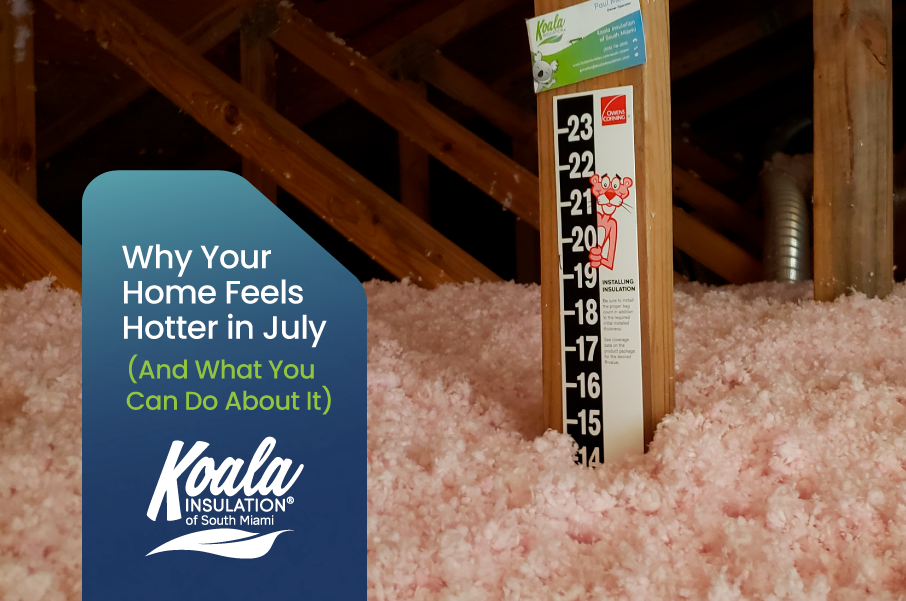
We recently inspected a two-story home in South Miami where the upstairs bedrooms were consistently 6–8 degrees warmer than the first floor. After evaluating the attic, we found several areas with compressed insulation that weren’t providing adequate coverage.
Humidity Changes Everything
Humidity has a way of making 74 degrees feel warmer than it actually is. That’s one reason summer feels so different here than it does in other parts of the country.
Keeping heat out of the house helps your cooling system spend more time doing what it’s supposed to do instead of constantly trying to catch up.
It Might Be Worth Looking Above the Ceiling
Unlike a water heater or an air conditioner, it doesn’t make noise or suddenly stop working one day.
Its performance usually changes little by little. By the time homeowners notice that every summer feels worse than the last, the insulation may have settled, shifted, or simply reached the point where it’s no longer providing the protection it once did and is needed for the heavy summers in south Florida.
Don’t Guess—Check First
Before replacing expensive HVAC equipment, it’s worth finding out how well your home is holding onto the cool air you’re already paying for.
A professional insulation inspection can reveal whether your attic is allowing too much heat into the home. Sometimes the solution is simpler than homeowners expect, and improving the insulation can make a noticeable difference in comfort, energy use, and how often the AC has to run.
South Florida summers are hot. That’s not changing anytime soon. How your home handles that heat, though, is something you can improve.
Find Your Location



Get a quote