
Blown-In vs Spray Foam vs Batt: Which Insulation Is Right for Phoenix’s East Valley Homes?
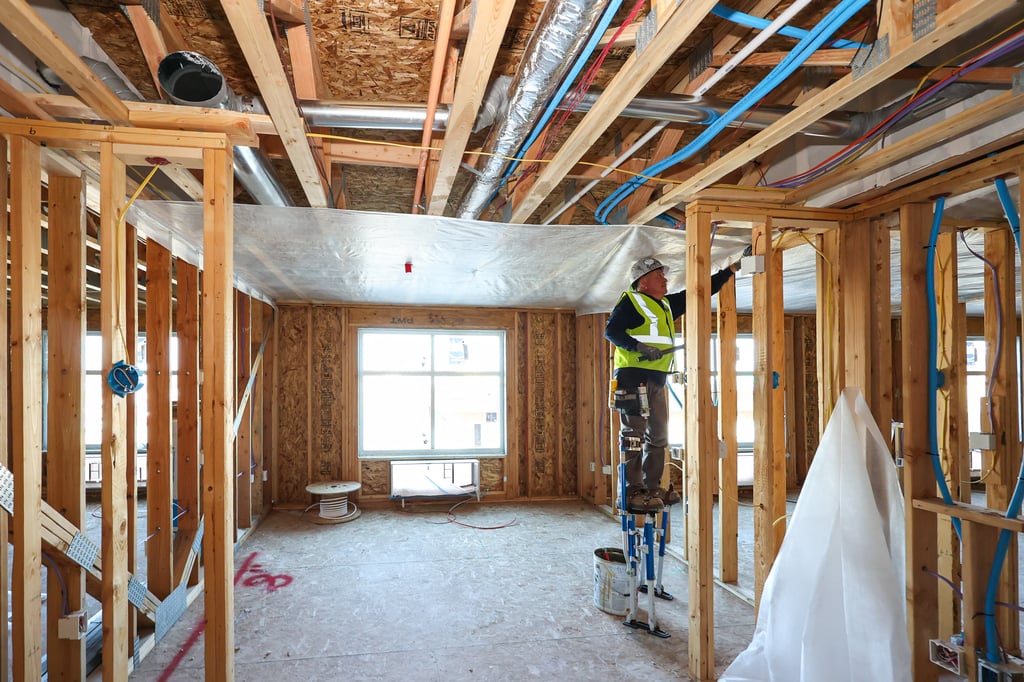
Key takeaways
- Blown-in is our default recommendation for Phoenix’s East Valley attics. It’s the most bang for your buck.
- Need air sealing and insulation in one shot? That’s spray foam, at a premium price.
- Batt still makes sense in walls and remodels with standard framing.
- We install all three, so you get the one your house needs, not the one on our truck.
Every insulation company seems to have a favorite type, and it’s usually whatever they happen to sell. We install blown-in, spray foam, and batt across Phoenix, Chandler, Gilbert, Mesa, and Tempe. That means we can compare them honestly, including the questions most comparison articles skip.
The 30-second answer for Arizona homes
If you own an existing Phoenix East Valley home with thin attic insulation, blown-in is almost always the answer. It goes in fast, it covers everything, and it gets you to R-38 for the least money. Spray foam earns its keep in homes that leak air badly, have odd framing, or where you want the attic brought inside the cooled part of the house. Batt fits walls and accessible spaces with standard joist spacing, usually during a remodel or new construction.
How blown-in attic insulation works
Our crew parks a truck-mounted blower in your driveway, runs a hose up through the hatch, and fills every gap, corner, and low spot with loose fiberglass or cellulose. Cellulose lands around R-3.1 to R-3.8 per inch, loose fiberglass a little under that. Reaching R-38 in a Phoenix East Valley attic usually takes 8 to 12 inches of fresh material, and most installs finish in a morning. It’s the workhorse of our business and the type we recommend for most homes here. Learn more about our blown-in attic insulation service.
Ready to start your insulation project?
How spray foam insulation works
Spray foam is a two-part liquid that expands on contact and hardens in seconds. It comes in two versions. Open-cell foam runs about R-3.6 per inch and stays slightly spongy; closed-cell runs about R-6 per inch, cures rigid, and resists moisture, according to the U.S. Department of Energy’s spray foam guidance. What makes foam special isn’t the R-value, though. It’s that foam air-seals while it insulates, closing the leaks that let 115°F air sneak into your cooled rooms. That double duty is also why it costs more. See our spray foam insulation service.
How batt insulation works
Batt is the classic: pre-cut rolls of fiberglass, sized to fit between studs and joists, insulating at roughly R-2.9 to R-3.8 per inch. In an open wall during a remodel, batt is quick, tidy, and economical. In a finished attic full of wires, pipes, and can lights, it’s hard to fit well, and gaps are where performance dies. That’s why we quote batt insulation for framing-friendly spaces and blown-in for nearly everything overhead.
What Arizona heat changes about this choice
Comparison articles written for Michigan or Massachusetts miss the point of a Phoenix summer. Your attic hits 160°F in July. The job here isn’t keeping warmth in through a long winter. It’s slowing a brutal, one-directional heat assault for six months straight, while your AC fights back at peak summer rates.
Two things follow from that. First, depth matters more than material brand: R-38 of blown-in beats a thin, expensive layer of anything. Second, air sealing punches above its weight in Arizona, because every leak is pulling in outside air that’s hotter than body temperature. That’s why our evaluations look at both insulation depth and air leakage paths, and why the answer is sometimes blown-in plus targeted air sealing rather than a full foam job.
Blown-in vs spray foam vs batt: how the costs compare
Exact pricing depends on your attic’s size, access, and what’s already up there, so it’s more useful to compare them relative to each other. Blown-in delivers the lowest cost per unit of R-value, which is a big part of why it’s our usual recommendation. Batt lives in similar territory when the space suits it, since the material is inexpensive and installation is straightforward in open framing. Spray foam is the premium option, typically two to three times the cost of a blown-in job on the same attic, with closed-cell at the top because it packs more material into every inch. For real numbers on your home, our attic insulation cost guide for Phoenix’s East Valley breaks down what drives pricing, and a free evaluation gets you an actual quote.
Spray foam and blown-in insulation questions we hear a lot
Why do some lenders flag spray foam homes?
You may have seen headlines about mortgage lenders balking at homes with spray foam. The issue traces to bad retrofits, mostly foam sprayed against roof decks over wood that was too damp, which can trap moisture and hide rot. The Department of Energy’s guidance says sheathing needs to be below 19% moisture content before foam goes on. In a properly specified, properly installed job, this isn’t a problem, and it’s rarely an issue in Arizona’s dry climate anyway. Hire an installer who follows the manufacturer’s specs and the moisture rules.
Does blown-in insulation settle?
Dry-blown cellulose can settle up to about 20% of its installed depth over time, and that sounds alarming until you learn the stated R-value already accounts for expected settling. Loose fiberglass settles less. Either way, a good installer blows to the depth markers that deliver the target R-value after settling, not before.
Is spray foam insulation safe?
Once cured, foam is stable and inert. The application is where the precautions live: it involves chemicals that require protective gear, ventilation, and keeping the household out until the foam has cured and aired out. This is not a product for anyone but trained professionals who follow the manufacturer’s safety procedures. And here’s something we do on every spray foam estimate: we ask whether anyone in the home is sensitive to smells. Fresh foam carries a temporary odor, and if the answer is yes, we’ll recommend blown-in or batt instead.
Insulation Comparison FAQs
Which insulation is best for an Arizona attic? For most existing homes, blown-in, topped up to R-38 minimum. It handles our heat well, installs in hours, and gives you the most insulation for your money. Spray foam enters the conversation for unusual air leakage, or when you’re turning the attic into conditioned space.
How much does spray foam cost for a 1,500 sq ft attic? Open-cell and closed-cell are priced differently, and thickness drives the total, so foam quotes swing a lot. In practice, plan on two to three times the price of blown-in for the same attic. The evaluation pins down the real number.
What are the downsides of blown-in insulation? Blown-in won’t stop air leaks by itself, so leaky houses get it paired with air sealing. Blown-in cellulose settles a little over the years, which installers account for with extra depth, and the cellulose install itself is dusty for a few hours. Blown-in fiberglass has neither the settling nor the dust issue.
Why are some people removing spray foam? Almost always because of a bad install: foam applied over damp wood, the wrong product for the assembly, or thickness that didn’t meet spec. Foam done right doesn’t need removing.
Get a recommendation for your home
Bill and Jim Villani and the Koala Insulation of The East Valley team install all three insulation types across Phoenix, Scottsdale, Chandler, Gilbert, Mesa, Tempe, Queen Creek, and the surrounding East Valley. Call (480) 900-7274 or request a free evaluation online.
Find Your Location



Get a quote