
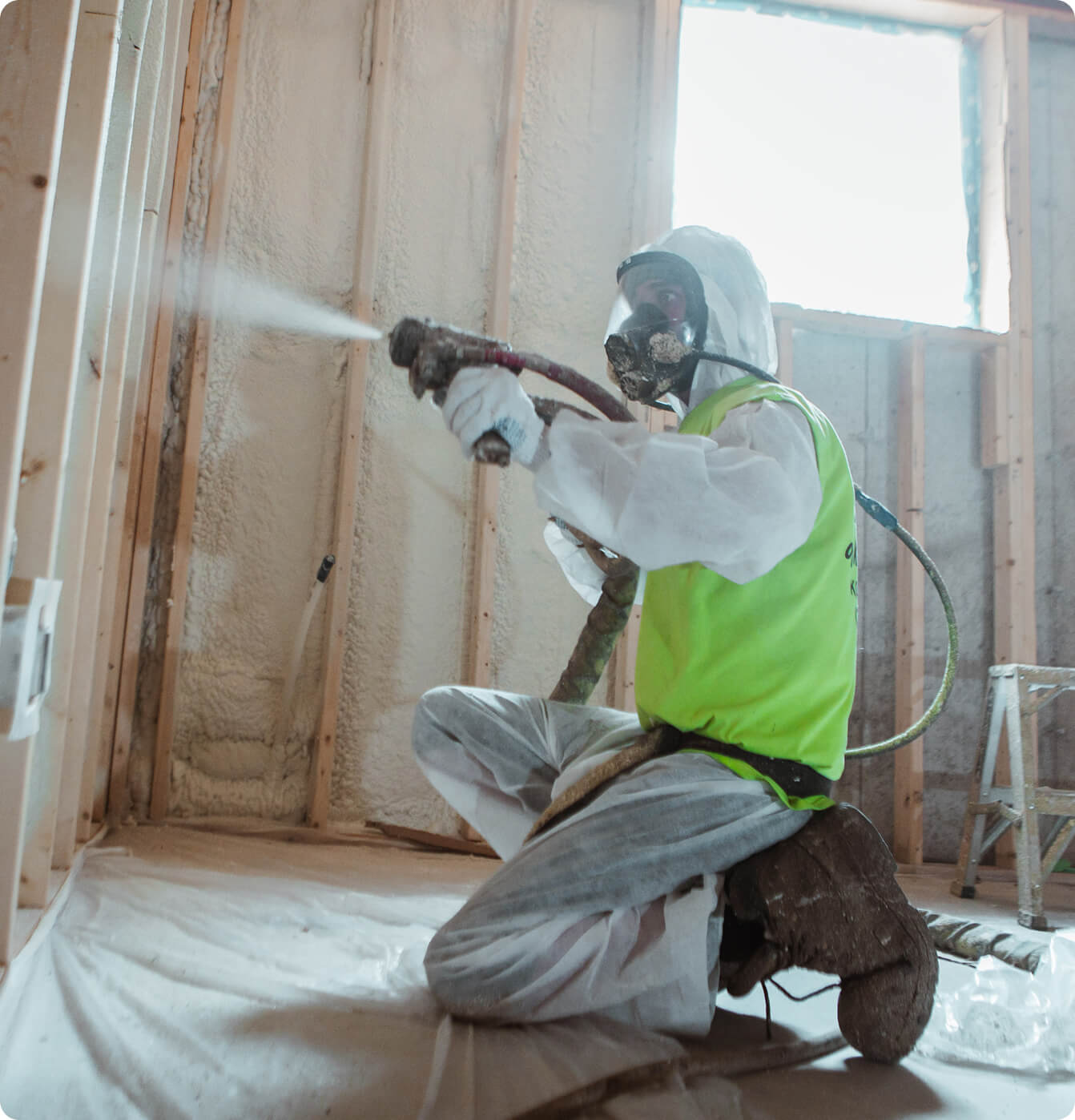

Reduces Conduction: Spray foam adds thermal resistance at surfaces such as wood, masonry, and drywall, helping slow heat flow through the building envelope.
Professional Spray Foam Insulation in East Toronto, ON
Let Our Insulation Experts Show You The Many Benefits Of Our High Performance Insulation.
Spray foam insulation delivers a high-performance thermal and air seal that can make East Toronto homes and commercial properties more comfortable through cold winters, humid summers, and shoulder-season temperature swings.
Koala Insulation of East Toronto combines local building knowledge with proven installation practices to recommend and install spray foam systems for attics, rim joists, basements, walls, additions, and other hard-to-seal areas.
Get a Free Estimate
<?php
$button_code = get_field('housecall_pro_button_code');
if ($button_code) {
    echo $button_code;
}
?>


Trusted
Spray Foam Insulation Contractors in East Toronto

East Toronto properties range from century homes and semi-detached houses in East York, Riverdale, Leslieville, and The Beaches to newer infill, townhomes, and commercial spaces toward Scarborough. Air leakage at attics, rim joists, additions, and foundation transitions can make rooms harder to heat in winter and cool in summer. Properly specified spray foam expands to seal irregular gaps while adding thermal resistance; some closed-cell products can also provide vapour-control benefits at the required thickness.
Performance depends on product selection, surface preparation, moisture management, and installation quality. Our team evaluates the assembly before work begins, follows product-specific application and ventilation requirements, and verifies coverage and adhesion before the site is returned to you.
A Superior
Thermal & Air Barrier Services in East Toronto
For East Toronto homes and businesses, spray foam can combine insulation and air sealing in one continuous application. It is especially useful around complex framing, rim joists, rooflines, and other areas where batts can leave gaps. The right open-cell or closed-cell system depends on the assembly, moisture conditions, code requirements, and project goals.
These capabilities define the insulation type:
Blocks Air Infiltration: The expanding foam seals joints, penetrations, and irregular gaps that can allow heated or cooled air to escape.
Helps Manage Moisture: Closed-cell spray foam can reduce water-vapour movement at appropriate thicknesses, but active leaks and drainage problems must be repaired first.
Advantages Of
Spray Foam Insulation in East Toronto
Spray foam is a premium option when a project needs both thermal resistance and detailed air sealing. Because it conforms to irregular surfaces, it can create a continuous, durable seal in areas where conventional materials are difficult to fit.

Improved Air Quality
By reducing uncontrolled air leakage, spray foam can help limit outdoor dust, pollen, and humid air entering through cracks. Because a tighter building also changes ventilation, proper exhaust, make-up air, and humidity control should be reviewed to maintain healthy indoor air.

Water & Fire Resistance
Closed-cell spray foam can resist water absorption and help limit vapour diffusion when specified at an appropriate thickness, but leaks and drainage problems must be repaired first. Spray polyurethane foam is combustible, so code-compliant assemblies may require gypsum board or another evaluated thermal or ignition barrier over exposed foam.

Pest and Wildlife Protection
Sealing gaps can close off some pathways used by insects and rodents, but spray foam is not a pest-control product and animals can damage it. Existing infestations and exterior entry points should be addressed before insulation is installed.

Strengthens Buildings
Closed-cell spray foam can add rigidity to some framed assemblies by bonding to sheathing and framing. Any structural benefit depends on the product, substrate, thickness, and assembly design; spray foam is not a substitute for required framing, sheathing, bracing, or structural repairs.

Soundproofing
Open-cell spray foam can help absorb sound within interior wall and floor cavities, while comprehensive noise control may also require resilient channels, acoustic sealant, mass, and isolation. We assess whether spray foam is the right part of a sound-control assembly for traffic, neighbour, plumbing, or mechanical noise common in urban homes.

Environmentally Friendly
By reducing uncontrolled heat loss and heat gain, spray foam can lower the energy needed to heat and cool an East Toronto property. Its environmental profile varies by product, including blowing-agent chemistry, recycled or renewable content, and embodied carbon. We recommend foam where its air-sealing performance justifies the material and compare other insulation options when they are a better fit.
East Toronto’s Easy 4-Step
Spray Foam Installation Process

Free Insulation Assessment
A Koala Insulation specialist will examine your home or building, identify air-leakage and insulation concerns, and recommend whether spray foam or another solution best fits the assembly.
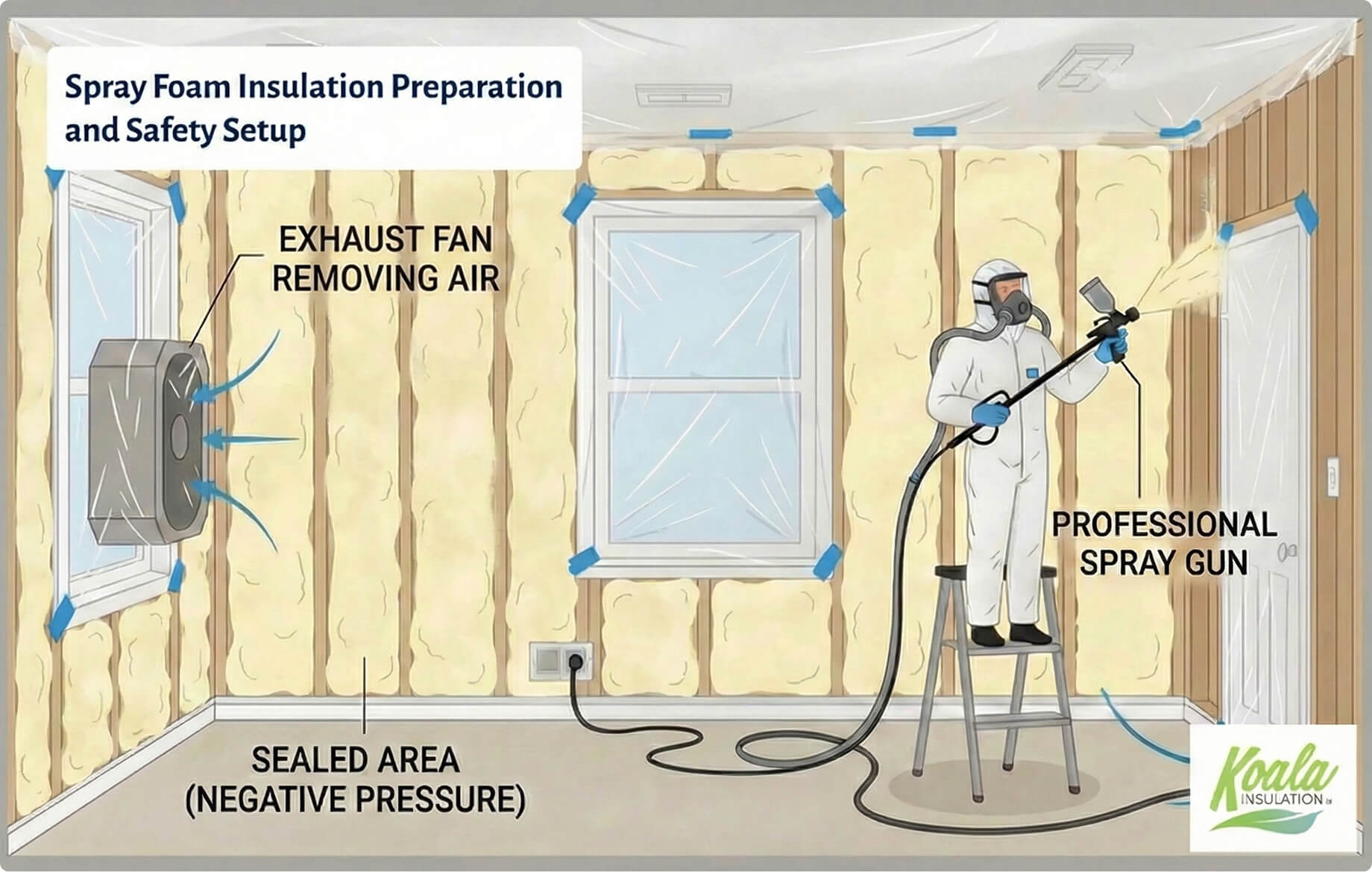
- Prep for Safe InstallationEvery project begins with site-specific safety and preparation. We confirm the product and approved assembly, address access and moisture concerns, isolate the work area, protect finishes and belongings, shut down or isolate HVAC pathways as required, and set up mechanical ventilation. Installers wear product-appropriate personal protective equipment, and occupants and pets remain outside the controlled area. Where applicable, medium-density closed-cell systems are installed by product-certified personnel under the manufacturer’s Site Quality Assurance Program.
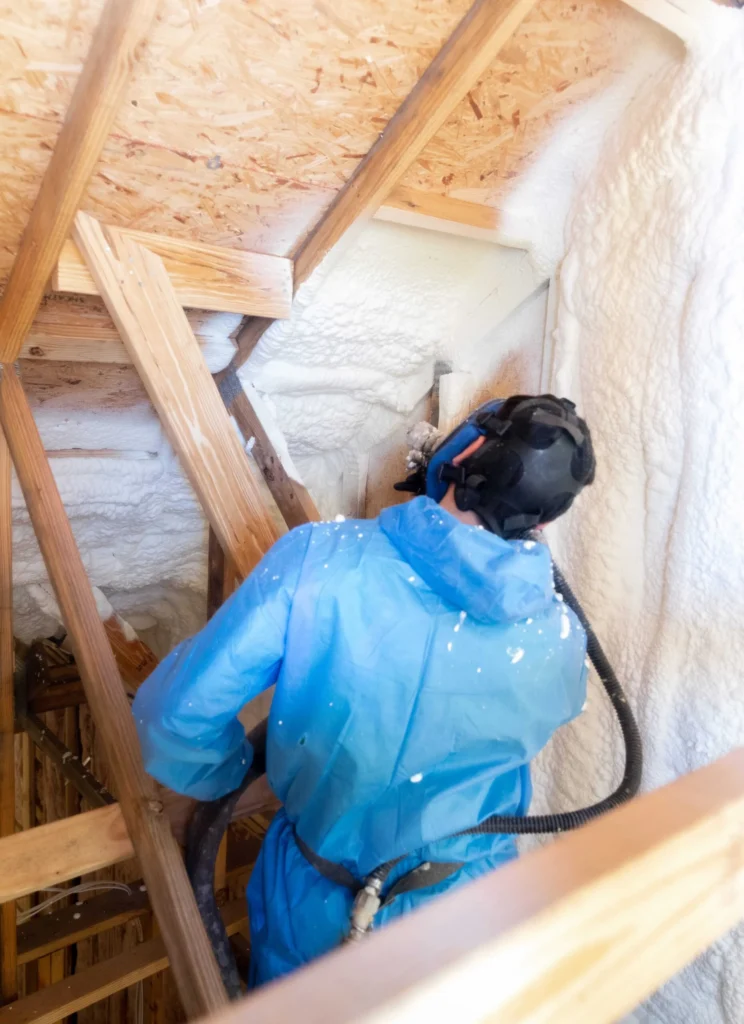
- Precisely Apply Spray FoamUsing professional proportioning and spray equipment, we verify substrate temperature and condition, test the spray, apply the foam in manufacturer-approved lifts, and measure depth as we work. Consistent passes help the material expand and cure as intended without voids, scorching, or off-ratio foam.
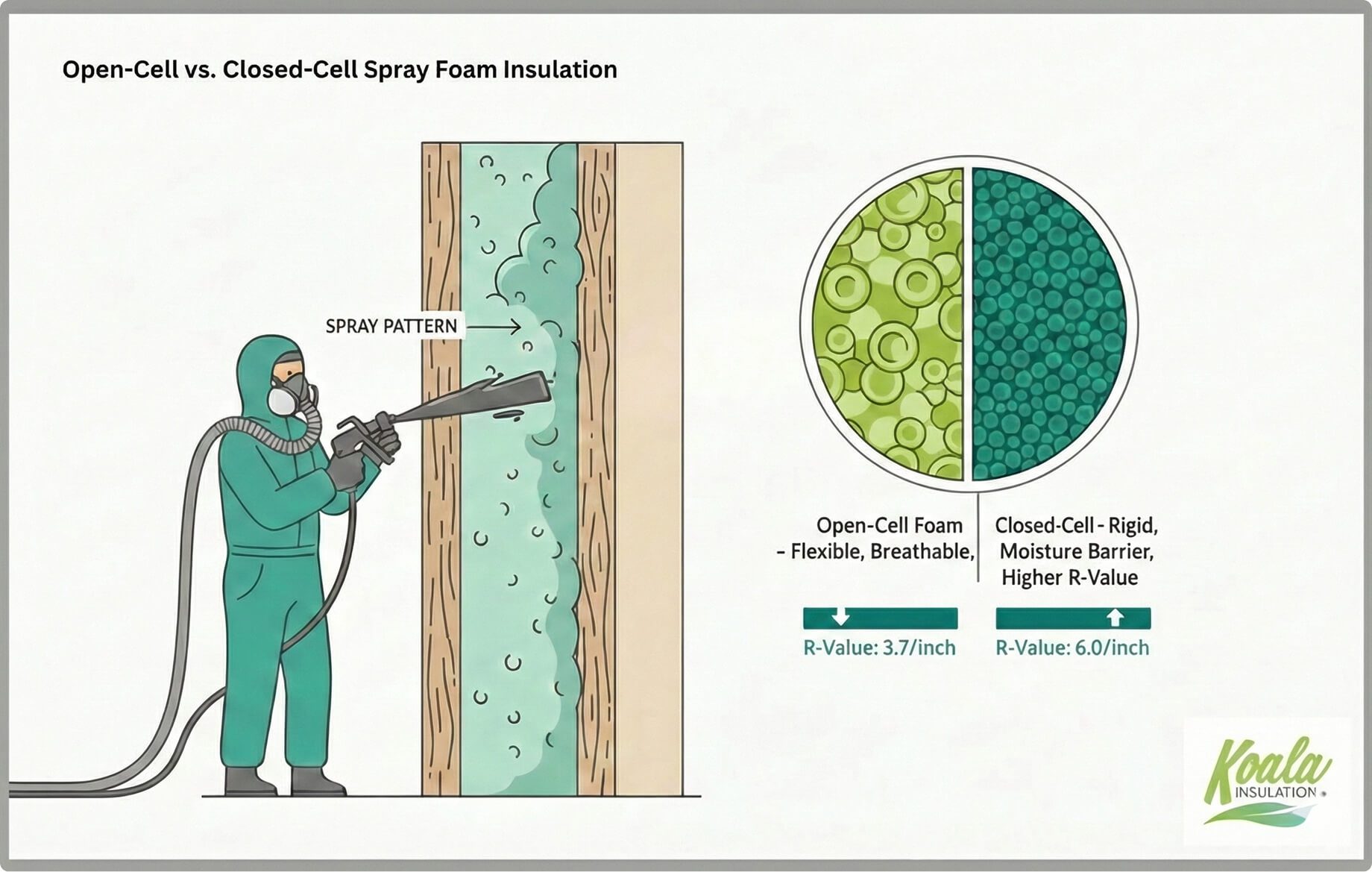
Koala Difference: We document product lot information, substrate conditions, test results, and installed thickness, and verify that the A-side and B-side components are proportioned according to the manufacturer’s requirements.
- Trim and InspectAfter the required cure time, we trim excess foam where needed and inspect coverage, adhesion, depth, and transitions around framing and penetrations. Ventilation continues for the product-specified period, and any required thermal or ignition barrier is confirmed as part of the approved scope.
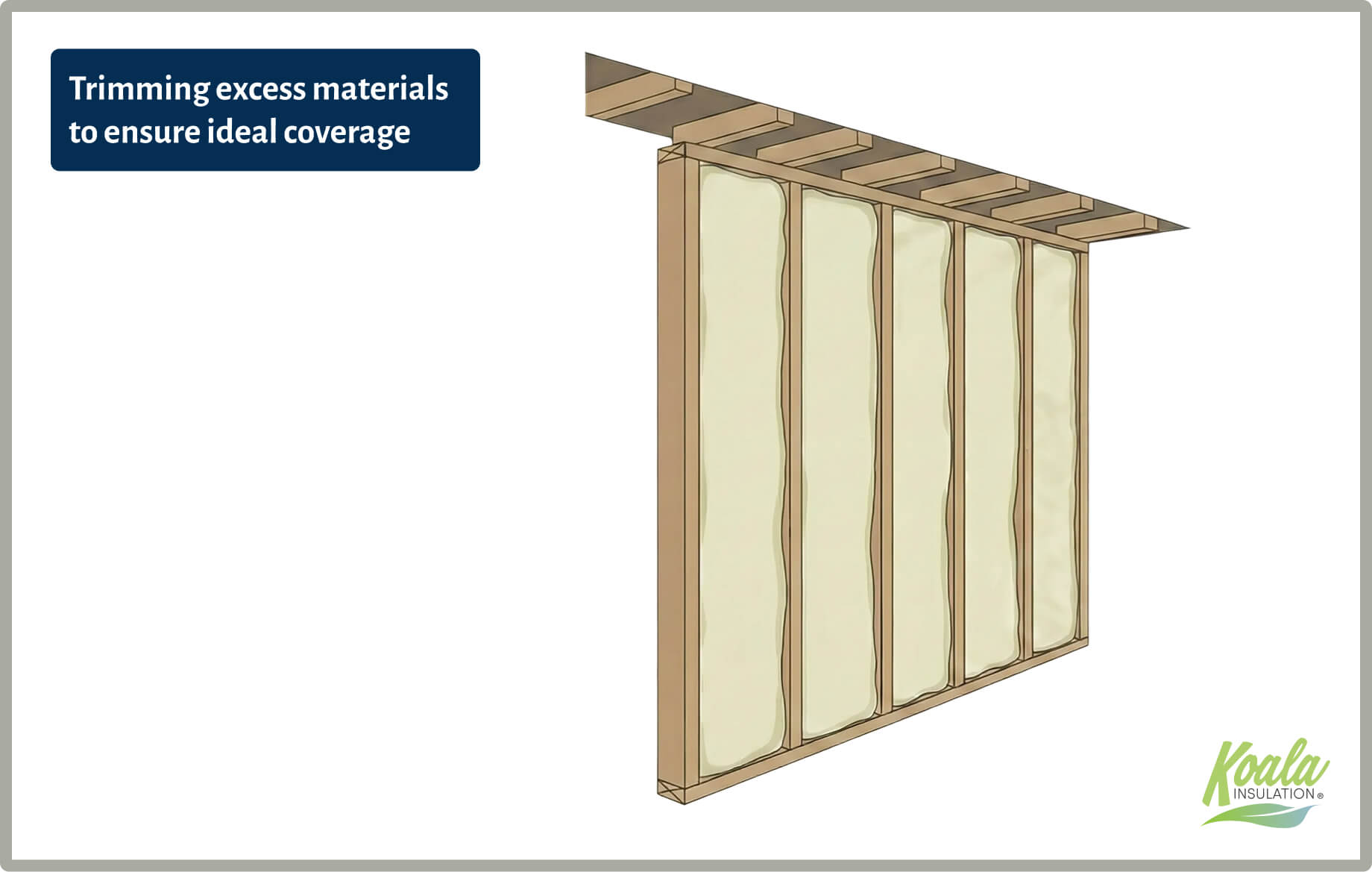
Koala Difference: We use a project-specific quality checklist and identify any areas that need touch-up before the work area is closed.
- Clean Site, Re-Entry & Ongoing Support
We remove masking and waste, clean the work area, and provide product-specific ventilation and re-entry instructions. Occupancy timing varies by product and site conditions; Health Canada advises following the contractor’s instructions on when the area is safe to re-enter. Your project documentation and warranty information are provided at completion.
Koala Difference: We provide available product, certification, warranty, and invoice documentation that may be required for eligible financing or rebate applications.
Get a Quote
Ready to improve comfort in your East Toronto property? Work with local spray foam insulation professionals who understand Ontario assemblies and Toronto’s seasonal temperature swings. Schedule a free quote with Koala Insulation of East Toronto today!
What to Expect
In 5 Easy Steps
In 5 Easy Steps
What to Expect
In 5 Easy Steps

Schedule Your Free Evaluation
Contact your nearest Koala Insulation Location, recognized as the #1 trusted insulation expert nationwide. We will discuss your needs and schedule an appointment to provide a free evaluation.

Home Efficiency Assessment & Estimate
One of our friendly insulation experts will perform a thorough home efficiency assessment. Your insulation expert will then review the assessment findings, the science behind these findings, and why any changes are needed. Lastly, your insulation expert will provide the best option that fits your home efficiency needs and your budget.

Schedule Your Insulation Service
We will schedule your insulation service for the soonest availability that fits your schedule because we understand that your home insulation is a priority!

Installation
Our team of highly skilled insulation technicians will install your premium insulation solution in as little as two hours. We treat your home like our own and take time to leave it cleaner than it was before.
Post Installation Inspection
Contact your nearest Koala Insulation Location, recognized as the #1 trusted insulation expert nationwide. We will discuss your needs and schedule an appointment to provide a free evaluation.

Enjoy Your Comfortable & Efficient Home
Enjoy a more efficient home with lower energy bills and improved comfort year-round. Enjoy your improved home stress free knowing that Koala Insulation stands behind their work! Reach out to your Koala Insulation team anytime for support.

Benefits

Enhanced Comfort

Energy Savings

Quality Materials

Eco-Friendly Options
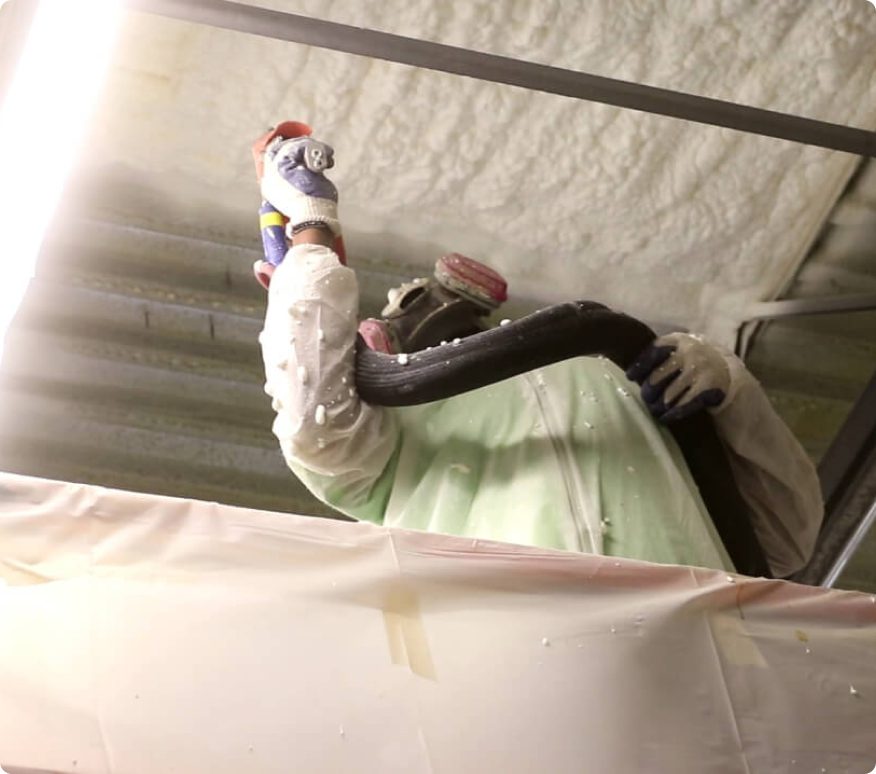
Enhanced Comfort
Stay cozy inside, no matter the weather outside.
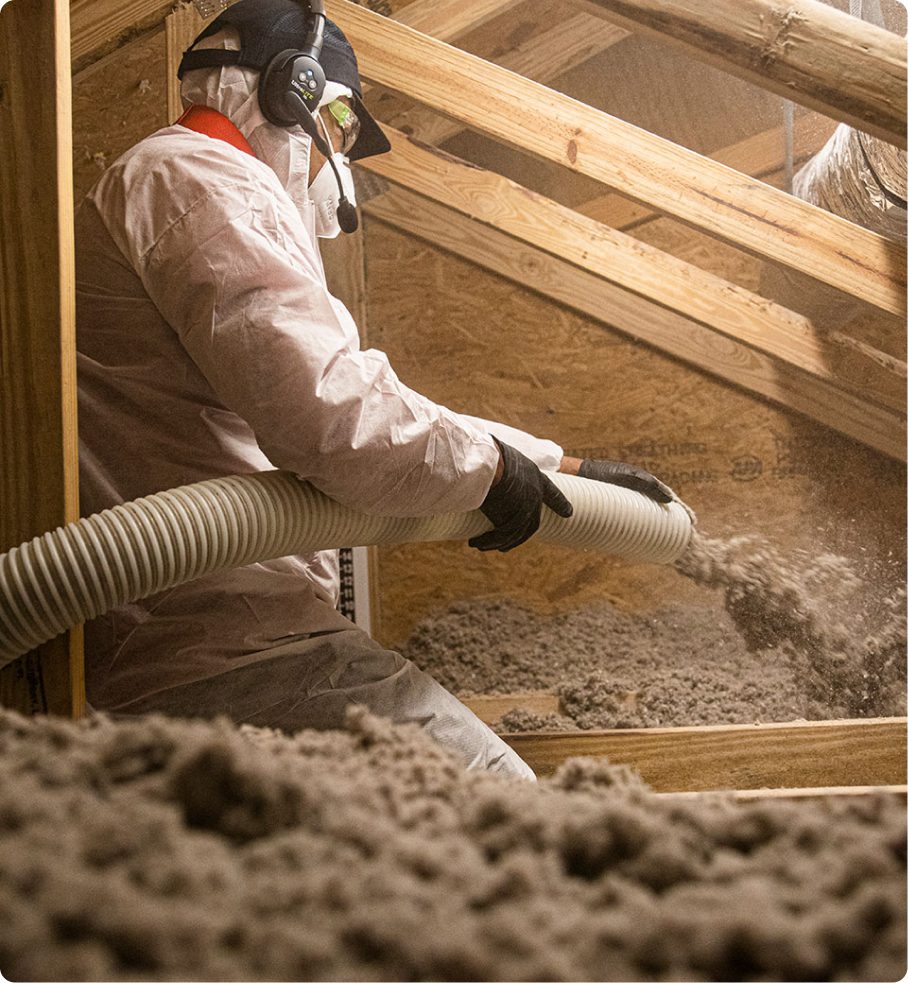
Energy Savings
Save on your energy bills while keeping your home comfy all year.

Reduced Noise
We use top-quality insulation to give you lasting results.
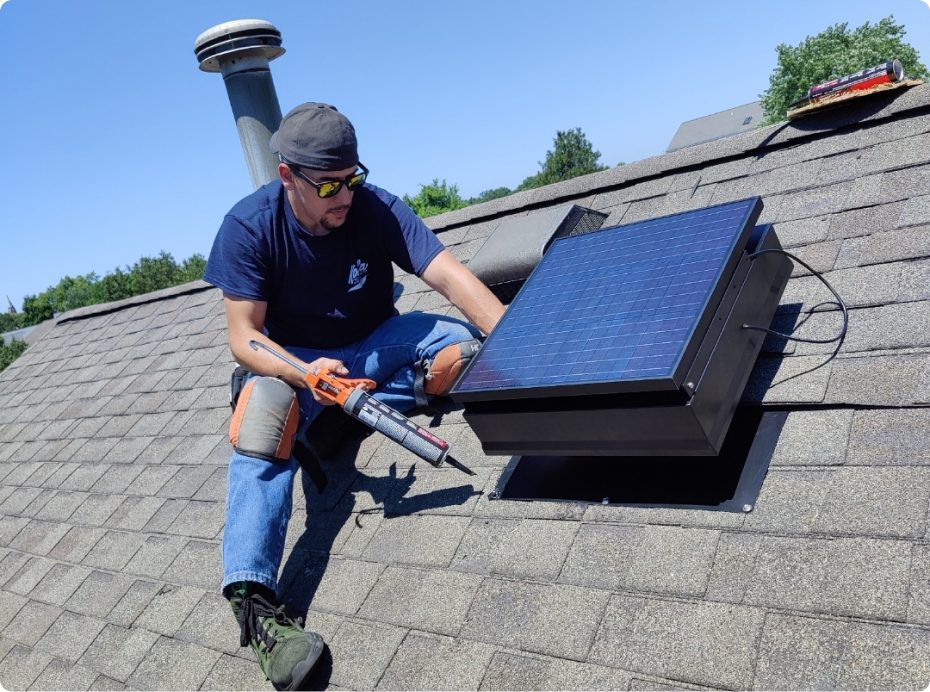
Eco Friendly
Choose insulation that’s better for your home and the planet, such as solar-powered attic fans.
Your Satisfaction is
Our Top Priority
Your satisfaction is our top priority. Hear from clients about their experience with our professional insulation assessments, installation, communication, and clean-up.



A T
20:34 23 Sep 26

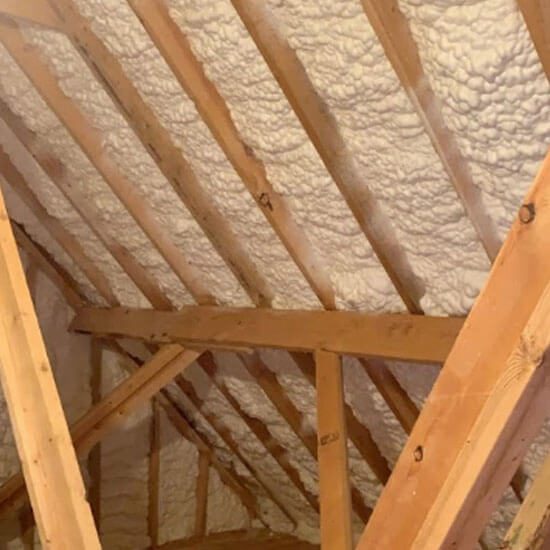





Get a Quote
Ready to improve comfort in your East Toronto property? Work with local spray foam insulation professionals who understand Ontario assemblies and Toronto’s seasonal temperature swings. Schedule a free quote with Koala Insulation of East Toronto today!
Frequently Asked Questions
Spray Foam Insulation FAQs
Get all your questions answered by our local experts. If we didn’t address your question here, give us a call at (647) 247-4744 or schedule a free quote today!
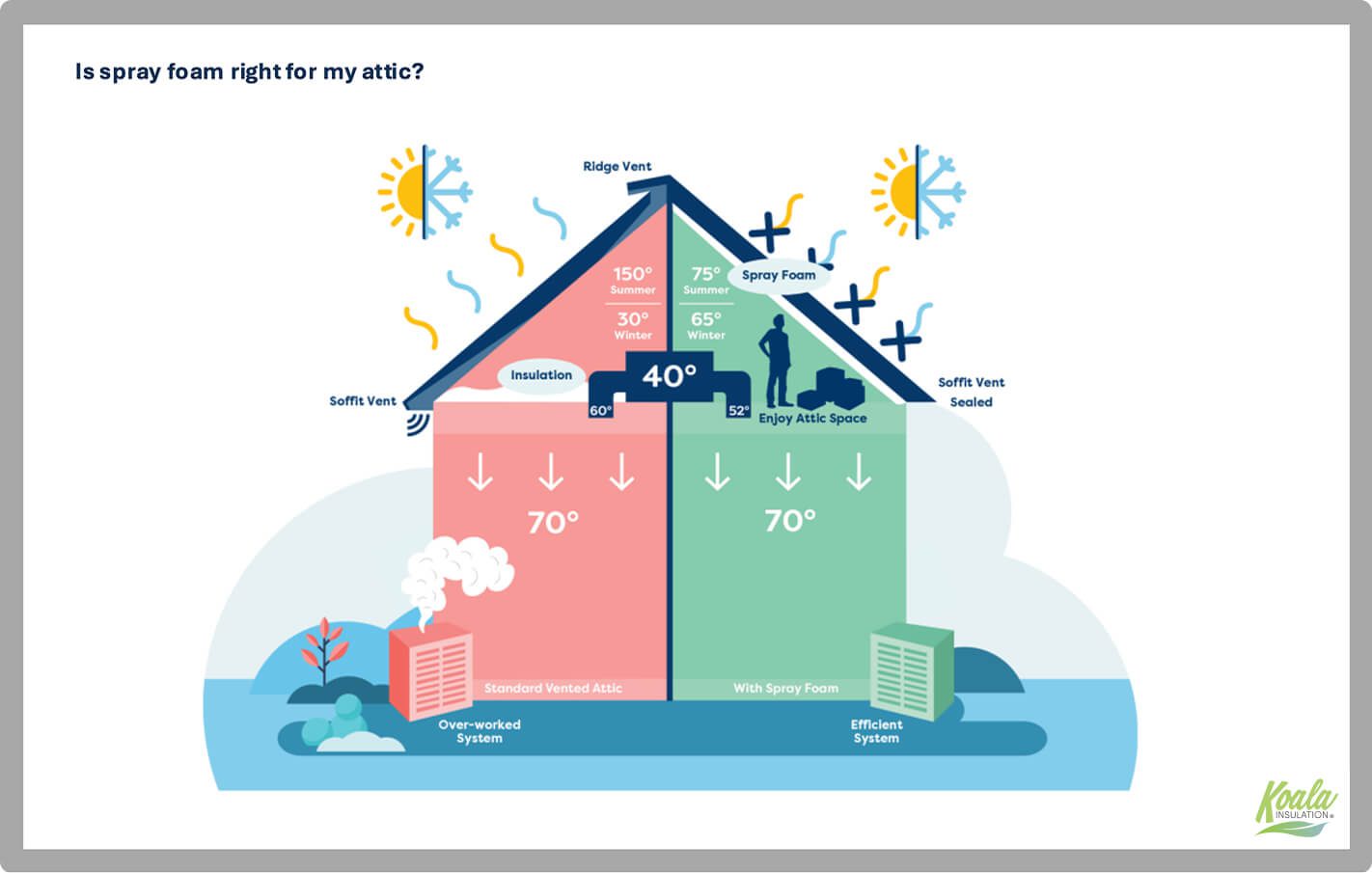
Is spray foam right for my attic in East Toronto?
Spray foam can be a good attic solution when the air-control strategy, roof assembly, ventilation, and moisture conditions are designed together.
Vented attic floor: Foam may be used to seal and insulate the ceiling plane while the roof space remains vented.
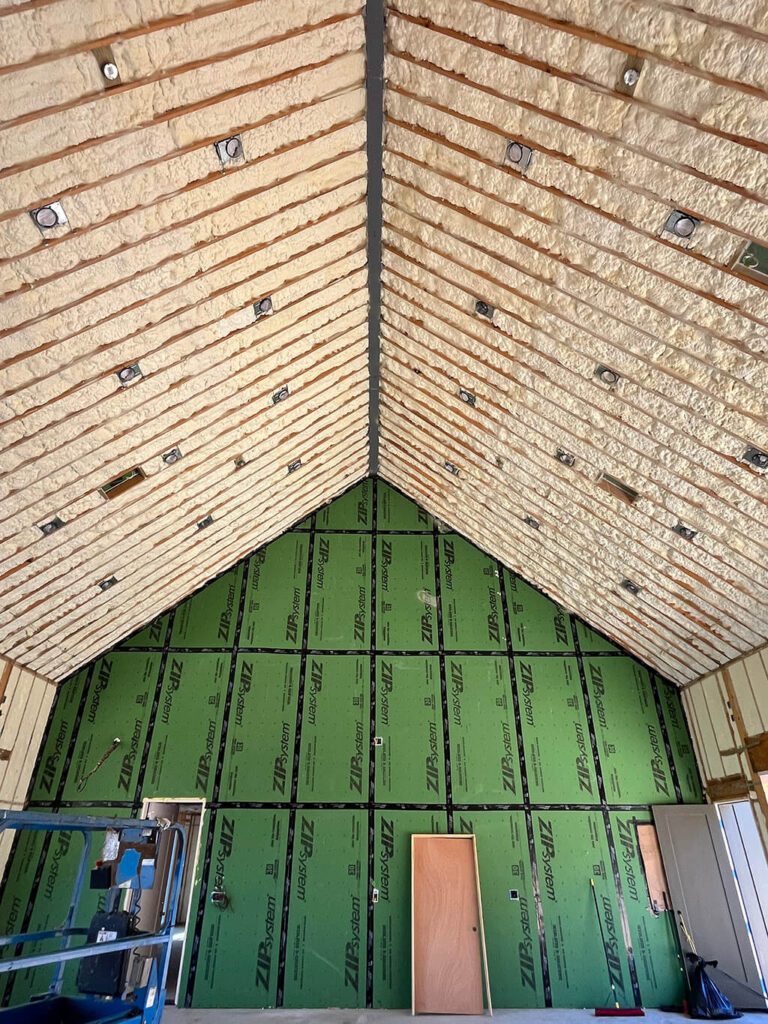
Roof deck or unvented attic: Foam may be applied under the roof sheathing only as part of an approved assembly that addresses moisture, ventilation, roofing warranties, and any combustion equipment in the attic.
Before installation, we check for roof leaks, wet sheathing, blocked soffits, exhaust ducts, wiring, and heat-producing fixtures. Natural Resources Canada advises obtaining building-inspector approval and using a certified spray foam contractor for foam installed under the roof.
How much does spray foam insulation cost in East Toronto?
“Spray foam pricing in East Toronto depends on several project-specific factors:
- Foam type and performance target: Open-cell and closed-cell products have different costs, densities, and uses.
- Area and thickness: Square footage, target R-value, lift thickness, and framing depth affect material volume.
- Preparation: Existing insulation removal, cleaning, moisture repairs, access, masking, and ventilation affect labour.
- Code-related finishes: Gypsum board or an evaluated protective coating may be required over exposed foam.
Because safety controls and protective finishes can materially change the scope, a price per square foot without an inspection can be misleading. A written estimate should identify the product, target thickness, preparation, barriers, removal and disposal, taxes, and warranty.”
Free Insulation Assessment
The Koala Insulation efficiency experts will perform a thorough examination of your home’s current efficiency.
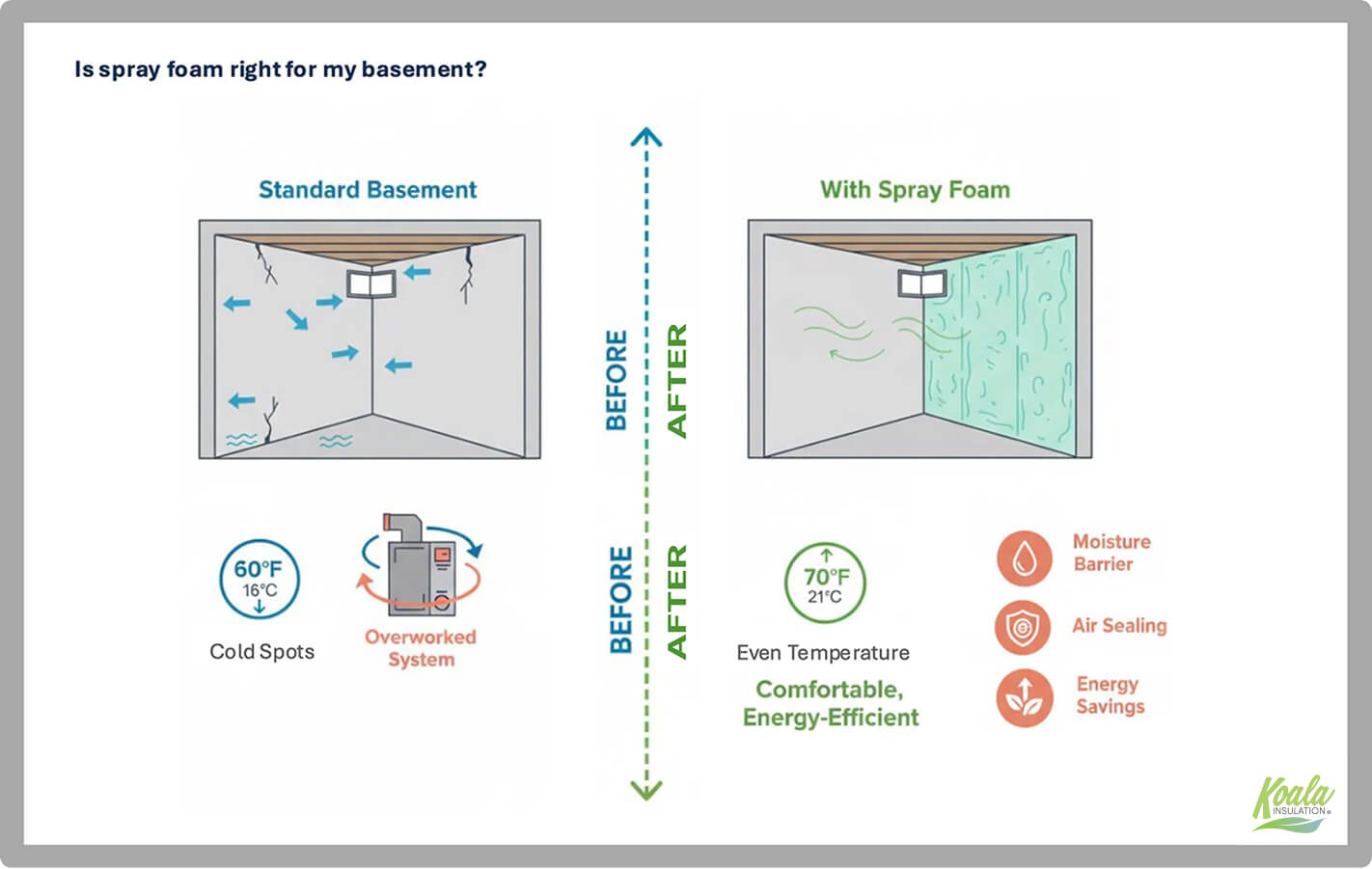
Is spray foam right for my basement in East Toronto?
“Spray foam can be an effective choice for basement rim joists and interior foundation-wall assemblies when the space is dry and the moisture strategy is planned first. Closed-cell foam can bond to clean concrete or masonry, provide thermal resistance, and create a continuous air seal.
Active leaks, foundation cracks, efflorescence, drainage problems, flooding risk, and existing mould must be addressed before foam is applied. Natural Resources Canada notes that basements can account for about 25% of a home’s total heat loss and identifies the rim-joist area as a critical air-leakage location. Learn more about basement insulation.
We assess whether spray foam, rigid insulation, batt insulation, or a hybrid wall system offers the best balance of drying potential, code compliance, comfort, and cost for your basement.”
How much does basement spray foam installation cost in East Toronto?
“Basement spray foam costs are project-specific and quoted in Canadian dollars. Key variables include the length and height of foundation walls, rim-joist access, foam type and thickness, demolition or insulation removal, cleaning and surface preparation, plumbing and electrical obstructions, moisture repairs, and the required thermal barrier or finished wall system.
A small rim-joist project and a full-height foundation-wall retrofit have very different material, labour, and finishing requirements. The most reliable price comes from an on-site assessment and a written scope that separates insulation, preparation, protective finishes, disposal, taxes, and optional work.”
Free Insulation Assessment
The Koala Insulation efficiency experts will perform a thorough examination of your home’s current efficiency.
Should I insulate my basement ceiling with spray foam?
“It depends on whether the basement should be inside or outside the home’s thermal envelope. If the basement is heated, used, or contains ducts and plumbing, insulating the foundation walls and rim joists often keeps the whole lower level warmer and reduces the risk of cold pipes. Insulating only the ceiling can leave the basement colder and may require additional pipe and duct protection.
Ceiling spray foam can make sense below an unheated area, above a garage, or where a specific air-sealing or sound-control goal has been identified. The assembly must also maintain required fire separations and access to services. We evaluate the basement’s use, HVAC layout, moisture conditions, and code requirements before recommending ceiling, wall, rim-joist, or hybrid insulation.”
Is spray foam insulation safe?
“Spray foam can be used safely when the correct product is installed and cured under controlled conditions. During application, two-component polyurethane materials can irritate the skin and respiratory system and may cause sensitization. Occupants and pets must stay outside the controlled work area while trained installers use appropriate protective equipment, isolation, and mechanical ventilation.
Re-entry time is product-specific. Health Canada advises following the contractor’s instructions on when the area is safe to re-enter and how long it should be ventilated. Some CCMC-evaluated medium-density closed-cell products specify approximately 25 hours under defined retrofit ventilation conditions, but the documentation for the product used on your project controls. Review Health Canada’s spray-foam safety guidance.
After curing, the foam should be firm, properly bonded, and free from persistent strong chemical odours. Any tackiness, unusual shrinkage, or continuing odour should be investigated.”
Will spray foam help with mould and mildew issues in my basement?
Spray foam can help reduce condensation and humid-air leakage when it is part of a properly designed basement assembly, but it does not remove existing mould or repair the water source that allowed growth. Roof runoff, grading, foundation cracks, plumbing leaks, flooding, high indoor humidity, and damp materials must be corrected first.
Closed-cell foam does not readily absorb water and is not a food source for mould, but dust, wood, drywall, and other materials beside it can still support growth if moisture remains. Affected materials should be assessed and remediated, and the substrate must be clean and dry before insulation is installed.


Mold and Mildew Removalwith Koala Insulation
Watch Now
Free Insulation Assessment
The Koala Insulation efficiency experts will perform a thorough examination of your home’s current efficiency.
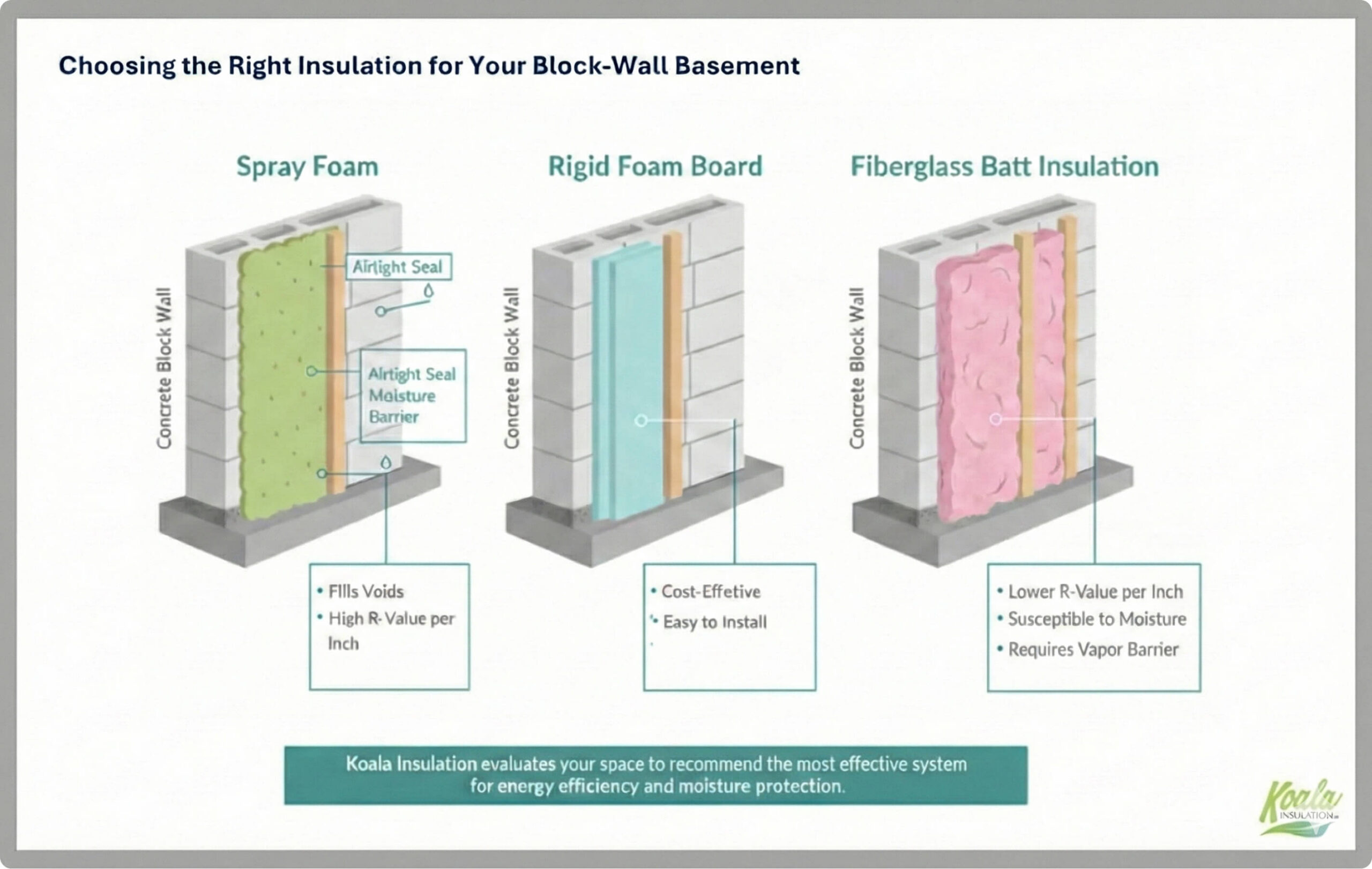
Can you insulate the concrete block walls in my basement?
Yes, concrete block walls can often be insulated, but the wall must first be checked for bulk-water entry, efflorescence, cracks, movement, and trapped moisture. Hollow concrete block can store and transport moisture, so exterior drainage and waterproofing problems should be corrected before an interior foam system is installed.
Closed-cell spray foam can bond to clean, dry, sound masonry and provide insulation, air control, and limited vapour control at the specified thickness. The completed assembly may need a code-approved thermal barrier, and some basements are better served by rigid foam, a framed wall, or a hybrid system that provides a suitable drying path.
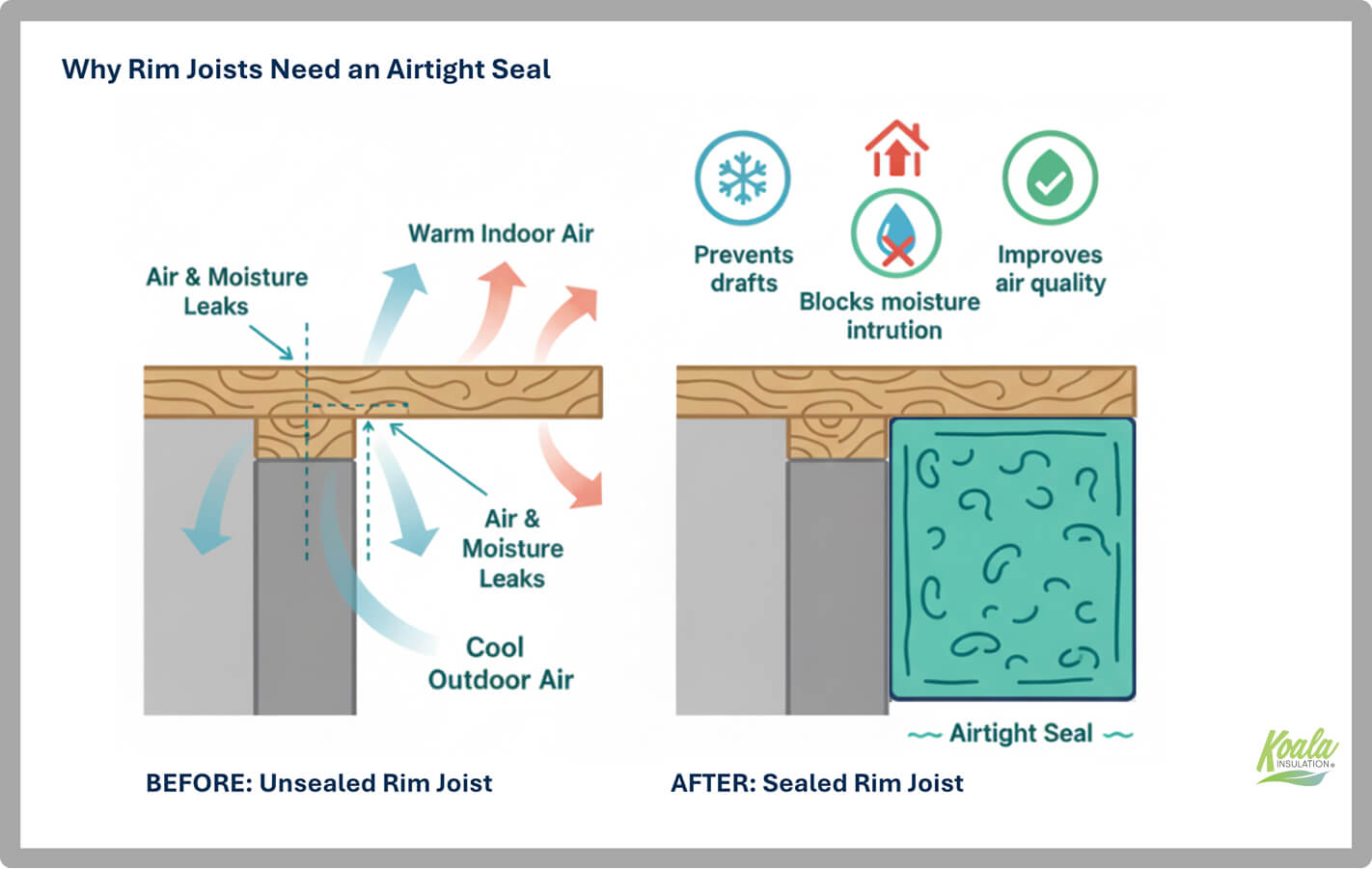
Do my rim joists need an airtight seal?
“Yes. The rim joist, where the wood framing meets the top of the foundation, is a common source of drafts and heat loss. Natural Resources Canada identifies airtightness at this area as critical and notes that polyurethane foam can be used to seal it. See its basement and rim-joist guidance.
Before sealing, we check for damp wood, plumbing or wiring penetrations, pest activity, and exterior water-management problems. A continuous, properly detailed seal can help reduce cold floors, uncontrolled air leakage, and condensation risk at the foundation transition.”
Free Insulation Assessment
The Koala Insulation efficiency experts will perform a thorough examination of your home’s current efficiency.
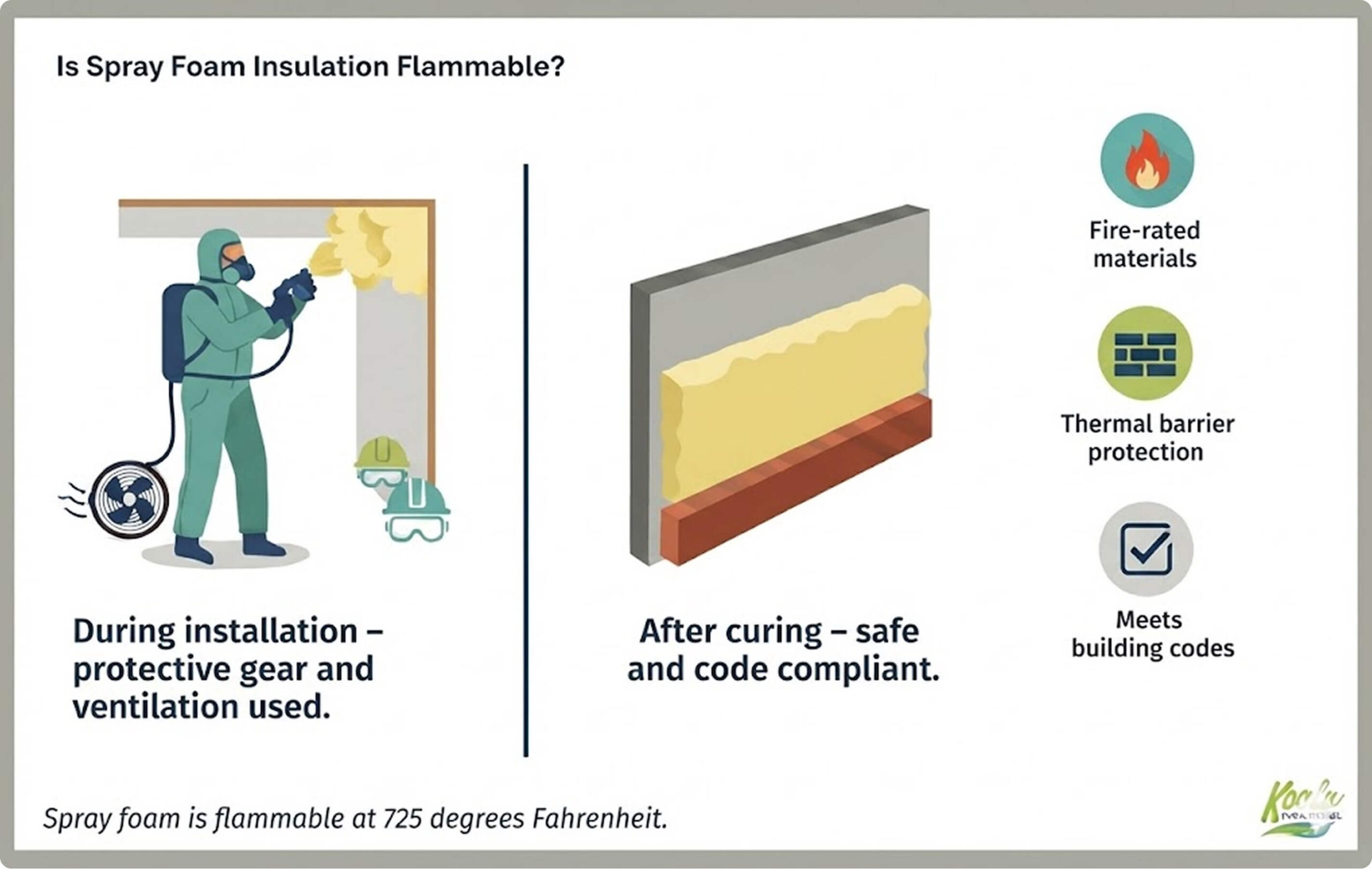
Is spray foam insulation flammable?
“Spray polyurethane foam is a combustible plastic. It can burn when exposed to sufficient heat or flame and may produce hazardous smoke. A product described as “fire rated” or having a particular flame-spread rating is not the same as a non-combustible material and does not automatically mean the foam may remain exposed.
Depending on the product and location, Ontario-compliant assemblies may require protection such as gypsum board or an evaluated thermal or ignition-barrier coating. The manufacturer’s evaluated assembly, the current Ontario Building Code, and the local authority having jurisdiction determine the required protection. Review Ontario’s Building Code information.”
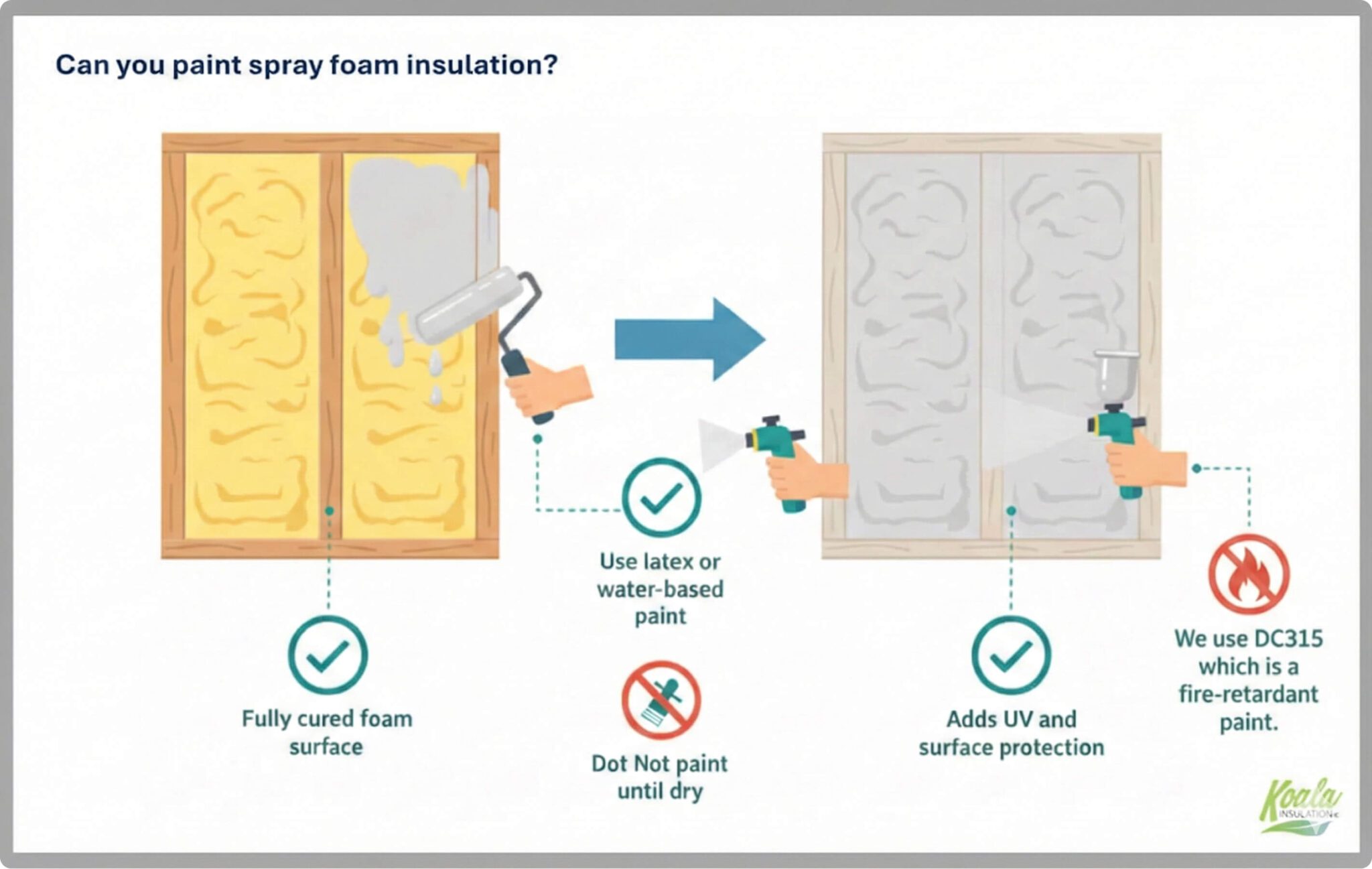
Can you paint spray foam insulation?
“Fully cured spray foam may sometimes be painted for appearance or ultraviolet protection if the foam manufacturer permits it and the surface is properly prepared. Ordinary paint, however, is not automatically a code-approved thermal or ignition barrier.
Where a protective coating is used for fire performance, it must be an evaluated system applied at the specified wet-film thickness by an approved installer and accepted for the exact assembly. In many applications, gypsum board is the required or preferred protection. Never coat foam that is uncured, tacky, contaminated, or still producing a strong chemical odour.”
How long does spray foam insulation last?
“Properly installed spray foam can remain effective for decades because it adheres to the substrate and does not settle like loose-fill insulation. Its actual service life depends on correct mixing and curing, a dry and sound substrate, protection from sunlight and physical damage, and the long-term condition of the roof, wall, or foundation assembly.
Foam should be inspected after leaks, roofing or electrical work, pest activity, or renovations that disturb the assembly. Damaged or poorly bonded areas can often be repaired after the underlying cause is corrected.”
What are the best applications for spray foam insulation?
“Spray foam is most valuable where detailed air sealing, irregular geometry, or limited cavity depth makes conventional insulation difficult. After an assessment, we may recommend it for:
Rim Joists and Sill Plates: Seals the complex transition between foundation and framing.
Attic Floors or Rooflines: Useful for air sealing, restricted eaves, knee walls, cathedral ceilings, or an approved conditioned-attic assembly.
Basement Foundation Walls: Closed-cell foam can provide insulation and air control after bulk-water issues are corrected.
Walls During Renovations or New Construction: Fills irregular stud cavities and penetrations when the wall is open.
Overhangs and Floors Above Garages: Helps seal hard-to-reach framing where cold floors and air leakage are common.
Commercial and Metal-Building Assemblies: Can provide continuous insulation and air control when specified for the substrate and occupancy.
The best product and thickness depend on moisture control, vapour permeance, fire protection, target R-value, and the building assembly.”
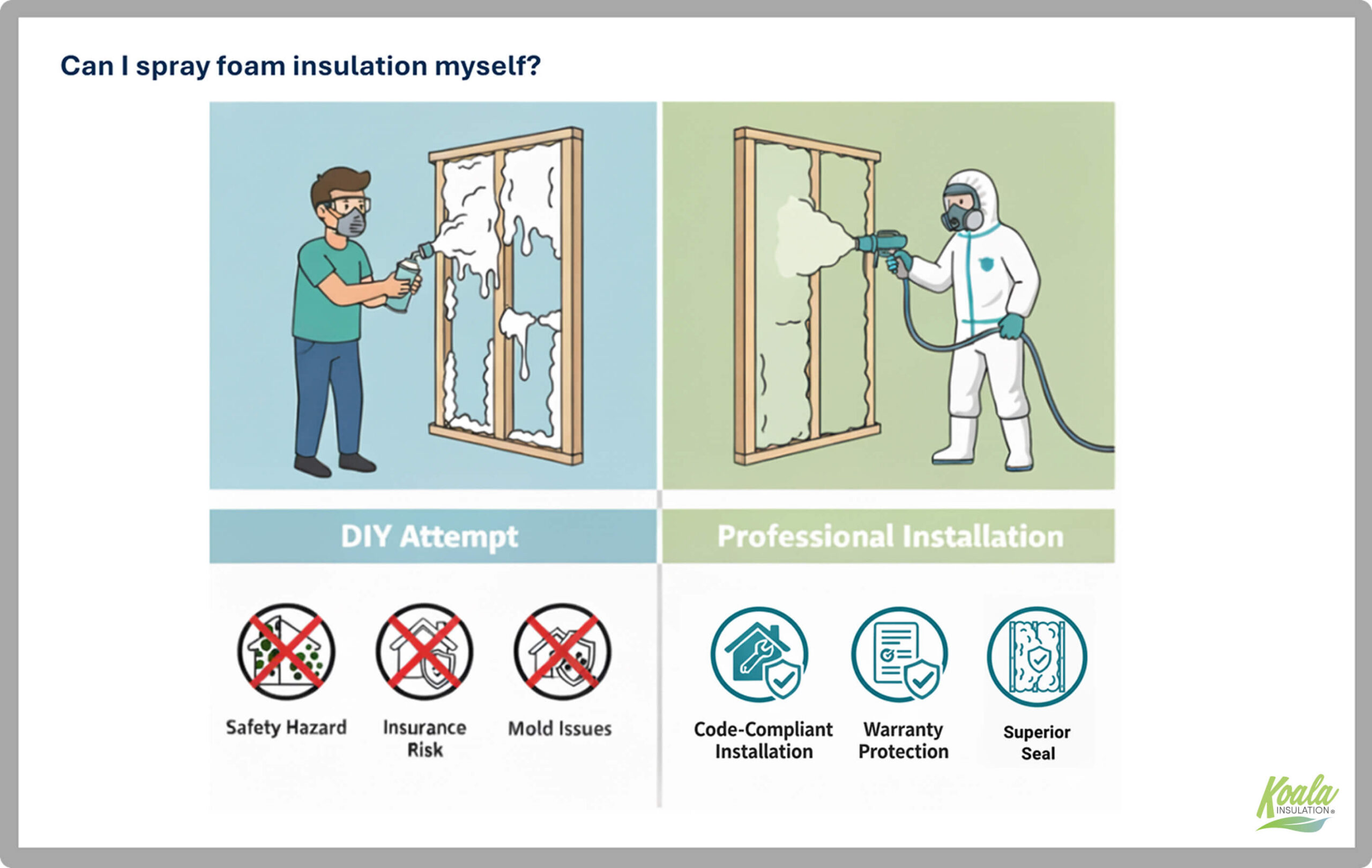
Can I spray foam insulation myself?
“Professional two-component spray foam is not a suitable do-it-yourself insulation project. Successful installation requires precise component ratio and temperature control, substrate testing, approved lift thicknesses, respiratory and skin protection, work-area isolation, mechanical ventilation, and knowledge of moisture and fire-code requirements.
Small one-component cans may be appropriate for limited gaps when used exactly as labelled, but they are not a substitute for a tested whole-cavity insulation system. DIY errors can create off-ratio foam, shrinkage, scorching, trapped moisture, persistent odours, inadequate R-value, or missing fire protection. Use a qualified contractor for full spray foam installations.”
Free Insulation Assessment
The Koala Insulation efficiency experts will perform a thorough examination of your home’s current efficiency.
Insulation Education
Learn why insulation is critical to your home’s energy efficiency and your family’s comfort.
Learn More
Get a quote
Ready to start your insulation project? Get a free quote from your local Koala Insulation team today.


<?php
$related_location = get_field('related_location');

$location_id = $related_location[0]->ID ? $related_location[0]->ID : false;
          $rl_code = get_field('real_labs_embed_code', $location_id);
          if ($rl_code) {
            echo $rl_code;
          }
          ?>