
Best Roof and Attic Insulation Options for Bergen County, NJ Winters
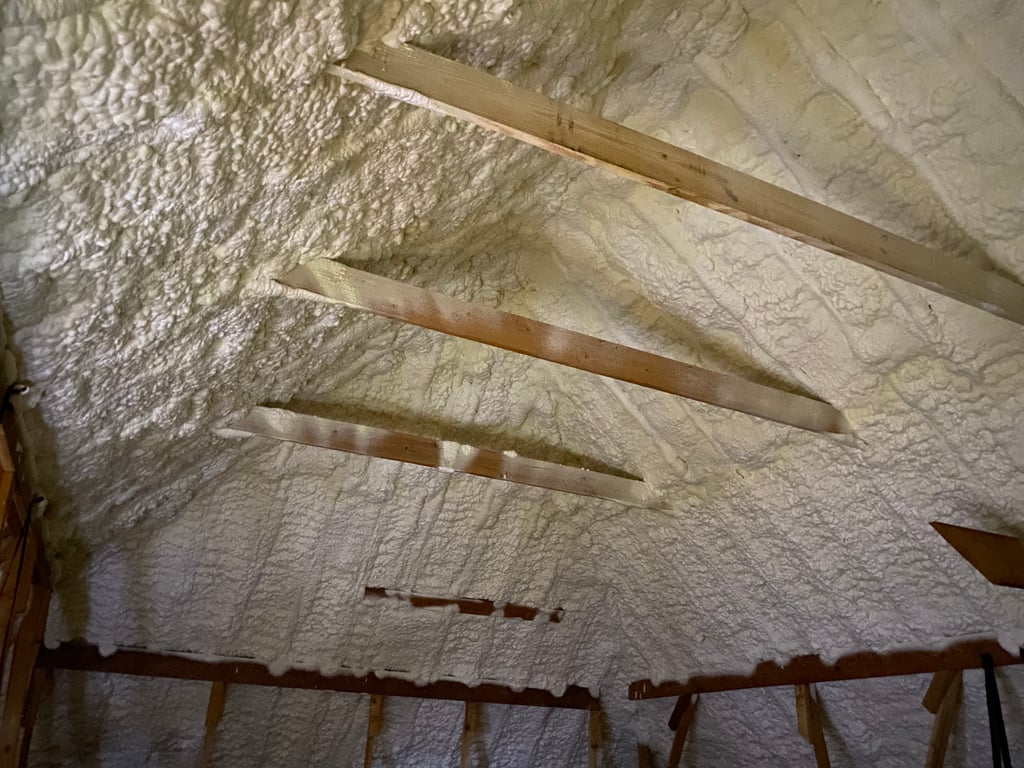
Winter in Bergen County, New Jersey, brings freezing temperatures, snowfall, icy conditions, and significant heating demands for homeowners. Whether you own a Colonial in Ridgewood, a Cape Cod in Fair Lawn, or a split-level home in Paramus, keeping your home warm throughout the winter depends partly on how effectively your roof and attic insulation prevent heat loss. When these areas are inadequately insulated, heat can escape from conditioned living spaces, potentially increasing energy bills, contributing to uncomfortable rooms, and creating conditions that encourage ice dam formation.
Choosing the best roof insulation is not simply about selecting the material with the highest R-value. The right solution depends on your home’s construction, whether the attic is finished or unfinished, the location of the thermal boundary, and how ventilation and moisture are managed. Fiberglass, blown-in cellulose, spray foam, mineral wool, and rigid foam insulation can all be effective in certain applications, but they are not interchangeable.
For most Bergen County homes with unfinished, vented attics, properly installed insulation across the attic floor, combined with air sealing, is an effective way to reduce winter heat loss. Homes with finished attic rooms, vaulted ceilings, or specialized roof assemblies may require insulation along the roofline instead. Understanding these differences can help homeowners choose an insulation strategy that improves comfort, supports energy efficiency, and protects the performance of their home’s building envelope.
Ready to start your insulation project?
Why Roof and Attic Insulation Matter During Bergen County Winters
During winter, heat naturally moves from warmer indoor spaces toward colder areas. Because the attic and roof are exposed to significant temperature differences, they can become major pathways for heat transfer when insulation is insufficient.
In a conventional home with an unfinished attic, the insulation typically sits on the attic floor, directly above the heated rooms below. This creates a thermal boundary that slows heat transfer into the colder attic space. If insulation is thin, missing, compressed, or unevenly distributed, more heat can escape through the ceiling assembly.
Air leakage can make these problems worse. Warm indoor air may move through gaps around attic hatches, plumbing penetrations, recessed lighting, or other openings. This can transport heat and moisture into the attic, creating conditions that affect both energy efficiency and moisture control.
For Bergen County homeowners, improving attic insulation can provide several benefits, including more consistent indoor temperatures, reduced heating demand, fewer cold spots, and potentially lower winter energy expenses. Proper insulation and air sealing can also help reduce unwanted roof warming that contributes to certain types of ice dams.
However, roof insulation should not be confused with roof waterproofing. Insulation helps manage heat transfer, while the roofing system must still protect the building from rain, snow, and other sources of water intrusion.
Should You Insulate the Attic Floor or the Roofline?
One of the most important decisions in a roof insulation project is determining where the insulation belongs. Homeowners sometimes assume that insulation must be installed directly beneath the roof decking, but that is not always the most appropriate approach.
According to the U.S. Department of Energy’s guidance on where to insulate a home, unfinished attics are generally insulated between and over the attic floor joists. Finished attics, cathedral ceilings, and certain conditioned attic configurations require different approaches.
Insulating the Attic Floor
For a typical unfinished, vented attic, insulation is installed along the ceiling plane separating the conditioned living space from the attic. This allows the attic to remain outside the home’s conditioned thermal envelope while reducing heat transfer from the occupied rooms below.
Blown-in fiberglass, cellulose, and fiberglass batts can all be suitable for this application. The most important considerations are achieving the appropriate R-value, eliminating significant gaps in coverage, and sealing unwanted air leakage before additional insulation is installed.
For homeowners in Emerson, Westwood, and Oradell with accessible unfinished attics, this approach may provide a practical way to improve winter thermal performance without substantially changing the existing roof assembly.
Insulating the Roofline
Insulating the roofline involves placing insulation along the sloped roof assembly rather than simply across the attic floor. This approach may be appropriate when an attic contains finished living space, when certain mechanical systems or ductwork are intended to be within the conditioned envelope, or when the roof assembly is specifically designed for insulation at the rafters.
Depending on the design, insulation may be installed beneath the roof decking, above the roof decking, or within a properly ventilated rafter assembly.
These approaches require careful attention to condensation control, air barriers, vapor management, ventilation requirements, and applicable construction codes. Installing insulation directly against roof sheathing without considering these factors can create moisture-related problems.
For many Bergen County homeowners, the best first step is identifying the intended thermal boundary before comparing insulation materials.
The Best Roof and Attic Insulation Materials for Bergen County Homes
Different insulation materials provide different benefits, and the best choice depends on where the insulation will be installed. The following options are commonly considered for winter roof and attic insulation projects in cold-climate homes.
1. Blown-In Fiberglass Insulation for Unfinished Attics
Blown-in fiberglass is a popular option for insulating unfinished attic floors. It consists of loose fiberglass fibers distributed through specialized equipment to create an insulating layer over the attic surface.
One advantage of blown-in insulation is its ability to conform to irregular framing and reach areas that may be difficult to insulate with traditional batts. When installed to the appropriate depth and coverage specifications, it can help establish consistent thermal resistance across accessible attic floors.
For older Bergen County homes with uneven insulation, exposed attic joists, or hard-to-reach corners, blown-in fiberglass can be an effective retrofit solution. In many situations, it can be installed over existing insulation when the original material is dry, uncontaminated, and suitable to remain in place.
However, blown-in fiberglass does not replace proper air sealing. Openings around attic penetrations should be addressed before new material is installed, and soffit ventilation pathways must remain unobstructed.
Homeowners considering an attic upgrade can learn more about blown-in attic insulation services in Bergen County and how this installation method can improve thermal performance.
2. Cellulose Insulation for Irregular Attic Spaces
Cellulose insulation is manufactured primarily from recycled paper fibers that have been treated with fire-retardant additives. Like loose-fill fiberglass, cellulose can be blown into unfinished attic spaces to create a continuous layer of thermal insulation.
Because cellulose conforms to irregular surfaces, it may be especially useful in older homes with complicated framing or attic spaces that contain numerous obstructions. Its composition also provides sound-absorption benefits within insulated building assemblies.
For certain Cape Cod homes in Fair Lawn or Bergenfield, irregular attic spaces and knee-wall configurations can make insulation coverage more challenging. Cellulose may be an appropriate option for some accessible areas, although the correct location and installation method depend on the construction.
One important consideration is moisture exposure. Cellulose can absorb water, so roof leaks and existing moisture problems should be corrected before installation. Loose-fill cellulose must also be installed according to manufacturer specifications that account for settling and the intended final R-value.
Cellulose is not necessarily superior to fiberglass in every application. Both materials can provide effective thermal resistance when properly selected and installed.
3. Fiberglass Batt Insulation for Accessible Framing
Fiberglass batt insulation is available in pre-cut sections or rolls designed to fit between framing members. It is commonly used in walls, floors, ceilings, and certain attic assemblies where framing cavities are readily accessible.
For Bergen County homeowners renovating an attic or improving insulation in accessible framing, fiberglass batts can be a practical option. The material is widely available, provides effective thermal resistance, and can be installed in specified thicknesses to achieve the required R-value.
However, installation quality is particularly important. Batts that are compressed, poorly fitted around obstructions, or installed with gaps can perform below their intended insulation value.
In finished attic spaces with sloped ceilings, fiberglass batts may be appropriate when the assembly includes a properly designed air barrier, sufficient insulation space, and any required ventilation channels. Simply placing batts between rafters without evaluating the complete roof assembly is not recommended.
For homeowners considering improvements to accessible framing, batt insulation installation in Bergen County provides another option for addressing heat loss through suitable building assemblies.
4. Spray Foam Insulation for Certain Roofline Assemblies
Spray foam insulation is a versatile material that expands during application and adheres to building surfaces. Depending on the product and installation method, it can provide thermal resistance and serve as an air barrier within a properly designed assembly.
Two common types are open-cell and closed-cell spray foam. Open-cell foam generally has a lower R-value per inch and is more vapor-permeable, while closed-cell foam typically provides greater thermal resistance per inch and greater resistance to vapor diffusion.
For certain Bergen County homes with finished attics, vaulted ceilings, or specialized roofline configurations, spray foam may be an appropriate option. Its air-sealing capabilities can be particularly useful in building assemblies where controlling air movement is an important part of the insulation strategy.
However, spray foam should not automatically be considered the best choice for every roof. Unvented roof assemblies require proper condensation-control design, and the applicable requirements depend on climate zone, insulation type, installation thickness, and other construction details.
Spray foam also does not repair existing roof leaks or replace the need for a functioning roofing system. Any water intrusion should be identified and corrected before installation.
Homeowners interested in this approach can explore spray foam insulation services in Bergen County to learn how the material may be used in suitable applications.
5. Mineral Wool and Rigid Foam Insulation for Specialized Applications
Mineral wool insulation and rigid foam boards are additional materials that may be considered for certain roof and attic assemblies.
Mineral wool is manufactured from rock or industrial mineral materials and is commonly available in batt form. It offers good thermal resistance, sound absorption, and high-temperature performance. In properly designed roof or ceiling assemblies, mineral wool can provide effective insulation when installed with the necessary air and moisture controls.
Rigid foam insulation is manufactured in boards that provide thermal resistance in relatively thin profiles. Depending on the product and project, rigid foam may be incorporated into specialized roof assemblies, including configurations where insulation is installed above the roof decking.
These applications are more commonly associated with substantial renovations or roof assembly modifications rather than straightforward attic insulation upgrades. Product selection and assembly design must account for moisture management, structural considerations, fire safety, and applicable building codes.
For most Bergen County homeowners seeking to improve a conventional unfinished attic, blown-in insulation or appropriately installed batt insulation may be a more practical starting point than redesigning the entire roof assembly.
How Much Roof or Attic Insulation Is Recommended in Bergen County, NJ?
Bergen County falls within IECC Climate Zone 5A, where winter heating demands make sufficient insulation particularly important.
R-value measures resistance to heat flow, with higher values generally providing greater thermal resistance. However, the appropriate R-value depends on the location of the insulation and the construction of the building assembly.
According to ENERGY STAR’s recommended home insulation R-values, the following retrofit benchmarks apply to existing wood-framed homes in Climate Zone 5:
For previously uninsulated attic floors: R-60 is the recommended retrofit target.
For attic floors with approximately three to four inches of existing insulation: R-49 is the recommended total retrofit level.
These recommendations apply to common attic retrofit scenarios and should not be treated as universal requirements for every type of roof assembly. Finished attics, cathedral ceilings, and roofline insulation systems may have different design and code considerations.
The amount of insulation needed also depends on the existing material. An attic containing several inches of fiberglass may require a different amount of additional insulation than one with very little existing coverage.
For Bergen County homeowners, a professional assessment can help establish the approximate existing R-value, identify inconsistent coverage, and determine the appropriate insulation improvements for the property.
Can Better Roof Insulation Help Prevent Ice Dams?
Ice dams are a concern during snowy winters in Bergen County, particularly when freezing temperatures are followed by periods of melting and refreezing.
An ice dam can develop when snow on a roof melts and the resulting water flows toward colder areas near the eaves. If that water refreezes, it can create a ridge of ice that interferes with normal drainage.
Heat escaping from the home into an attic may contribute to this process by warming portions of the roof above the attic. When the roof surface becomes warm enough to melt accumulated snow while the eaves remain below freezing, conditions can favor ice dam formation.
How Insulation Helps Reduce Ice Dam Risk
Adequate attic insulation slows heat transfer from the living space into the attic, helping reduce unwanted warming of the roof assembly.
Air sealing is equally important because openings in the ceiling plane can allow warm indoor air to enter the attic and transfer heat to roof surfaces.
For conventional vented attics, preserving appropriate ventilation pathways can further support the intended performance of the assembly. These measures work together to help limit the temperature differences that can contribute to certain ice dams.
However, insulation alone cannot guarantee that ice dams will never develop. Roof geometry, snowfall, solar exposure, outdoor temperatures, and other conditions can also influence the melting and refreezing cycle.
Homeowners who repeatedly experience ice dams should have the attic insulation, air leakage, ventilation, and overall roof conditions evaluated rather than assuming that additional insulation will automatically resolve every issue.
Why Air Sealing Should Be Part of Every Attic Insulation Assessment
One of the most common mistakes homeowners make is assuming that adding insulation will automatically stop drafts and air leakage.
Insulation primarily slows heat transfer through building assemblies. Air sealing addresses cracks, gaps, and other openings that allow conditioned indoor air to escape and outside air to enter.
In a typical Bergen County attic, potential leakage points include plumbing penetrations, electrical wiring openings, attic access hatches, wall top plates, and certain recessed lighting assemblies.
During winter, pressure differences between indoor and outdoor air can encourage warm air to move through these openings. This not only contributes to heat loss but can also transport indoor moisture into colder attic spaces.
For this reason, air sealing should generally be completed before installing additional insulation across a conventional vented attic floor. Once new loose-fill insulation covers the surface, previously accessible leakage points can become more difficult to identify.
Koala Insulation of Bergen County provides professional air sealing services that can complement attic insulation improvements. Addressing both thermal resistance and uncontrolled airflow helps create a more complete approach to winter energy efficiency.
How Roof Insulation Needs Differ Across Bergen County Home Styles
Bergen County features a variety of residential construction styles, and each can present different challenges when insulating attics and roof assemblies. Understanding these differences helps homeowners select insulation improvements that address their actual building conditions.
Colonial Homes in Ridgewood, Glen Rock, and Oradell
Traditional two-story Colonial homes often have bedrooms located directly beneath an unfinished attic. When insulation is insufficient, heat can transfer through the second-floor ceiling, contributing to uncomfortable rooms and unnecessary heating demand.
For these properties, improving attic floor insulation and sealing ceiling penetrations may be an effective starting point. However, older Colonials with dormers, additions, or modified roof structures may require more detailed evaluation to identify discontinuities in the insulation and air barriers.
Cape Cod Homes in Fair Lawn and Bergenfield
Cape Cod homes often have finished upper floors with knee walls, sloped ceilings, and small attic spaces behind the occupied rooms. These configurations can be more complicated than a traditional unfinished attic because multiple surfaces may separate conditioned living areas from unconditioned spaces.
For example, a finished upstairs bedroom may lose heat through an inadequately insulated sloped ceiling, an unsealed knee wall, or an exposed floor cavity behind the knee wall.
Addressing these areas requires identifying the correct thermal boundary and selecting insulation methods that maintain appropriate ventilation and moisture control.
Split-Level Homes in Paramus, Teaneck, and Hackensack
Split-level homes frequently contain multiple attic sections and different ceiling elevations. One portion of the house may have sufficient insulation while another has inadequate coverage or substantial air leakage.
This can produce noticeable temperature differences between rooms, particularly during periods of extreme cold.
For these properties, an insulation assessment should consider each accessible attic section separately rather than assuming that the entire house has the same insulation conditions.
Ranch Homes in Emerson and Westwood
Ranch homes often have a relatively large attic floor area compared with their conditioned living space. When insulation coverage is insufficient, heat transfer through that expansive ceiling area can influence comfort throughout the home.
For ranch homes with accessible unfinished attics, blown-in fiberglass or cellulose may be appropriate for improving thermal resistance across the attic floor.
However, the existing insulation, ventilation pathways, attic access conditions, and other building details should be evaluated before installation.
Why Attic Ventilation Matters When Winterproofing Your Roof
Attic ventilation plays an important role in the performance of many conventional roof assemblies. In a vented attic, intentional airflow through soffit vents and other designated openings helps support the assembly’s moisture-management strategy.
During winter, moisture-laden indoor air may enter the attic through unsealed gaps in the ceiling plane. When this air encounters cold surfaces, condensation can develop under certain conditions.
Proper air sealing helps reduce the movement of indoor moisture into the attic, while appropriate ventilation can help manage moisture that reaches the space.
When adding loose-fill insulation, care must be taken to avoid covering soffit vents or restricting intended airflow paths. Insulation baffles may be necessary near the eaves to maintain ventilation clearance while allowing insulation to extend toward the roof edges.
However, not all attics are intended to be vented. Certain roofline insulation systems are designed as unvented assemblies, with different requirements for condensation control and moisture management.
The correct approach depends on how the roof assembly was constructed or is being redesigned. Adding more ventilation is not automatically beneficial, particularly when it conflicts with the intended roofline insulation system.
Should Existing Attic Insulation Be Removed Before Winter?
Not every roof insulation project requires removing the existing insulation. In many Bergen County homes, additional insulation can be installed over existing material when the original insulation remains dry, uncontaminated, and otherwise suitable for continued use.
For example, an unfinished attic with an older but properly installed layer of fiberglass insulation may be suitable for additional blown-in insulation. The new material can increase the total thermal resistance of the attic floor without requiring complete removal.
However, certain conditions may make insulation removal appropriate.
Moisture damage from roof leaks, significant pest contamination, improperly installed material, or other deterioration can compromise the effectiveness and suitability of the existing insulation.
Older homes may also contain insulation materials that require special handling. If potentially hazardous materials are present, qualified professionals should evaluate the conditions before the insulation is disturbed.
In these situations, insulation removal services in Bergen County may be necessary before new material is installed.
The decision should be based on the condition of the existing insulation and surrounding building materials rather than assuming all older insulation needs replacement.
What to Expect During a Professional Roof or Attic Insulation Assessment
Before selecting an insulation material, homeowners should have the relevant building conditions evaluated. This helps determine which areas are contributing to heat loss and which improvements are appropriate for the home’s construction.
Step 1: Evaluate the Existing Insulation
The assessment should begin with examining accessible attic areas, identifying the existing insulation material, and estimating current insulation levels.
A professional should also look for inconsistent coverage, missing insulation, compressed materials, and other conditions that could affect thermal performance.
Step 2: Identify the Correct Thermal Boundary
The next step is determining whether insulation belongs at the attic floor, along the roofline, or within a combination of assemblies.
For a conventional unfinished attic, the ceiling plane is usually the appropriate thermal boundary. Finished attic rooms and certain specialized roof configurations may require a different approach.
Step 3: Check for Air Leakage and Moisture Problems
Before adding insulation, accessible air leakage points should be evaluated and addressed as appropriate.
The assessment should also consider roof leaks, damp insulation, condensation, and other moisture-related concerns. Existing water intrusion should be corrected before installing new insulation.
Step 4: Review Ventilation and Safety Requirements
A proper evaluation should account for attic ventilation pathways, insulation clearances around heat-producing fixtures, electrical conditions, and other safety considerations.
The specific requirements depend on the insulation type, installation location, and applicable building codes.
Step 5: Recommend the Appropriate Insulation Solution
Once the existing conditions are understood, the contractor can recommend a material and installation approach that addresses the property’s thermal performance needs.
For some homeowners, the best solution may be adding blown-in insulation across the attic floor. Others may benefit from targeted air sealing, fiberglass batt insulation, or a specialized roofline insulation system.
The goal should be to select the right improvement for the building rather than applying the same insulation method to every property.
Frequently Asked Questions About Roof Insulation in Bergen County, NJ
What Is the Best Roof Insulation for Cold New Jersey Winters?
The best insulation depends on the construction of the roof and attic. For conventional unfinished attics, blown-in fiberglass or cellulose can provide effective thermal resistance across the attic floor. Fiberglass batts may also be appropriate for accessible framing. Certain conditioned attic and roofline assemblies may benefit from spray foam or other specialized insulation systems. The correct material should be selected based on the required R-value, air sealing needs, moisture conditions, and overall assembly design.
Is Spray Foam Better Than Fiberglass for Roof Insulation?
Spray foam provides both thermal resistance and air-sealing capabilities when properly installed, making it useful for certain specialized roof assemblies. Fiberglass is often a practical and cost-effective option for conventional unfinished attics when combined with appropriate air sealing. Neither material is universally superior. The best choice depends on where the insulation will be installed and how the roof assembly is intended to function.
Should I Insulate My Roof Rafters or Attic Floor?
For most homes with unfinished, vented attics, insulation belongs along the attic floor to separate conditioned living space from the unconditioned attic. Roof rafter insulation may be appropriate for finished attic rooms, cathedral ceilings, and certain conditioned attic designs. Insulating the rafters without evaluating ventilation and condensation-control requirements can create problems, so the appropriate thermal boundary should be determined before installation.
Can Roof Insulation Help Prevent Ice Dams?
Proper insulation and air sealing can reduce heat transfer from the living space into the attic, helping limit conditions that contribute to some ice dams. However, ice dams can also be influenced by roof design, snow accumulation, weather conditions, and ventilation. Insulation should be considered part of a comprehensive strategy rather than a guaranteed solution.
How Much Attic Insulation Should I Have in Bergen County?
Bergen County is in Climate Zone 5A. ENERGY STAR recommends an R-60 retrofit target for previously uninsulated attics and R-49 for attics that already have approximately three to four inches of insulation. These are general recommendations for common attic retrofit conditions. The appropriate specification depends on the existing building assembly, insulation material, and applicable construction requirements.
Can New Insulation Be Installed Over Old Attic Insulation?
Yes, additional insulation can often be installed over existing material when the original insulation is dry, uncontaminated, and properly installed. The contractor should evaluate the existing material, its approximate R-value, and the overall attic conditions before recommending additional insulation. Damaged or contaminated materials may require removal before new insulation is installed.
Will Roof Insulation Help Lower My Winter Heating Bills?
Proper insulation can reduce heat transfer through ceilings and roof assemblies, potentially decreasing the amount of energy needed to heat the home. The actual savings depend on existing insulation levels, air leakage, heating equipment, energy rates, and the improvements completed. Homes with significant insulation deficiencies may have greater opportunities for energy savings than properties that are already well insulated.
Does Roof Insulation Help Keep Homes Cooler in Summer?
Yes. Insulation slows heat transfer in both directions, making it beneficial throughout the year. During winter, it reduces heat loss from conditioned living spaces. During summer, it limits heat entering the home through warmer building assemblies. This year-round performance is particularly useful in Bergen County, where homeowners experience both cold winters and hot, humid summers.
How Do I Know if My Bergen County Attic Needs More Insulation?
Common warning signs include uneven indoor temperatures, cold upstairs rooms, visibly thin or inconsistent attic insulation, and high heating demand. If attic floor joists are clearly visible above the existing insulation, additional insulation may be beneficial. However, a professional assessment is the most reliable way to determine existing R-value, identify air leakage, and evaluate whether the home would benefit from an upgrade.
When Is the Best Time to Upgrade Roof or Attic Insulation?
Insulation improvements can generally be completed throughout the year when conditions allow safe access and proper installation. Many homeowners schedule upgrades before winter to prepare for increased heating demand, but there is no universal requirement to wait for a particular season. If inadequate insulation is causing discomfort or unnecessary energy consumption, an assessment can help determine whether improvements should be completed sooner.
Winterproof Your Home With Koala Insulation of Bergen County
Preparing your home for a Bergen County winter involves more than ensuring that your heating system is functioning properly. The condition of your roof and attic insulation can have a substantial influence on how effectively your home retains warmth, maintains indoor comfort, and manages heating demand.
For homeowners throughout Ridgewood, Fair Lawn, Paramus, Glen Rock, Oradell, Teaneck, Wyckoff, Emerson, Westwood, and surrounding Bergen County communities, selecting the right insulation begins with understanding the construction of the home.
Some properties may benefit from adding blown-in insulation to an unfinished attic floor, while others may need fiberglass batt insulation, targeted air sealing, or specialized roofline improvements. Existing moisture conditions, ventilation requirements, and insulation coverage should all be considered before determining the appropriate solution.
At Koala Insulation of Bergen County, our local team helps homeowners evaluate insulation conditions and identify opportunities to improve year-round comfort and energy efficiency. Based in Emerson, New Jersey, we provide blown-in insulation, batt insulation, spray foam insulation, air sealing, insulation removal, and other building-envelope solutions tailored to the needs of local properties.
We understand that every home has different insulation requirements, particularly when comparing older Colonials, Cape Cod homes, ranches, split-levels, and newer residential construction. Our approach focuses on identifying the areas where insulation improvements can provide meaningful benefits while addressing the importance of air sealing, ventilation, and moisture control.
Ready to prepare your Bergen County home for colder weather? Contact Koala Insulation of Bergen County at (201) 627-0087 to schedule a free insulation assessment and learn which roof or attic insulation options are appropriate for your property.
From the initial assessment through professional installation and the final walkthrough, our goal is to help Bergen County homeowners make informed decisions that improve comfort, reduce unnecessary energy waste, and support long-term building-envelope performance.
Find Your Location



Get a quote