
Cellulose Insulation in Bergen County, NJ: Is It Right for Your Home?
Keeping a home comfortable throughout the year can be challenging in Bergen County, New Jersey. Between freezing winter temperatures, summer humidity, and seasonal temperature swings, poorly insulated homes can lose significant amounts of energy through their attics, walls, and other areas of the building envelope. Whether you own a Colonial in Ridgewood, a Cape Cod in Fair Lawn, or a split-level home in Paramus, choosing the right insulation can make a noticeable difference in indoor comfort and heating and cooling efficiency.
Cellulose insulation is often an excellent option for Bergen County homeowners, particularly when upgrading older attics with uneven insulation coverage or hard-to-reach spaces. However, the best results depend on proper installation, air sealing, moisture management, and selecting the right material for your home’s construction. In this guide, we’ll explore how cellulose insulation works, its advantages and limitations, and what Bergen County homeowners should consider before scheduling an insulation upgrade.
What Is Cellulose Insulation?
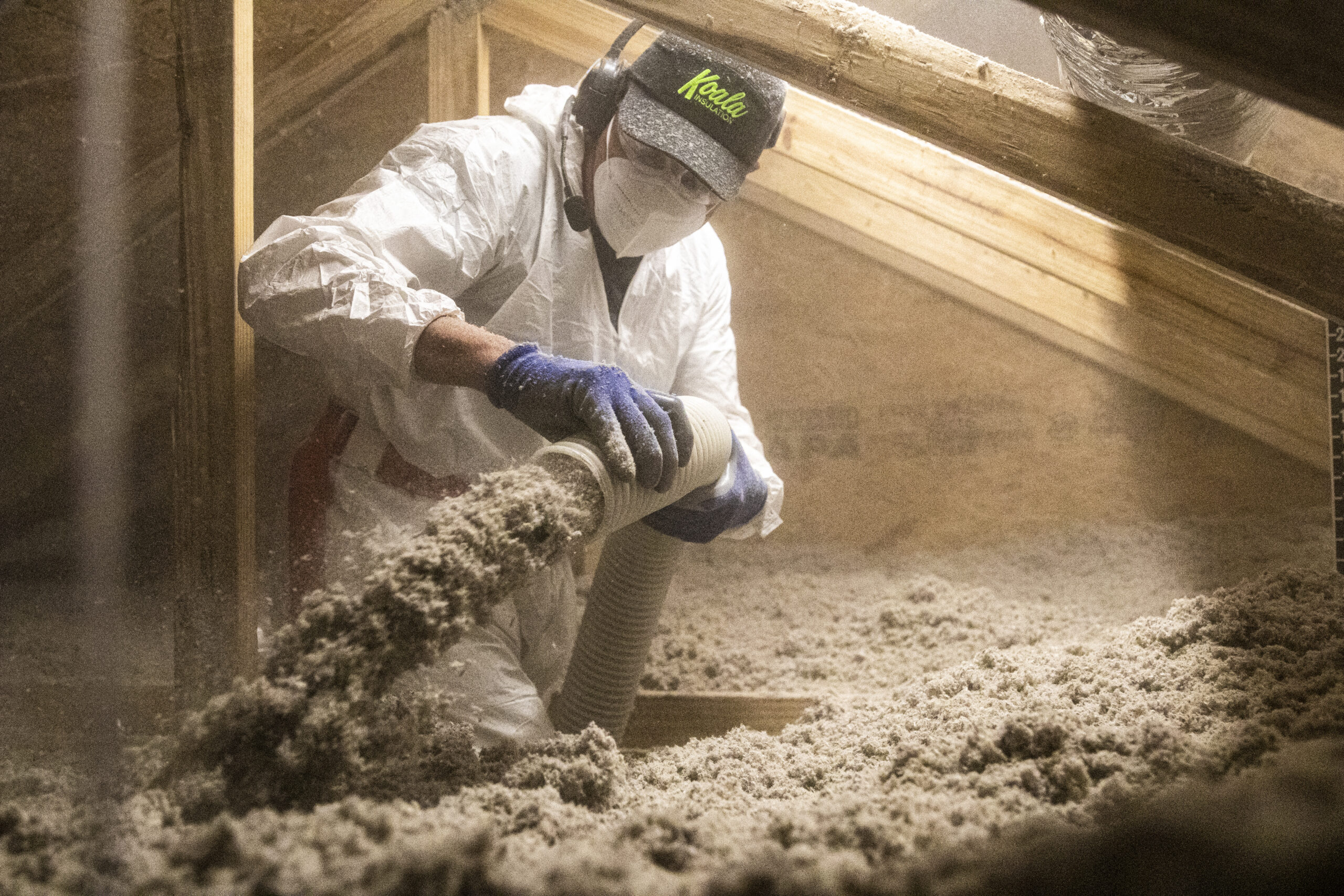
Cellulose insulation is a thermal insulation material manufactured primarily from recycled paper products, including newspaper and other recovered paper fibers. These materials are processed into small particles and treated with fire-retardant additives to improve their resistance to ignition and combustion. Unlike traditional fiberglass batts that are installed in pre-cut sections, cellulose insulation can be blown into attic spaces or densely packed into certain enclosed wall cavities.
Ready to start your insulation project?
Cellulose generally provides approximately R-3 to R-4 of thermal resistance per inch, depending on the manufacturer, product formulation, and installed density. Two common installation methods include loose-fill cellulose, which is blown across unfinished attic floors to create a continuous thermal layer, and dense-pack cellulose, which is installed at a specified density within enclosed wall or ceiling cavities. Because cellulose conforms to irregular framing and obstructions, it can be particularly useful when upgrading existing homes without extensive reconstruction.
Why Cellulose Insulation Makes Sense for Bergen County Homes
Better Protection Against New Jersey’s Cold Winters
Northern New Jersey experiences substantial heating demand during the winter. When attic insulation is inadequate, heat from the living space can escape through the ceiling into the attic. This heat loss can contribute to uncomfortable rooms, increased heating demand, and inconsistent temperatures between different areas of the house. Properly installed cellulose insulation slows heat transfer and can help maintain more consistent indoor temperatures.
For Bergen County homeowners with bedrooms directly beneath unfinished attic spaces, adding insulation can be especially beneficial when the existing insulation is thin, uneven, or missing. Homes with older attic insulation may also have significant gaps around framing, penetrations, and other structural features that allow additional heat loss. Addressing these deficiencies can help improve the overall thermal performance of the home.
Improved Comfort During Hot, Humid Summers
Insulation is just as important during the summer. Roof surfaces absorb solar energy, and temperatures in unfinished attics can rise considerably above outdoor temperatures. Without sufficient attic insulation, heat transfers into the living spaces below, potentially increasing air-conditioning demand. Cellulose insulation creates a thermal barrier that helps reduce this heat transfer.
For homeowners in Teaneck, Englewood, Hackensack, and surrounding Bergen County communities, adequate attic insulation can help maintain more comfortable second-floor temperatures during the summer. However, insulation should also be paired with appropriate air sealing and an attic ventilation strategy suited to the home’s construction. These improvements work together to help limit unwanted heat transfer and maintain more consistent indoor conditions.
Effective Coverage in Older Bergen County Homes
Bergen County includes a wide variety of residential construction styles, from older Colonials and Cape Cod homes to mid-century ranches, split-levels, and newer properties. Older homes can present insulation challenges because of irregular framing, attic additions, dormers, and difficult-to-access cavities. For example, a Cape Cod with finished upstairs bedrooms may have short knee walls and small attic spaces behind them, while a split-level home may contain multiple attic sections with different insulation depths.
In these situations, blown-in cellulose can be useful because it conforms to the shape of accessible spaces. However, a professional should first determine where the building’s thermal and air boundaries belong. Simply adding insulation without addressing air leakage or existing construction details may not solve the underlying comfort problem. Homeowners considering an upgrade can learn more about blown-in attic insulation services in Bergen County and how this installation method works.
Recycled Materials and Potential Noise Reduction
Cellulose is manufactured with a high percentage of recycled materials, making it attractive to homeowners interested in reducing the environmental impact of their renovation projects. Its fibrous composition can also help absorb sound within insulated building assemblies. For properties near busy Bergen County transportation corridors, such as Routes 4 and 17, appropriately insulated wall and ceiling assemblies may help reduce some unwanted sound transmission.
However, cellulose is not a complete soundproofing solution. Windows, air leaks, exterior walls, and other building components also influence how much outdoor noise reaches the living space. Homeowners concerned about sound should consider how insulation works alongside other elements of their home’s construction.
How Much Cellulose Insulation Do Bergen County Homes Need?
The correct amount of insulation depends on the home’s existing R-value, construction type, and the location where insulation is installed. R-value measures a material’s resistance to heat flow, with higher values generally providing greater thermal resistance. Bergen County falls within IECC Climate Zone 5A, a climate classification characterized by cold winters and humid conditions.
According to ENERGY STAR’s recommended home insulation R-values, R-60 is a useful planning benchmark for previously uninsulated attics in Climate Zone 5. For attics that already have approximately three to four inches of insulation, ENERGY STAR identifies R-49 as a recommended total insulation level in its retrofit guidance. These are general recommendations rather than universal installation specifications, and the appropriate amount of additional insulation depends on the existing material, its condition, and the total insulation assembly.
New Jersey also maintains specific construction and energy-code requirements. Homeowners undertaking renovations or permitted improvements should consult the New Jersey Department of Community Affairs’ current construction codes and applicable municipal requirements to determine which standards apply to their projects.
Why Insulation Depth Matters
Adding more insulation is not simply a matter of blowing a predetermined number of inches into an attic. Different cellulose products have different coverage and settled-thickness specifications, meaning installation requirements vary depending on the material being used. For example, an attic with existing fiberglass insulation may require a different amount of additional cellulose than one with little or no insulation.
A professional assessment should establish the existing insulation’s approximate R-value, identify gaps or compressed material, and determine the amount of new insulation necessary to reach the recommended total. Proper coverage matters just as much as depth, since insulation that is significantly thinner near attic edges, access hatches, or obstructions can reduce overall performance. Following manufacturer specifications helps ensure the finished installation achieves its intended thermal resistance.
Cellulose vs. Fiberglass vs. Spray Foam: Which Is Better for Bergen County?
Cellulose is a strong option for many residential insulation projects, but it is not necessarily the best material for every part of a home. Each insulation type has different characteristics, making it important to consider the existing building conditions and the specific area being insulated.
Cellulose insulation offers high recycled content, conforms to irregular spaces, and provides good thermal performance with potential sound-absorption benefits. However, it requires appropriate moisture protection, professional installation planning, and allowance for settling.
Fiberglass insulation is widely available in both batts and loose-fill forms and is generally less moisture-absorbent than cellulose. Its performance depends on correct installation without significant gaps, compression, or uneven coverage.
Spray foam insulation can provide both thermal resistance and air sealing when properly installed, making it useful for certain difficult-to-seal areas and specialized building assemblies. However, spray foam typically has a higher initial installation cost and requires careful planning around moisture, ventilation, and roof construction.
For a conventional unfinished attic, cellulose or loose-fill fiberglass may be a practical option. For specific rim joists, roofline assemblies, or difficult-to-seal areas, spray foam insulation in Bergen County may be worth evaluating. The correct choice depends on the home’s construction, existing conditions, and project goals rather than one material being universally superior.
Why Air Sealing Should Come Before Cellulose Insulation
One of the most important considerations in an insulation project is understanding the difference between insulation and air sealing. Insulation slows heat transfer, while air sealing reduces unwanted airflow through cracks, gaps, and penetrations. Even an attic with substantial insulation can lose conditioned air through unsealed openings around plumbing penetrations, electrical wiring, attic hatches, and wall top plates.
These air leaks may also allow warm, moisture-laden indoor air to reach cold attic surfaces during the winter, potentially contributing to condensation. Before installing additional cellulose insulation, these leakage points should be evaluated and appropriately sealed. Combining these improvements often makes more sense than adding insulation alone, particularly in older houses with multiple attic penetrations.
Koala Insulation of Bergen County offers professional air sealing services that can complement an attic insulation upgrade. By reducing unwanted air movement before increasing thermal resistance, homeowners can address two important sources of building-envelope inefficiency.
When Cellulose Insulation May Not Be the Best Choice
Although cellulose has several advantages, some conditions should be addressed before installation. Identifying existing moisture problems, ventilation limitations, and potentially hazardous materials is an important part of determining whether cellulose is appropriate for a particular property.
Active Roof Leaks or Existing Moisture Damage
Cellulose can absorb moisture, which may compromise thermal performance and affect nearby building materials. If an attic has a roof leak, damp insulation, or unexplained moisture staining, the underlying issue should be corrected before installing new insulation. Adding new material over existing moisture damage can conceal problems rather than resolve them.
In cases involving damaged or contaminated materials, professional insulation removal services in Bergen County may be appropriate before replacing the existing insulation. The condition of the attic should determine whether removal is necessary.
Inadequate Attic Ventilation
In a conventional vented attic, proper intake and exhaust ventilation should be maintained when adding loose-fill insulation. Cellulose should not obstruct soffit vents or other intentional airflow paths, since restricting ventilation can contribute to undesirable moisture and temperature conditions. Professional installers can assess whether ventilation baffles or other measures are needed to maintain clear airflow at the eaves.
Finished attics and unvented roof assemblies require different considerations. Insulation placement and moisture-control details must be designed around the specific roof construction rather than assuming that every attic requires the same ventilation arrangement.
Potentially Hazardous Existing Materials
Some older homes may contain insulation materials that require special handling before renovation. For example, older vermiculite insulation may contain asbestos, and the U.S. Environmental Protection Agency advises homeowners not to disturb suspected vermiculite insulation. Homeowners can review the EPA’s guidance on vermiculite attic insulation and consult qualified professionals before undertaking work that could affect it.
Electrical hazards, heat-producing fixtures, and required clearances around chimneys or flues should also be evaluated before insulation is installed. These considerations are particularly important in older Bergen County homes that have undergone multiple renovations or electrical upgrades.
What to Expect During a Professional Cellulose Insulation Project
For Bergen County homeowners considering blown-in insulation, understanding the installation process can help establish appropriate expectations. Although the specific steps vary depending on the property, a professional project generally involves evaluating existing conditions, preparing the installation area, addressing air leakage, and verifying the completed work.
Step 1: Evaluate the Existing Insulation
The assessment begins with reviewing the home’s existing insulation, accessible attic areas, and potential sources of heat loss. A professional should check insulation depth and condition, ventilation openings, moisture issues, and other factors that could affect installation. This evaluation helps determine whether the existing insulation can remain in place or whether additional preparation is required.
Step 2: Address Air Leakage and Necessary Repairs
Before adding new insulation, the contractor should identify openings that allow unwanted airflow between conditioned living spaces and unconditioned areas. Necessary air sealing, moisture repairs, and other preparatory work should be completed before additional material is installed. Correcting these issues first helps support the long-term performance of the insulation system.
Step 3: Prepare the Installation Area
Depending on the attic configuration, preparation may include protecting fixtures, maintaining required fire clearances, preserving ventilation pathways, and installing insulation dams or baffles. Damaged or contaminated existing insulation may need to be removed. Proper preparation helps protect the building and allows the insulation to be installed more consistently.
Step 4: Install the Appropriate Blown-In Material
Once the area is prepared, insulation is applied using specialized equipment. For a typical vented attic, loose-fill cellulose can be distributed across the attic floor to achieve the specified coverage and installed thickness. For certain enclosed cavities, dense-pack installation may be considered when suitable for the construction.
Step 5: Verify Coverage and Installed R-Value
After installation, the contractor should check for uneven coverage, insufficient depth, blocked vents, and other issues. The completed installation should be evaluated against the selected product’s coverage and settled R-value specifications. A final walkthrough also gives homeowners an opportunity to understand the improvements made and any maintenance considerations.
How Much Does Cellulose Insulation Cost in Bergen County, NJ?
Cellulose insulation costs vary based on the size and condition of the home, the type of installation, and how much additional preparation is necessary. Larger attics generally require more insulation material, while difficult-to-access spaces may involve additional labor. Existing insulation levels also influence pricing because a home with minimal insulation may require substantially more material to achieve its target R-value.
Other factors include air sealing requirements, insulation removal, ventilation improvements, and safety considerations around existing fixtures or mechanical equipment. A home with wet or pest-damaged insulation may require more extensive preparation than one with dry, properly installed material that can remain in place. Rather than relying on a generic cost-per-square-foot estimate, homeowners should request an assessment that identifies the work their property actually requires.
Are Insulation Rebates Available in Bergen County?
Depending on the utility provider, household eligibility, and program requirements, certain New Jersey homeowners may qualify for incentives related to insulation or broader home energy improvements. Available programs and participation requirements can change, and some require approved contractors or assessments before work begins.
For more information, see our 2026 Bergen County insulation rebates guide. Homeowners should confirm eligibility and program requirements before scheduling installation, particularly if they plan to use incentives to offset project costs.
Frequently Asked Questions About Cellulose Insulation in Bergen County
Is Cellulose Insulation a Good Choice for Older Bergen County Homes?
Yes, cellulose can be a suitable choice for many older homes, particularly those with accessible attic floors, irregular framing, or insufficient existing insulation. However, older homes may also have air leaks, moisture issues, and electrical or ventilation conditions that need attention before additional insulation is installed. A professional evaluation helps determine whether cellulose, fiberglass, spray foam, or a combination of materials would be most appropriate.
Can Cellulose Insulation Be Installed Over Existing Fiberglass Insulation?
In many cases, loose-fill cellulose can be installed over existing fiberglass insulation, provided the original insulation is dry, uncontaminated, and otherwise suitable to remain in place. The existing insulation’s condition and R-value should be evaluated before determining how much additional insulation is needed. Existing materials that are wet, significantly damaged, or contaminated may need to be removed first.
Will Cellulose Insulation Help Lower Heating and Cooling Bills?
Properly installed cellulose insulation can reduce heat transfer through the areas where it is applied. When a home is currently underinsulated, an upgrade may reduce heating and cooling demand. The amount of energy savings depends on several factors, including the home’s existing insulation levels, air leakage, heating and cooling equipment, and occupant behavior. For the best results, insulation improvements should be coordinated with appropriate air sealing and ventilation.
Does Cellulose Insulation Settle Over Time?
Loose-fill cellulose can settle after installation, with the amount depending on the product and installation method. Manufacturers account for settling through specified coverage requirements and settled R-values. Professional installers should follow the manufacturer’s application instructions to ensure the intended thermal performance is maintained after settling occurs. Dense-pack cellulose is installed at a higher density to minimize settlement within enclosed cavities.
Does Cellulose Insulation Help Prevent Ice Dams During Bergen County Winters?
Proper attic insulation can help reduce the conditions that contribute to ice dam formation. Ice dams can develop when heat escaping into an attic warms portions of the roof, causing snow to melt and refreeze near colder roof edges. Improving attic insulation and air sealing can reduce unwanted heat transfer to the roof. However, ice dams may have multiple contributing factors, including roof geometry, snow accumulation, and ventilation conditions, so insulation should be part of a broader assessment rather than viewed as a guaranteed solution.
Is Cellulose Insulation Resistant to Pests?
Some cellulose insulation products contain borate-based additives that can discourage certain insects. However, cellulose insulation should not be treated as a substitute for proper pest prevention, since rodents and other animals may still enter attic spaces through gaps around the building exterior. Sealing accessible entry points and addressing existing infestations before installing new insulation are important steps for protecting the home.
Can Cellulose Insulation Be Used in the Walls of an Existing Bergen County Home?
Yes, dense-pack cellulose may be suitable for certain existing wall cavities, depending on construction details and accessibility. Installation typically involves creating access points through which insulation can be introduced into previously uninsulated cavities. However, wall retrofits require careful evaluation of existing insulation, cavity conditions, wiring, moisture management, and exterior materials. Some walls may be better suited to alternative insulation methods.
How Long Does Cellulose Insulation Last?
Cellulose insulation can provide decades of thermal performance when properly installed and protected from moisture, physical disturbance, and contamination. Its useful life depends on factors such as product quality, installation density, moisture exposure, and the condition of the surrounding building materials. Homeowners should periodically inspect accessible attic areas for moisture damage, significant disturbance, or changes that could compromise insulation performance.
Do Bergen County Homeowners Need to Remove Old Insulation Before Adding Cellulose?
Not necessarily. Existing insulation can sometimes remain in place when it is dry, clean, correctly installed, and structurally appropriate for the intended upgrade. Removal may be recommended when insulation is damaged by water, contaminated by pests, improperly installed, or otherwise unsuitable for continued use. The decision should be based on the home’s conditions rather than assuming that all older insulation must be replaced.
What Is the Best Time of Year to Install Attic Insulation in Bergen County?
Attic insulation can generally be installed throughout the year, assuming conditions allow safe access and proper installation. Many homeowners consider insulation upgrades before the heating season begins or ahead of summer cooling demand. However, an insulation project can provide benefits in any season. If a home has noticeable drafts, uncomfortable second-floor temperatures, or unusually high heating and cooling bills, an assessment can help determine whether improvements should be made sooner.
Improving Home Comfort in Bergen County Starts With the Building Envelope
For Bergen County homeowners, improving insulation is about more than adding material to an attic. It is about creating a more effective building envelope that reduces unwanted heat transfer, controls air leakage, and appropriately manages moisture. Cellulose insulation offers several advantages, including strong thermal performance, recycled content, and the ability to conform to irregular spaces. These characteristics can make it particularly useful in older Bergen County homes where attic insulation may be insufficient or uneven.
However, a successful insulation upgrade should address three interconnected elements: insulation, air sealing, and ventilation. Insulation establishes sufficient thermal resistance to reduce heat transfer, air sealing closes unwanted airflow pathways that allow conditioned air to escape, and ventilation maintains the appropriate airflow strategy for the attic or roof assembly. When these components work together, homeowners are better positioned to improve indoor comfort, manage heating and cooling demand, and protect their investment.
Schedule a Free Insulation Assessment With Koala Insulation of Bergen County
Every home has different insulation needs. A Cape Cod in Ridgewood may require a different approach than a split-level in Paramus or an older Colonial in Englewood. That is why choosing the appropriate insulation material, identifying air leakage, and evaluating existing attic conditions are important first steps.
At Koala Insulation of Bergen County, our team helps local homeowners identify opportunities to improve insulation performance and indoor comfort. Whether you are considering cellulose insulation, fiberglass, spray foam, or another blown-in insulation solution, we can help evaluate your home’s specific needs and recommend an appropriate approach. Our services include attic insulation, air sealing, insulation removal, and other solutions designed to improve the performance of your home’s building envelope.
Ready to improve your home’s comfort and energy efficiency? Contact Koala Insulation of Bergen County to schedule a free, no-obligation insulation assessment and learn which insulation options are appropriate for your home. From the initial assessment through installation and the final walkthrough, our goal is to help Bergen County homeowners make informed decisions about improving their home’s comfort and efficiency.
Find Your Location



Get a quote